
Civil Coalition Criticises Lightning-Fast Deliberation of the Police Bill
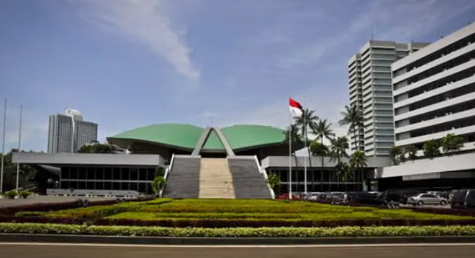
A civil society coalition under the Movement for a Just and Democratic Indonesia (GIAD) has criticised the lightning-fast legislative process for the revision of the Law on the National Police of the Republic of Indonesia (Polri) in the House of Representatives (DPR). GIAD representative Lucius Karus highlighted the timeline for deliberating the Police Bill, deeming it unreasonable for a regulation governing the country’s security institution. Since being designated as a DPR Initiative Bill on 20 May 2026, Commission III immediately accelerated the process, holding deliberations on 25 May, receiving the Problem Inventory List (DIM) from the government on Thursday (4/6/2026), and conducting the final approval on Tuesday (9/6). “How can it be considered serious if the time available for discussing the DIM was only two working days, namely Friday (5/6) and Monday (8/6)? How can it be considered serious if the Public Hearing Meetings held from 25 May to 4 June appeared only as a mere formality and were never genuinely discussed as deliberation material? The public is truly disregarded and sidelined,” Lucius said in his statement on Tuesday (9/6). Lucius urged the DPR to immediately halt the ratification process for the Police Law revision and first conduct public outreach on the latest draft, particularly regarding whether the points proposed by the Police Reform Team had been accommodated. He also requested that the deliberation of the Police Bill be restarted from the beginning by officially opening the Academic Paper document and the Police Bill draft to the public. He stressed that the principle of meaningful participation is not merely about inviting a handful of representatives to the hearing room, but about openness of information at every stage. He reminded the DPR not to forget the memory of the people’s resistance in August 2025. “One of the factors that sparked public anger during the August 2025 incident was the DPR’s working method, which was closed, skipped steps, and lacked public participation. The impression given was institutional arrogance. Bills were discussed in a flash and then suddenly ratified. At that time, the DPR repeatedly apologised and promised to improve. But in reality, that pattern is being repeated. Was the August 2025 incident not enough of a lesson?” Lucius said. Lucius added that the most fatal aspect of this rushed Police Bill was the absence of an official draft that civil society or the mass media could legally access during the crucial deliberation period. He considered this attitude a violation of the commitment to modern parliamentary reform and instead revived old, poor legislative patterns that triggered horizontal tensions between the public and state institutions. Separately, Chairman of Commission III of the DPR, Habiburokhman, asserted that the deliberation process up to the ratification of the Bill on the Third Amendment to Law Number 2 of 2002 concerning the Indonesian National Police had maximised space for meaningful public participation. Habiburokhman explained that a series of public aspiration absorption efforts had been initiated since the initial drafting phase, long before the Working Committee’s official marathon working meeting on 25 May 2026. “We convey that meaningful participation in the drafting of this law has been very much maximised. During the drafting phase, we held at least 12 Public Hearing Meetings to receive community input regarding this Police Law,” Habiburokhman said during the DPR Plenary Meeting on Tuesday (9/6). Habiburokhman stated that Commission III of the DPR also conducted specific working visits to 12 provinces in Indonesia to gather direct input from civil society elements and academics at various universities. Cumulatively, during that initial drafting phase, the DPR had invited at least 15 experts from various disciplines, 6 community groups, and 3 alliances of student groups to provide the best formula for reform efforts within Polri. Habiburokhman asserted that transparency and openness were consistently maintained when the Police Bill entered the deliberation phase. He detailed that during this phase, his side again held 12 follow-up Public Hearing Meetings, presenting 16 legal experts, 2 public health experts, 3 alliances of student groups, and received 124 written input documents from various community organisations.