
Civil Coalition Condemns Military Involvement in Taxpayer Oversight
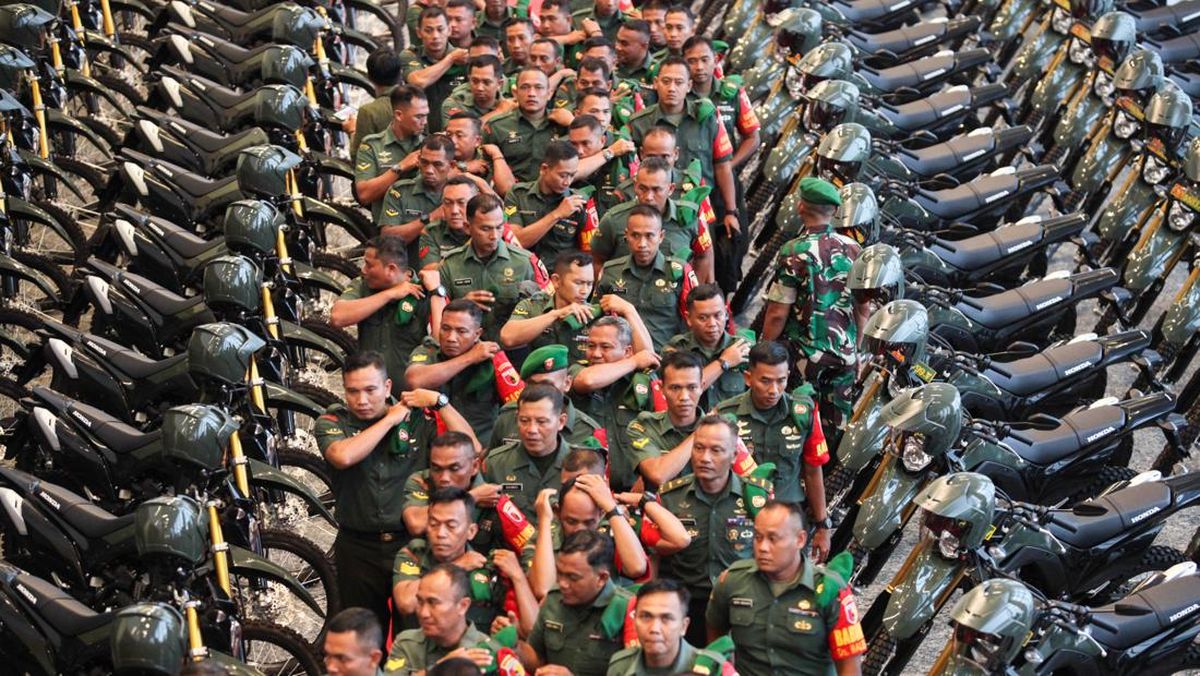
The Civil Society Coalition for Security Sector Reform has firmly rejected a Directorate General of Taxes (DJP) policy that opens the door for the Indonesian Military (TNI) to be involved in monitoring taxpayer compliance through building information networks down to the village level. The policy, outlined in Circular Letter SE-8/PJ/2026, allows for the involvement of TNI’s Village Supervisory Non-Commissioned Officers (Babinsa) and the National Police’s Community Security and Order Supervisors (Bhabinkamtibmas). “This policy is dangerous because it blurs the boundaries between civil and military authority, expands the state’s surveillance function over citizens without an adequate legal basis, and has the potential to create intimidation in the relationship between the public and tax authorities,” the coalition said in a joint statement received on Tuesday afternoon. The civil coalition comprises a group of civil society and research organisations, including YLBHI, Amnesty International Indonesia, KontraS, Imparsial, ICW, Setara Institute, ICJR, LBH Pers, and the Alliance of Independent Journalists (AJI) Indonesia. The coalition explained that under the self-assessment tax system, the state has the authority to provide guidance, supervision, examination, and law enforcement. However, it stated that this authority must be exercised by tax officials and civil law enforcement officers who have clear mandates, measurable procedures, objection mechanisms, and external oversight. “Involving Babinsa in the tax information gathering chain shifts the approach from voluntary compliance to a security approach,” the statement read. The coalition also assessed that the involvement of TNI personnel reflects a current state practice of managing the populace through a politics of fear, right down to the lowest administrative levels. “At the village level, the presence of Babinsa in tax matters is a manifestation of the politics of fear built by the state against the people, especially targeting vulnerable groups, small business owners, farmers, fishermen, and informal workers,” they said. They argued this situation contradicts the TNI reform agenda, the principle of civil supremacy, and efforts to build public trust in tax administration. The coalition also believes the policy risks violating the principle of taxpayer confidentiality and the right to privacy. Information regarding a person’s income, assets, business activities, transactions, and economic conditions is sensitive data whose use must be limited to legitimate tax purposes, with clear access, recording, and accountability. “When this information is collected through a network of territorial officers who are not within the DJP structure, the risk of misuse, leakage, stigmatisation, and social pressure on citizens becomes much greater,” the coalition stated. Furthermore, the coalition argued that legally, the involvement of Babinsa is not aligned with the TNI’s mandate as a state defence instrument. They stated that the TNI Law places the institution’s primary duties on upholding state sovereignty, defending territorial integrity, and protecting the nation from threats. The law also stipulates that Military Operations Other Than War (OMSP) are limited to specific types of tasks and must be carried out based on state policy and political decisions. “Tax compliance monitoring, mapping citizens’ economic activities, or identifying potential taxpayers are not defence functions and cannot be expanded through an administrative circular,” the coalition said. On these grounds, the civil coalition urged the government, particularly the DJP, to revoke the provisions allowing the involvement of TNI Babinsa in building tax information networks. They also urged the central government and the House of Representatives to conduct a comprehensive evaluation of tax policies involving defence and security apparatus to ensure they do not conflict with the principles of the rule of law, civil supremacy, human rights protection, and taxpayer data confidentiality. “Komnas HAM, the Ombudsman, and other relevant oversight bodies must monitor the potential for maladministration, intimidation, and rights violations arising from this policy,” the statement added. The coalition further urged the DJP to strengthen lawful, transparent, proportional, and auditable data-based supervision mechanisms and to ensure all field activities are conducted by authorised officers with procedures that protect citizens’ rights. The involvement of the TNI and National Police in taxpayer oversight is stipulated in the DJP Director General’s Circular Letter Number SE-8/PJ/2026 concerning Taxpayer Compliance Supervision Guidelines. The circular was issued by Director General of Taxes Bimo Wijayanto in Jakarta on 15 July 2026. In the circular, the TNI and Polri elements involved in supervision activities are Babinsa and Bhabinkamtibmas. These officers are specifically involved in building information networks for the supervision of registered taxpayers, unregistered taxpayers, and regions. “Supervision activities are carried out through various methods and approaches, such as visitations, canvassing, direct observation, building information networks (through Babinsa/Bhabinkamtibmas), assessment using remote sensing technology, web scraping, and utilising media information…,” Bimo stated, as quoted from the general section of the SE-8/PJ/2026 copy. Separately, Bimo stressed that the involvement of these officers is limited to coordination and building information networks, not for conducting tax audits or collections. “Once again, this is an SE intended for internal DJP purposes. So, there is no need to politicise or blow it out of proportion,” he said.