
Citizens Strangled by Cost of Living and Online Gambling, President Faces Threat of Ousting
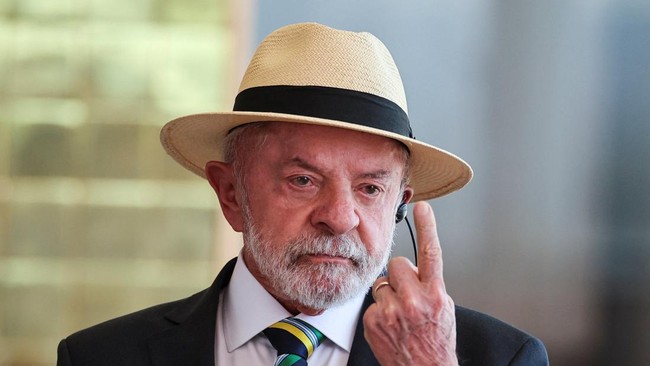
The rising pressure of living costs has become the greatest stumbling block for Brazilian President Luiz Inácio Lula da Silva ahead of the upcoming general election. Amidst government claims that several macroeconomic indicators are beginning to improve, millions of citizens still feel squeezed by the high prices of daily necessities.
Kleyton Zacariandum (39), a worker at a butcher shop near the historic centre of Sao Paulo, feels the impact acutely. He reports that his number of customers has plummeted drastically in recent years due to the unrelenting surge in food prices.
This tightening of household economic conditions has led Zacarioto to firmly reject voting for Lula for a fourth term. Although he acknowledges that the incumbent achieved positive milestones during his early leadership in the 2000s, he feels the current situation is vastly different.
“Someone earning the minimum wage has no chance to improve their fate,” he stated, as quoted by Reuters.
Lula, who is now 80 years old, frequently asks voters for patience. He has repeatedly highlighted achievements such as record-low unemployment rates, a decrease in social inequality, and a slowing inflation rate in recent months as evidence of an economic recovery.
However, the frustration felt by Zacarioto reflects a global phenomenon that often trips up incumbents post-pandemic: the difficulty of convincing the public of economic improvements on paper when they are personally struggling with soaring commodity prices.
“I know the conditions are not ideal, but I guarantee that inflation will remain controlled,” Lula promised during a campaign appearance, while claiming to deeply understand the hardships faced by the common people.
Tight Competition and the ‘Vibecession’ Phenomenon
For months, polls have shown tight competition between Lula and Senator Flavio Bolsonaro, the son of former right-wing President Jair Bolsonaro, who was barred from contesting after being convicted of an attempted coup.
Surveys indicate that economic concerns are the primary reason Lula is struggling to secure a significant lead over the senator. According to a Quaest poll released in September, nearly half of Brazilian citizens believe the economic condition has actually worsened over the past year, compared to only 19% who stated otherwise.
Senator Flavio Bolsonaro has made the decline in purchasing power the primary ammunition for his campaign. He frequently compares current supermarket prices to the era of his father’s leadership. In response to these attacks, Lula’s campaign team launched a dedicated website named “Market of Lies” and reported the opposition to the Electoral Court over allegations of spreading false information regarding food prices.
Observers suggest this situation is triggering a phenomenon known as a “vibecession”—a condition where an economic recession or crisis is driven more by psychological sentiment and public mood than by real statistical data.
“All macro data shows that this government has worked well. However, the reality is that the general public does not agree with that,” said political analyst Thomas Traumann, comparing it to similar challenges faced by Joe Biden in the US in 2024.
Trapped by Debt, High Interest Rates, and Online Gambling
The surge in food prices, accumulated year after year, is further exacerbated by the suffocating burden of household debt. Central bank data shows that the household debt repayment ratio (excluding mortgages) surged to a record high of 26.6% of total income last June.
This condition is driven by the proliferation of fintech companies offering instant high-interest loans, as well as the widespread phenomenon of online gambling, which drains billions of reais from the pockets of working-class families.
The financial burden is made heavier by Brazil’s benchmark interest rate, which remains at 13.75%—one of the highest in the world—even though the central bank has begun to ease it gradually.
“If you examine labour market data and poverty indicators, there is indeed significant progress. However, if we account for accumulated food inflation, high interest rates, and the prevalence of online gambling, the result is as balanced as a fierce match,” concluded Marcelo Neri, an economist from Fundacao Getulio Vargas.
Source: jawawa.id (https://jawawa.id/newsitem/citizens-strangled-by-cost-of-living-and-online-gambling-president-faces-threat-of-ousting-1790499164)
Originally published by CNBC Indonesia (https://www.cnbcindonesia.com/news/20260927104710-4-771205/rakyat-tercekik-biaya-hidup-terjerat-judol-presiden-terancam-lengser), translated from Indonesian