
Citizens Gain Accounts, The State Gains Statistics
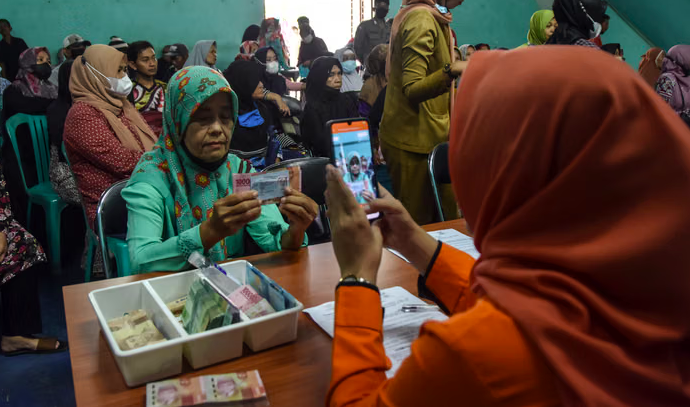
Chief Economist of Trimegah Sekuritas Indonesia, Fakhrul Fulvian, has warned that the success of the mass bank account opening programme for the public should not be measured solely by the quantity or number of accounts successfully opened.
According to him, the government and the financial industry need to ensure that these accounts are low-cost, easy to use, interoperable with the national payment system, possess strong data protection, and do not create a permanent dependency on any single financial institution.
“Two hundred million accounts do not automatically mean two hundred million people are financially included. After account ownership, the next stages are account usage and, ultimately, economic participation,” Fakhrul stated in Jakarta on Thursday.
Fakhrul added that the policy must be accompanied by financial literacy and consumer protection, particularly because many recipients are individuals entering the formal financial system for the first time.
He believes the government’s plan to automatically provide bank accounts to Indonesian citizens reaching the age of 17 should be viewed more broadly than just a financial inclusion programme. He assesses that this policy could be part of the evolution of Indonesia’s monetary sovereignty in the digital era, where access to money increasingly depends on access to the infrastructure through which money moves. Fakhrul explained that this idea has deeper roots in Indonesia’s monetary architecture.
The 1945 Constitution, through Article 23B, places currency within the constitution. Furthermore, the Currency Law affirms the Rupiah as a symbol of national sovereignty and a legal tender, while the Bank Indonesia (BI) Law mandates BI to regulate and maintain the smoothness of the payment system.
“Monetary sovereignty is not just about whether a country has its own currency. In a modern economy, we also need to ask whether all citizens have effective access to the infrastructure that allows that currency to be used,” said Fakhrul.
He views this development as the formation of ‘monetary citizenship’—a condition where citizens not only have the right to use the national currency but also have basic access to the monetary and payment infrastructure increasingly required to participate in the modern economy.
“In the 20th century, access to money primarily meant that the public could obtain and use cash. In the 21st century, access to money increasingly means access to the places where that money moves,” he said.
Therefore, he believes the government’s planned account opening programme could be a vital step in ensuring that financial access becomes part of the basic infrastructure of the people’s economic life.
“In the past, the state ensured the Rupiah reached the hands of the people. In the digital era, the next task is to ensure the people have a way to enter the places where the Rupiah moves. Monetary sovereignty is ultimately not just about having one’s own currency, but ensuring citizens can participate in its monetary system,” he added.
Previously, the Coordinating Minister for Economic Affairs, Airlangga Hartarto, stated that the government is preparing a mechanism for the provision or creation of mass accounts for the entire population. This follows instructions from President Prabowo Subianto to ensure every Indonesian citizen has a bank account to strengthen domestic financial inclusion and literacy levels.
According to Airlangga, the government will prepare approximately IDR 11 trillion for the mass account opening plan. He stated that these funds will come from the State Budget (APBN) and target over 200 million people, with each account receiving an initial deposit of IDR 50,000.
Finance Minister Purbaya Yudhi Sadewa stated that the budget for the mass account opening plan has not yet been finalised.
“It has not (been set) at IDR 11 trillion. This budget is still being calculated,” Purbaya explained to reporters at the Ministry of Finance Office in Jakarta on Thursday.