
Citizen Trauma Remains a Challenge for Post-Earthquake Recovery in NTT
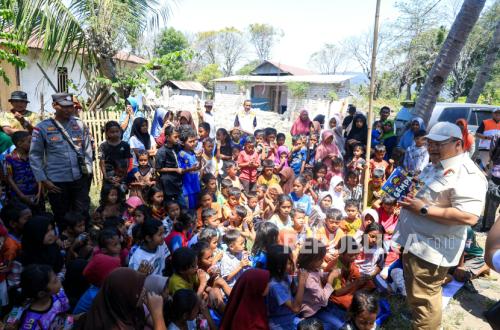
The recovery of communities affected by earthquakes in East Nusa Tenggara (NTT) cannot rely solely on rebuilding damaged houses and public facilities. Psychological recovery is also considered a vital part of post-disaster management, given that some residents are still gripped by fear due to aftershocks.
The Secretary-General of the Prosperous Justice Party (PKS), Muhammad Kholid, noted this condition during his visit to disaster-affected residents in Ronting Hamlet, Satar Kampas Village, East Manggarai Regency, NTT, on Friday (4/9/2026).
According to Kholid, some residents have not yet dared to sleep inside their homes. They choose to stay in tents at night because they remain worried about the possibility of further earthquakes.
“We see that the community still does not dare to sleep inside their houses. They still feel earthquakes every day. At night, they sleep in tents, and even schooling is still taking place in tents. This means the trauma is still very strong,” said Kholid.
He assessed that this condition demonstrates that post-disaster management needs to pay attention to the psychological aspects of the community, in addition to infrastructure recovery.
“Physical reconstruction is indeed important. But after that, mental reconstruction must also become a priority. Trauma healing must be strengthened,” he said.
Kholid stated that the trauma caused by disasters can have long-lasting impacts, especially for children. Therefore, continuous psychological assistance is necessary so that the community can gradually feel safe again and resume their daily activities.
“We must not only rebuild houses and public facilities but forget to rebuild the community’s sense of security. Therefore, trauma healing must be an important part of the reconstruction of NTT,” he emphasised.
In addition to the psychological aspect, attention to the continuity of children’s education is also considered vital. The emergency conditions caused by the disaster mean that some learning activities are still being conducted in tents.
“Children need space to feel safe again, to play, learn, and grow without being constantly overshadowed by the fear of earthquakes,” said Kholid.
During his visit, Kholid also distributed aid to the affected residents in the form of basic food supplies, milk for children, and storybooks for children.