
Citi Strengthens Global Business and Targets Opportunities in Indonesia
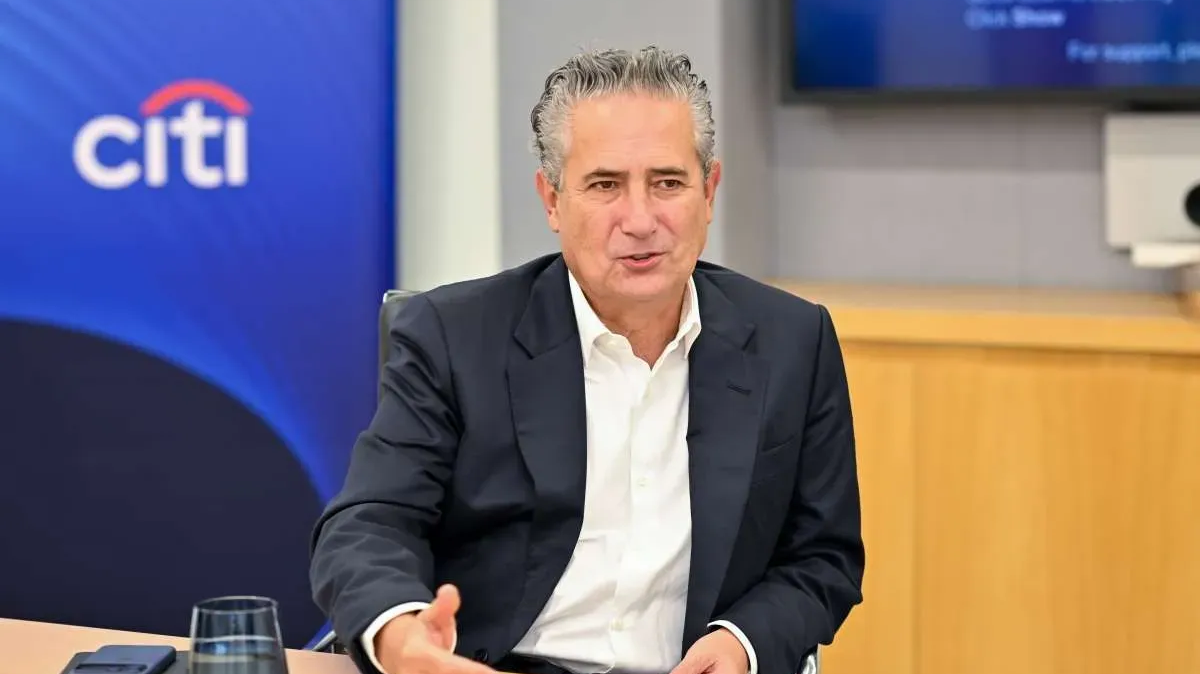
Citi’s global business transformation has prompted a strategic shift, with operations concentrated in four main areas. Indonesia remains an important market in the US bank’s growth plans, according to Keuangan. The change involved divesting its consumer banking businesses outside the United States, including transferring Citi’s Indonesian operations to Bank UOB Indonesia.
The move is part of the company’s effort to build a more focused business. Following the transformation, Citi now relies on four global segments: Services, Markets, Banking and Wealth. The strategy has also helped boost the company’s financial performance.
In the third quarter of 2026, Citi recorded revenue of US$23.8 billion, an 8% increase on the same period a year earlier.
Revenue growth came from contributions across the four main business lines. Net interest income also rose by 14%. In Indonesia, Citi’s revenue reached Rp4.11 trillion by September 2026, up from Rp4.03 trillion in the same period a year earlier.
However, higher revenue was not accompanied by profit growth. Net profit for the year stood at Rp1.53 trillion in September 2026, down from Rp2.29 trillion in September 2025. Citi’s Head of International, Ernesto Torres Cantu, said a simpler business focus was helping the company improve its performance. He also described third-quarter revenue as the best result in a decade.
Ernesto said Citi Indonesia delivered strong financial results in the first half of 2026. Lending grew by 8%, while third-party funds increased by about 23% year on year. The company is committed to supporting customers’ needs through three connected business lines: Banking, Markets and Services. Investment in its transformation programme has also strengthened operations and created scope to develop technology and the business.
Indonesia is an important part of Citi’s global strategy
Indonesia holds a strategic position in Citi’s international network, which spans more than 90 markets. Its operations in those countries are supported by local professionals, including Citi Indonesia chief executive Batara Sianturi.
Citi has operated in Indonesia for nearly 60 years. The company says it has achieved a number of milestones during that time, including introducing electronic banking and becoming the first foreign bank to launch a credit card in Indonesia. It has also helped open up opportunities for international investors to participate in the national economy.
Citi aims to become a leading partner for institutions conducting cross-border business. Its strategy includes serving global companies operating in Indonesia while supporting Indonesian businesses seeking to expand into international markets.
Supply-chain shifts open up opportunities in ASEAN
Geopolitical changes and protectionist policies are not necessarily reducing international trade, Ernesto said. Rather, they reflect the movement of trade activity from one region to another.
ASEAN is well placed to benefit from these changes. Each country has different strengths that can complement one another in building regional production networks. Indonesia has opportunities in its abundant nickel reserves and developing battery industry. These factors have attracted investment in battery-cell plants and electric-vehicle assembly facilities.
Elsewhere in the region, Thailand is developing as a centre for electric-vehicle assembly and exports, while Vietnam is building its own market in electric two-wheelers. Supply-chain restructuring has in fact been under way since the Covid-19 pandemic. International companies are now paying greater attention to operational resilience, including by securing alternative production locations in case of disruption in any one country.
Citi offers a range of financial services to help companies navigate this uncertainty. These include hedging against market volatility, cross-border transactions, multi-currency liquidity management and structured supply-chain finance.
Indonesia’s economic outlook and investment opportunities
Citi forecasts global economic growth of 2.7% in 2026. Indonesia’s economy is projected to grow by 5.2%, up from 5.1% in 2025.
Optimism about Indonesia is also reflected in international capital-market activity. Citi acted as joint lead manager and bookrunner for a US$1.5 billion global bond issue by state-owned electricity company Perusahaan Listrik Negara (PLN). Investor demand for the issue was nearly five times the amount offered.
Nevertheless, Ernesto said market sentiment remained a challenge. Clear policy direction and appropriate regulatory responses are important to restoring investor confidence over the long term. Economic stability and strong institutions, including the central bank, are also key considerations in decisions about where to deploy capital.
Ernesto said Indonesia’s opportunities remained substantial, particularly because of its large population and natural-resource wealth. These strengths matter as global companies look for alternative supply chains and sources of long-term growth.
Over the past three years, Indonesian exports to North America, Central and South America, and the Middle East have continued to grow. This points to opportunities to expand trade ties with a range of regions. The government’s downstreaming programme is also helping increase the domestic value added to natural resources. The development of processing industries and related manufacturing ecosystems is creating broader investment opportunities for domestic and international investors.
Citi is also involved in developing the critical-minerals sector through advisory services for mineral downstreaming transformation. Freeport Indonesia has appointed the company for the fourth consecutive time. In artificial intelligence, Citi acted as debt adviser to Zankore, an AI infrastructure platform launched with Indosat Ooredoo Hutchison, NVIDIA and Nokia.
Three factors for an international financial centre
Indonesia’s plan to establish an International Financial Centre has potential, but it will require several foundations to compete with other global financial hubs.
Drawing on Citi’s experience in financial centres around the world, the company identified three main factors for attracting global investors:
Regulatory and legal certainty. Consistent policy, legal certainty and transparent dispute-resolution mechanisms are needed to build investor confidence.
Liquidity. Efficient capital flows require an adequate foreign-exchange market and clear rules for cross-border investment.
Infrastructure and expertise. High-quality financial infrastructure and digital technology must be supported by a skilled workforce.
Indonesia has made progress in digital-payment innovation and financial-sector development. However, deeper capital markets and stronger investor confidence remain essential to creating a financial centre that can connect international capital with domestic opportunities.
Citi expands its use of artificial intelligence
The company’s transformation also includes using artificial intelligence (AI) in a range of operational activities. Citi applies the technology with attention to security, compliance and responsible innovation. Its internal AI tools are used in 87 countries and jurisdictions by nearly 180,000 employees.
The tools are intended to increase productivity and speed up work. One example is CitiService Agent Assist, used by the Operations Services team. The technology helps employees provide customers with faster and more accurate answers.
AI is also used in Citi’s wholesale credit underwriting process in 41 countries. Its application has enabled processing capacity to increase by as much as fourfold.
Citi Indonesia is among the first banks in Indonesia to provide internal AI tools to all its employees. The tools are used to support productivity across the company’s operations.
Source: jawawa.id (https://jawawa.id/newsitem/citi-strengthens-global-business-and-targets-opportunities-in-indonesia-1793746248)
Originally published by demokratis.co.id (https://demokratis.co.id/citi-perkuat-bisnis-global-indonesia), translated from Indonesian