
CISCE showcases China's clean energy supply chain to realise green dreams
Inside the clean energy pavilion at the fourth China International Supply Chain Expo (CISCE) in Beijing, a towering cylindrical display offers a striking vision of the future: offshore oil extraction equipment coexisting harmoniously with marine life. The stand, presented by China National Offshore Oil Corporation (CNOOC), marks a significant shift for the world’s largest energy producer, where traditional fossil fuels are no longer synonymous with high carbon emissions and environmental degradation. CNOOC President Huang Yongzhang stressed that low-carbon development has become a global consensus, highlighting the company’s commitment to collaborating with international partners across the value chain to drive this transformation. The company’s green transition mirrors a broader, technology-driven shift in China’s energy sector towards environmentally friendly growth.
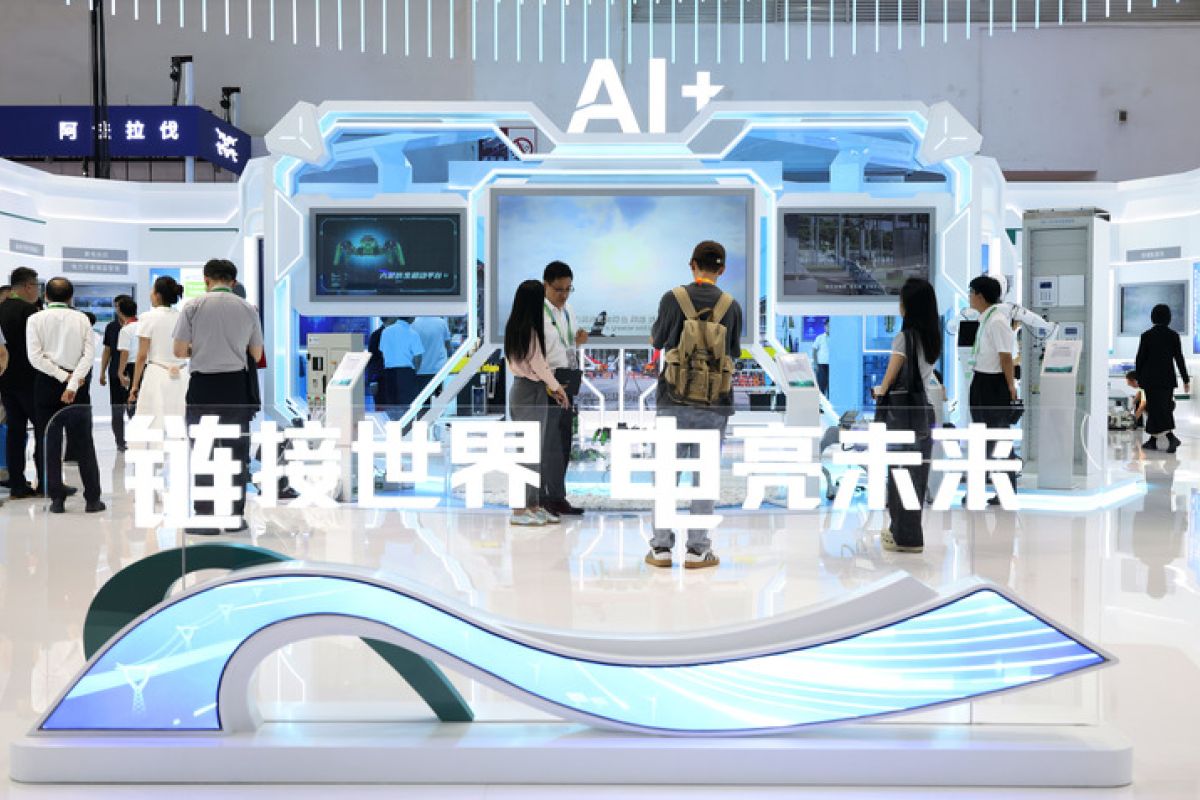
Beyond traditional energy, the pavilion underscored how artificial intelligence (AI) is emerging as a new engine for cost reduction and high-quality development in the clean energy sector. Shenglong Electric, a fast-growing private enterprise specialising in smart grids and intelligent energy management, launched its next-generation AI-powered low-voltage switchgear and an intelligent energy management system based on digital twin technology. According to Hu Jia, an engineer at Shenglong, AI technology acts as the ‘intelligent brain’ behind clean energy equipment. The new switchgear allows users to monitor power distribution systems through a single interface, enabling AI-based fault prediction, maintenance, and energy savings that can reduce operational costs by up to 60 per cent. Its intelligent energy management system significantly cuts building energy consumption. The company’s equipment is now widely used in global projects, such as a vegetable oil plant in Brazil, a women’s college in Niger, and a new materials factory in Indonesia. With products and services spanning more than 50 countries and regions, Shenglong is bringing China’s smart energy solutions to the world, enabling local green transitions.
Meanwhile, Ming Yang Smart Energy Group, a leading global clean energy solutions provider, showcased its innovations in wind, solar, and energy storage. Leveraging extensive offshore wind farm data, the company, which operates over 20,000 wind turbines worldwide, has developed world-leading floating wind turbine technology. A company representative noted that its turbines have gained strong traction in South American, Japanese, and Vietnamese markets, while deepening its presence in Europe and the Middle East, marked by a recent partnership in Saudi Arabia. Collectively, the exhibitors in the pavilion, including state-owned energy giants, equipment manufacturers, and international partners, presented a comprehensive ecosystem of China’s clean energy industry, spanning resource development, manufacturing, and cross-border collaboration.
According to Liang Changxin, a senior official at China’s National Energy Administration (NEA), China has built the world’s largest and fastest-growing renewable energy system. The country’s non-fossil energy consumption has led the world for 11 consecutive years, with renewables accounting for over 60 per cent of installed power capacity. Wind and solar installations have surpassed thermal power, contributing more than half of new global additions. Building on this massive domestic scale, China is now converting its industrial strength into global collaboration. The country currently cooperates on green energy projects with more than 100 countries and regions, supplying over 80 per cent of the world’s photovoltaic components and 70 per cent of wind power equipment. The impact has not gone unnoticed by international experts. ‘When I first entered this field, solar photovoltaics, battery storage, and wind power were too expensive to be taken seriously,’ said Ned Ekins-Daukes, Associate Dean of the School of Photovoltaic and Renewable Energy Engineering at the University of New South Wales in Australia. ‘But today, China has built such highly efficient manufacturing and supply chains that these technologies now provide electricity at the cheapest cost. They have become the foundation of the global energy transition, enabling countries at every stage of development to benefit from this affordable hardware to power their economies.’