
Cisadane River Restoration: Using Eco-Enzymes, Releasing 5,000 Fish Fry
Jakarta, CNN Indonesia – The government said it will take firm action following the fire at a pesticide warehouse belonging to PT Biotek Saranatama in South Tangerang that resulted in contamination of the Cisadane River. Environment Minister Hanif Faisol Nurofiq demanded the company take full responsibility for the environmental damage caused.
“They must be held accountable because the impact is significant. Administratively and technically, we will require the facility operator to conduct a precise environmental audit to take the necessary steps,” Hanif said at the burned warehouse site in South Tangerang on Friday (2/13).
Hanif stressed that an environmental audit is essential to identify the source of contamination, measure the extent of the impact, and determine the remediation steps the company must undertake. The government, he said, will not tolerate violations that result in ecosystem damage and threaten public health.
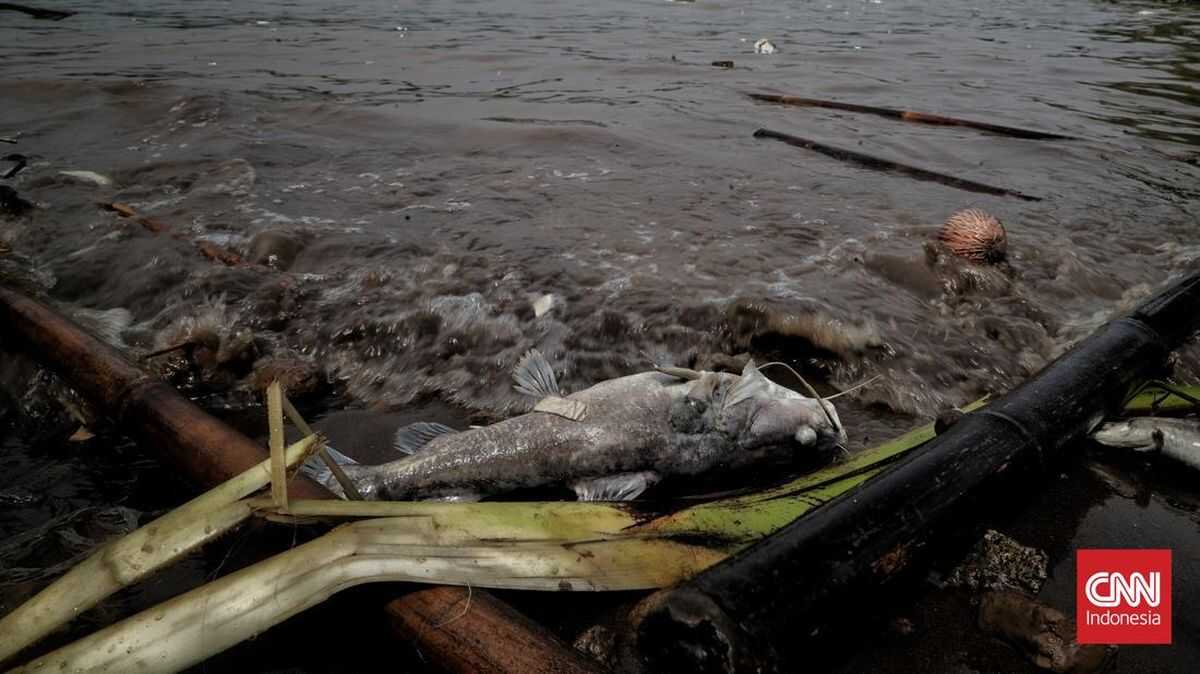
Following the fire, numerous fish were found dead in the Cisadane River. The situation triggered public concern and prompted several agencies to take emergency response measures.
In response to government demands, PT Biotek Saranatama’s Operations Manager, Luki, said the company has been coordinating with the South Tangerang Environmental Agency (DLH) to address the contamination impact on both air quality and river water.
“For air quality, we are using products provided by the Ministry of Agriculture. Then in the river, we have deployed pesticide absorbents for neutralization. Today we are also restoring the river’s biotic ecosystem by releasing approximately 5,000 fish, consisting of catfish, gourami, and tilapia,” Luki said.
The release of thousands of fish was carried out in the Jaletreng River, a tributary of the Cisadane that was affected. The measure was described as part of efforts to restore the aquatic ecosystem disrupted by suspected chemical pesticide waste.
Luki added that the neutralization process was carried out in coordination with relevant ministries. The company also said it has been conducting periodic water quality monitoring.
“The biotic and ecosystem restoration we carry out ourselves. For water testing, there is a team that handles it periodically,” he said.
Going forward, PT Biotek Saranatama said it will partner with the South Tangerang Environmental Agency in handling hazardous and toxic waste (B3), including prevention measures and the implementation of occupational health and safety (K3) standards.
“We will coordinate with the environmental agency, which is more competent regarding B3 waste, including prevention and occupational safety,” Luki said.
Meanwhile, recovery efforts were also carried out by the Tangerang City Regional Disaster Management Agency (BPBD) together with volunteers. A total of 1,500 liters of eco-enzyme solution was poured into the Cisadane River on Friday (2/13) as a measure to help neutralize the suspected contamination.
The eco-enzyme solution is a product of organic material fermentation produced by volunteers. The substance is considered environmentally safe and functions as a waste neutralizer while helping to improve water quality.
Tangerang City BPBD Chief Executive Mahdiar said the dispersal was carried out in stages using boats along the river.
“Approximately 1,500 liters of eco-enzymes will be dispersed in stages using boats. Hopefully this serves as a preventive measure against the suspected Cisadane River contamination and can help neutralize the river water,” Mahdiar said.
According to Mahdiar, eco-enzymes have benefits as both a disinfectant and a neutralizer for various types of pollutants. In addition to pouring the solution, officers also swept the area to remove dead fish and remaining debris along the river. Dead fish and collected waste were gathered for disposal to prevent the potential spread of disease to surrounding communities.
These measures are being carried out while awaiting the results of the environmental audit requested by the Ministry of Environment. The government emphasized that beyond remediation, legal and administrative accountability remain the primary focus in this case. With the audit being prepared, it is hoped that the source of contamination can be confirmed scientifically and comprehensively. The results will serve as the basis for determining sanctions and further remediation measures for the Cisadane River ecosystem affected by the pesticide warehouse fire.