
Cisadane River Recedes: Residents Cry Out Over Water Crisis
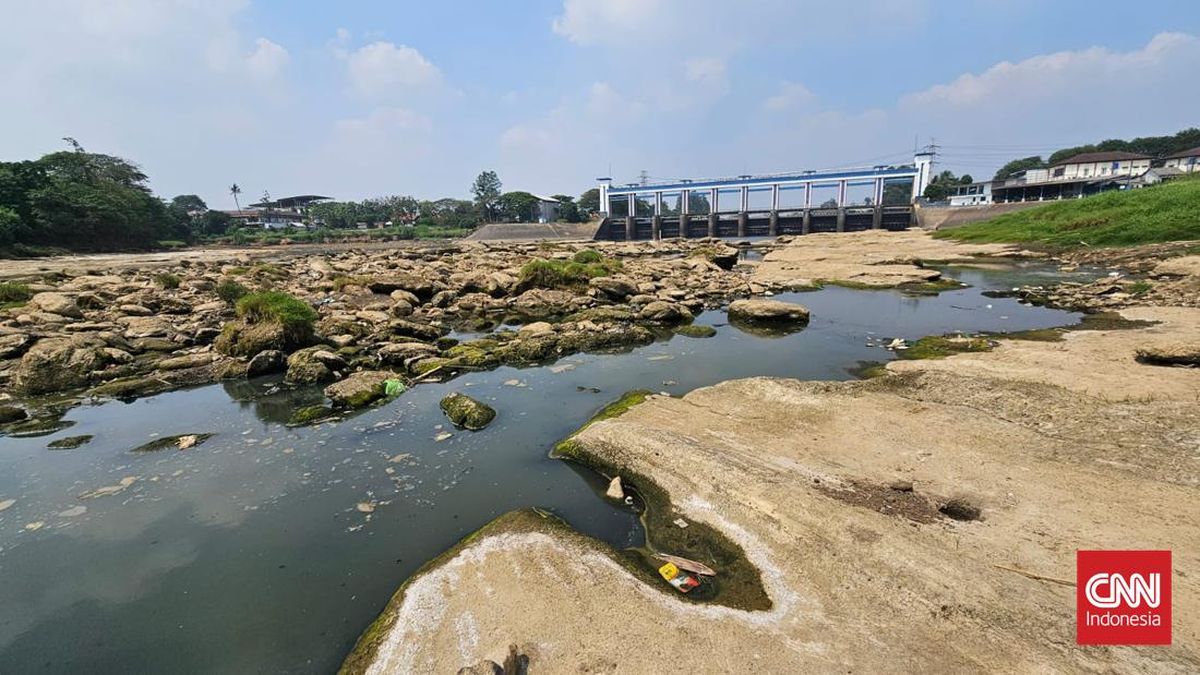
The flow of the Cisadane River has receded over the past month due to the dry season. The receding waters have exposed the rocky riverbed, which residents are now using for fishing and netting. Monitoring by CNNIndonesia.com at the flow after the Pasar Baru Weir, or Pintu Air 10, in Tangerang City, Banten, on Thursday (16/7), showed the Cisadane River’s water level has dropped due to a lack of supply from the upstream area in Bogor, West Java, and low rainfall during the dry season. Several residents have taken advantage of the conditions to go down to the riverbed. Activities usually carried out from the riverbanks can now be done directly on the dried-up riverbed. A fisherman, Gunawan, said he had been fishing since 8 a.m. WIB. According to him, the low water conditions have lasted about a month, coinciding with the lack of rain and the Pasar Baru Weir gates rarely being opened. ‘It’s been about a month since the rain stopped. The weir gates are also rarely opened, so the water is low. I usually fish from above, but now I can go down directly to the riverbed. There are still plenty of fish,’ said Gunawan. The water level of the Cisadane River has receded by about 12 percent from the normal elevation of 12.45 metres. On Thursday afternoon, the water level in front of the weir was recorded at 11.95 metres, while the water level behind the weir was only 5.50 metres. All 10 weir gates are currently closed to maintain the supply of raw water used for drinking water treatment and industrial needs. However, this policy could potentially affect the water supply for agricultural land downstream of the Cisadane River. The receding Cisadane River has also triggered a water crisis in Kranggan Village, Setu District, South Tangerang City. In Kampung Koceak, RW 02, several residents’ wells have been drying up for about a month. The conditions have forced some residents to wash their clothes in the Cisadane River, while daily clean water needs are met through water tanker assistance. ‘There is no water at all. It’s been a month,’ said Ekawati, a local resident, on Wednesday (15/7). Not only Ekawati, but several other residents, including the elderly, were seen queuing with buckets and jerry cans to collect clean water distributed by the South Tangerang City Regional Disaster Management Agency (BPBD). The head of RW 02 in Kranggan Village, Nasrullah, said the clean water crisis is not a new problem. According to him, the area experiences drought almost every year during the dry season. He explained that before the area developed into an urban region, residents never had difficulty obtaining water. However, in recent years, the groundwater level has continued to decline, causing many wells to dry up during the dry season. ‘The worst was in 2023. Almost every day, BPBD sent water to our area,’ he said. Nasrullah hopes the government will not only distribute clean water aid during the dry season but also build a piped network so residents can obtain permanent access to clean water. According to him, proposals for a piped water connection have been submitted several times but have not yet been realised. Setu Sub-district Head Erwin Gemala Putra said that based on temporary data collection, around 35 families are affected by the water crisis, consisting of 15 families in RW 01 and 20 families in RW 02. He explained that Kranggan’s geographical position on higher ground causes groundwater reserves to deplete more quickly during the dry season. Meanwhile, the South Tangerang City BPBD has mapped that 16,485.47 hectares of area are potentially affected by drought during the 2026 dry season. Setu District is the area with the highest level of vulnerability, while six other sub-districts remain in the low-risk category based on drought history and rainfall. The recurring conditions, which happen almost every year, have led residents to hope the government will soon provide a long-term solution. For them, clean water aid is only a temporary measure, while the need for a piped water network is seen as the answer to prevent the same crisis from repeating every dry season.