
Cirebon Port Reimagines Its Maritime Identity
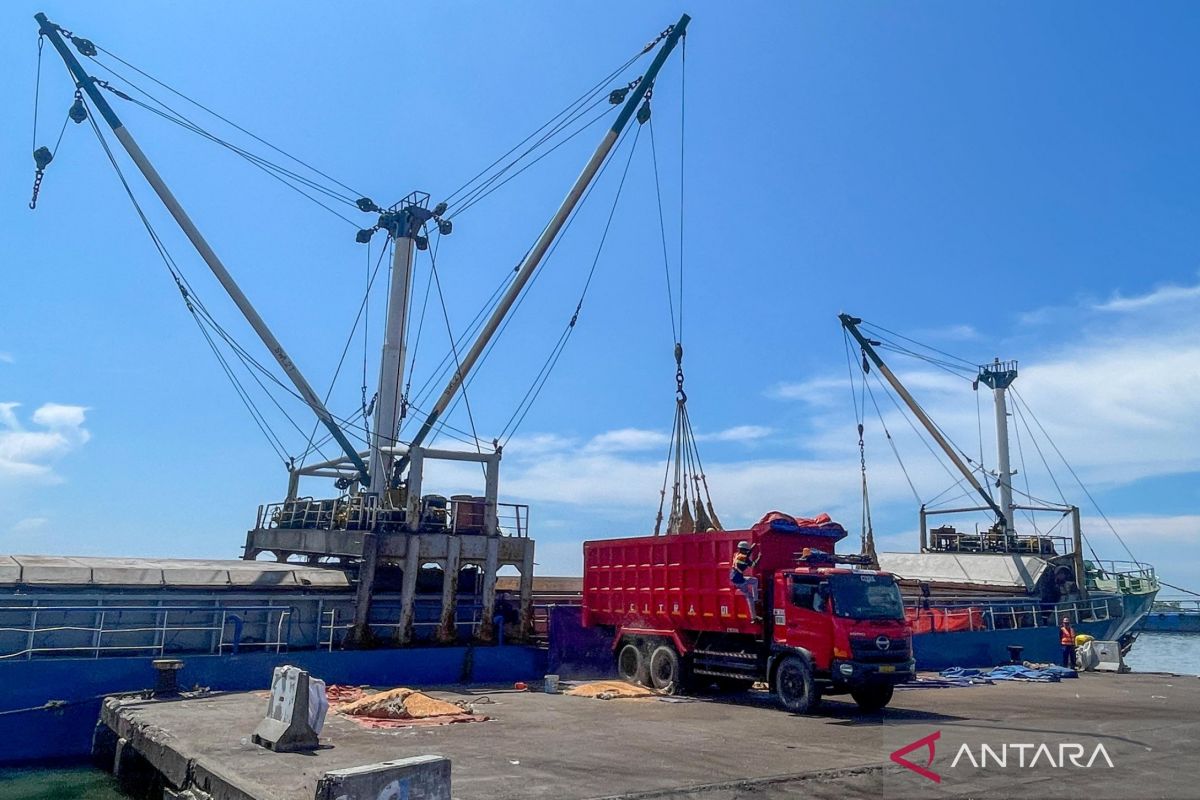
The history of Cirebon Port illustrates how the region has long developed as an open coastal city. No one expected that the old warehouse at Cirebon Port in West Java could be transformed into a visual stage that captivates the youth. The weathered walls, worn by time, are now adorned with holographic visuals displaying vibrant batik motifs, wayang ornaments, and cosmic symbols that shift with the rhythm of light. From a distance, the artwork appears as a living digital altar amidst the port’s historic structures.
The installation is the result of a collaboration between Cirebon artists Made Castra and M Hafiz Maha for the Festival of Media Arts Communities (FKSM), held at Cirebon Port in mid-November 2025. They combined painting, digital visuals, and artificial intelligence (AI) technology in an installation themed Asta Brata—a traditional Nusantara teaching about natural elements as leadership exemplars. These elements include the sun providing life, water bringing calm, fire symbolising firmness, and wind representing the ability to reach all layers without discrimination.
Made Castra stated that the philosophical meanings passed down by ancestors are being reinterpreted through contemporary visual language. However, he noted that these ideas have slowly fallen asleep in today’s fast-paced modern life, hence the artwork serves as a space for reflection. Visitors are invited to step into the moving visuals, as if being “diruwat” (purified) from the noise of the current era.
“I want to encourage leaders to reflect on these natural traits. Everyone is a leader, including myself and even the president,” the artist told ANTARA.
For Ahmad Mahendra, Director General of Cultural Development, Utilisation, and Empowerment at the Ministry of Culture, the atmosphere at Cirebon Port during the event reminded him of art spaces at the Venice Biennale in Italy.
The choice of Cirebon as the FKSM venue was not arbitrary. The port city has a long history of civilisation, with the presence of royal courts, trade routes, and the port itself marking it as a longstanding meeting point for diverse cultures. FKSM was designed as a dialogue space bringing together various elements: artists collaborating, traditions merging with technology, and local communities given space to build their own stages.
Hikayat