
Cirebon on High Alert for Landfill Fires as El Niño Peak Approaches
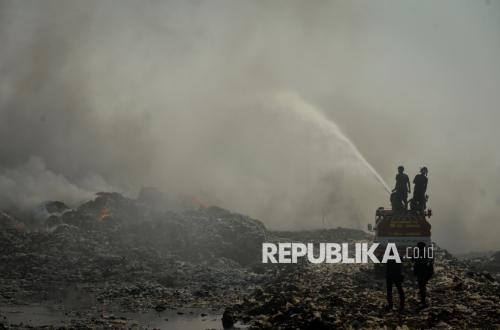
The Cirebon Regency Government is increasing its vigilance against the potential for extreme drought caused by the El Niño phenomenon. The Environmental Agency (DLH) is focusing on preventative measures to reduce the risk of land and landfill (TPA) fires.
Head of the Cirebon Regency DLH, Dede Sudiono, stated that based on coordination with the Meteorology, Climatology and Geophysics Agency (BMKG) and the Regional Disaster Management Agency (BPBD), the most vulnerable period is estimated to occur between August and September 2026. “Our main focus currently is anticipating a spike in hotspots, land fires, and potential fires in landfill areas,” Dede said on Friday (10/7/2026).
Dede explained that landfills are particularly vulnerable to fires when air temperatures rise. This condition is triggered by piles of waste that produce methane gas, a flammable gas when exposed to high temperatures. According to Dede, when the air temperature ranges from 33 to 35 degrees Celsius, the temperature inside the waste pile can increase to around 50 degrees Celsius, potentially triggering spontaneous combustion.
As a preventative measure, the DLH is implementing a semi-sanitary landfill method by covering waste piles with fill soil. This approach helps to level the waste piles while reducing pockets of trapped methane gas. The DLH has also deployed tanker trucks to spray the landfill area at least twice a day to keep the temperature of the waste piles down. However, spraying is carried out in a measured manner to avoid producing excessive leachate that could pollute the environment.
“We are also actively monitoring hotspots with relevant agencies and strictly prohibiting the burning of waste or land,” Dede said. In addition to strengthening security at the landfill, the DLH is urging the public to reduce waste accumulation by sorting waste at home. “We appeal to residents to separate organic and inorganic waste. Organic waste should be diverted for maggot feed or processed into compost. This step is important so that waste does not pile up in the TPA and trigger the formation of methane gas,” Dede explained.
The DLH is also coordinating with the Social Service and Health Service to collect data on scavengers at the landfill. This data collection aims to provide them with occupational safety education, access to safer jobs, and BPJS Health protection. Dede added that despite the increased threat of fire during the dry season, the air quality around the landfill tends to be better compared to the rainy season. “Regarding air quality, the intensity of odour and pollution around the TPA is actually monitored to be lower during the dry season. This is influenced by the high rate of evaporation due to maximum sunlight,” Dede said.