
Cirebon BPBD intensifies clean water distribution to drought-affected areas
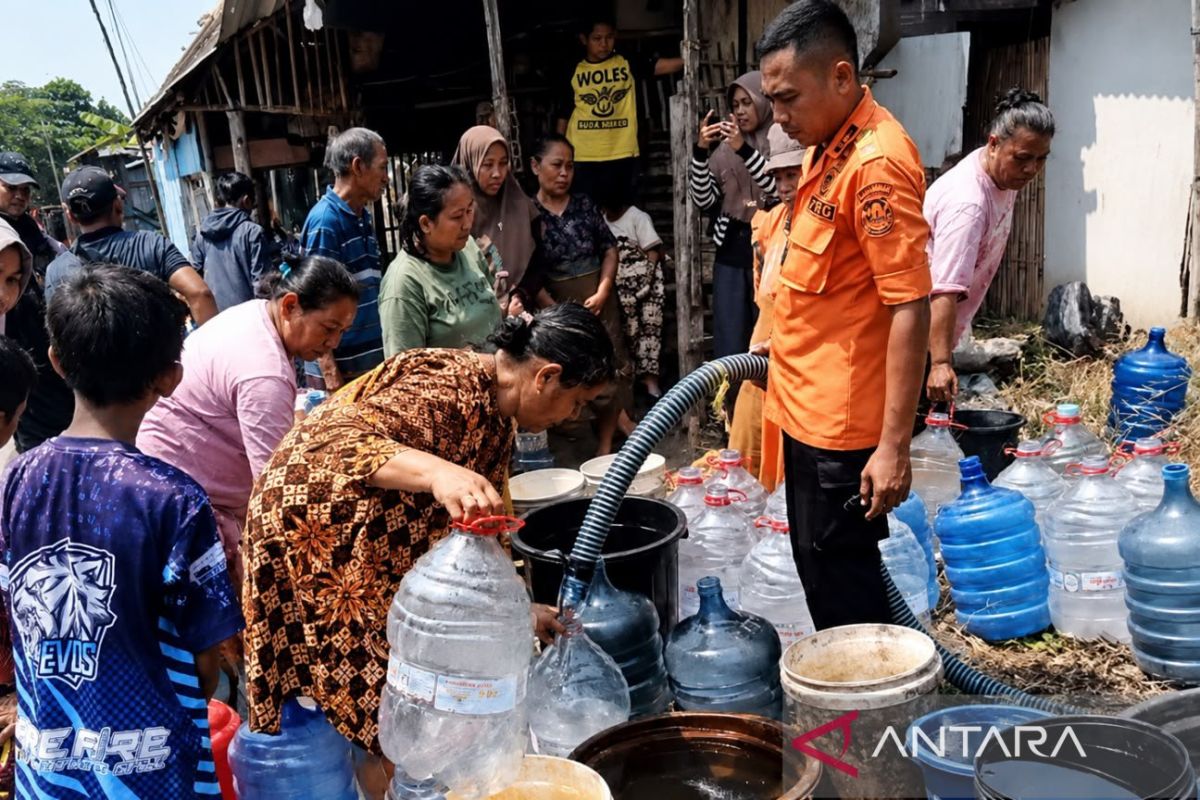
The Cirebon Regency Disaster Mitigation Agency (BPBD) in West Java is intensifying the distribution of clean water aid to a number of points in several villages that have begun to be affected by drought due to the dry season.
Acting Head of the Cirebon Regency BPBD Samsul Huda in Cirebon on Friday said the distribution was carried out as a quick measure to meet the basic needs of communities experiencing limited water sources.
He said around 24,000 litres of clean water had been distributed to the public, transported using a tanker fleet with a capacity of around 4,000 litres.
“Clean water aid has been distributed to Sibubut Village, Gegesik District, Slangit Village, Klangenan District, Sampiran Village, Talun District, and Panongan Lor Village, Sedong District,” he said.
Samsul said the distribution would be adjusted according to reports and the condition of areas experiencing water shortages during the dry season.
Based on mapping and evaluation of incidents over the past three years, the Cirebon BPBD has identified five sub-districts with high potential to experience a clean water crisis.
According to him, water distribution via tanker fleet is a rapid response, so it needs to be followed by the provision of alternative water sources to anticipate a longer dry season.
His office is coordinating with the central government to propose the construction of 10 borehole points in areas requiring sustainable water sources.
“Boreholes are considered an effective solution because they can provide a more sustainable water source compared to relying solely on tanker distribution,” he said.
In addition to boreholes, he said, the local government is preparing the normalisation of embung (small reservoirs) to increase water storage capacity as a reserve for facing the dry season.
Furthermore, his office is proposing the addition of water tanker fleets so that distribution can be expanded and accelerated if drought-affected areas increase.
Samsul said the potential impact of drought based on mapping could reach around 563,000 people, so the readiness of water sources and distribution facilities needs to be continuously strengthened.
“Drought handling is not only carried out when residents have begun to have difficulty obtaining water, but is also prepared well before the dry season returns,” he said.