
Circular-Economy Waste Management Expands Across Regions, Providing Communities with a Source of Income
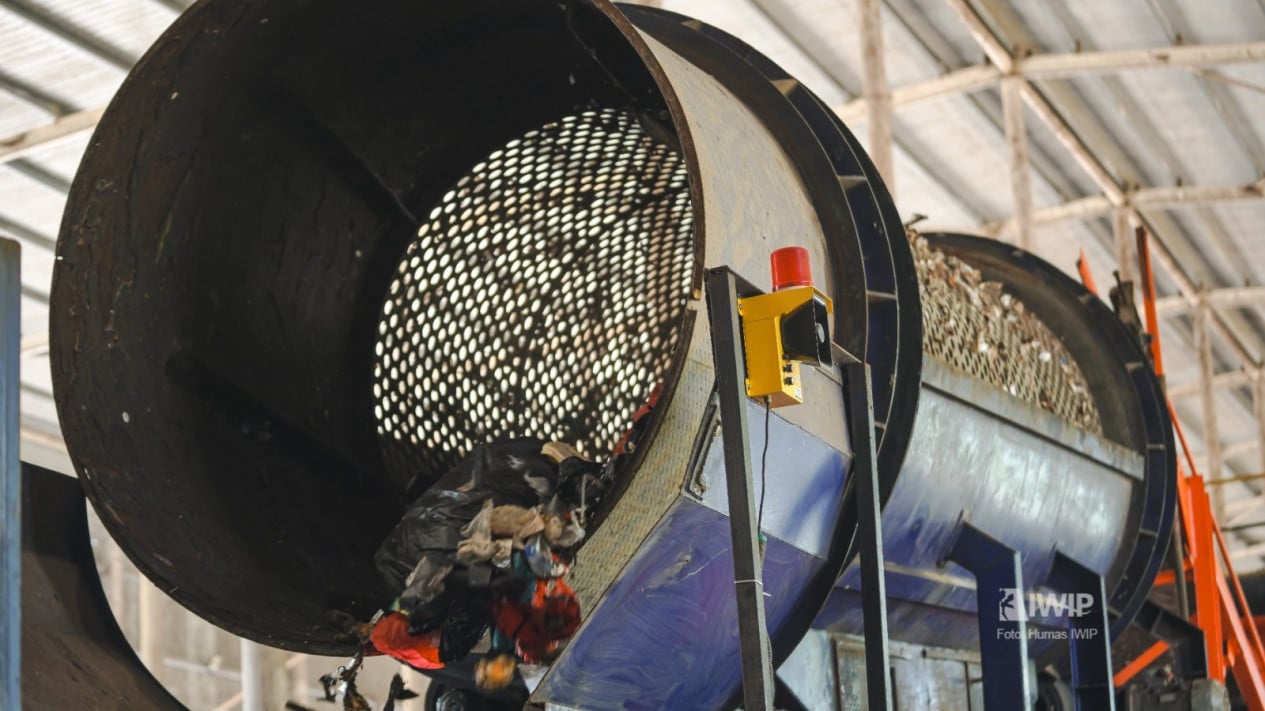
Circular-economy waste-management initiatives are being expanded by various parties. One example is the opening of a Waste Station at Purwokerto town square in Banyumas Regency, Central Java, on Thursday, 5 November 2026.
The facility, established through a partnership between BTN, the Banyumas Regency Government and Rekosistem, enables residents to turn inorganic waste into economic value that can be credited to their BTN accounts. The initiative demonstrates how waste, once regarded as a burden, can be managed as a new source of value for communities and the environment.
The urgency of this initiative is reflected in data from the National Waste Management Information System (SIPSN) for 2024. Household waste accounts for around 50.8 per cent of Indonesia’s total waste generation of 33.79 million tonnes. This sizeable contribution highlights the importance of managing waste in residential areas, rather than relying solely on final disposal sites.
If household waste is not sorted and managed at home, the burden on final disposal sites will continue to grow. The potential economic value of reusable materials will also simply be lost.
Circular-economy waste management offers a different way of looking at waste. Rather than being seen as the end of consumption, waste becomes the start of a new cycle. Sorted plastic bottles, cardboard, paper, cans, glass and electronic waste can be collected, weighed, converted into economic value and then channelled back to the recycling industry.
This approach not only reduces the volume of waste; it also allows materials to become useful raw inputs again, while generating economic value for the people who sort them.
The success of this model requires strong cooperation between local government and higher-education institutions, as demonstrated in Banyumas, Purwokerto.
Local government provides policies, facilities and institutional support. Businesses and banks connect waste management with financial services and incentives, while universities contribute through education, research and innovation.
Such collaboration is key to building a sustainable waste-management system, because no single party can solve the waste problem alone.
Source: jawawa.id (https://jawawa.id/newsitem/circular-economy-waste-management-expands-across-regions-providing-communities-with-a-source-of-income-1794012642)
Originally published by VIVA.co.id (https://www.viva.co.id/bisnis/1941680-jadi-sumber-penghasilan-masyarakat-pengelolaan-sampah-berbasis-ekonomi-sirkular-makin-meluas-di-berbagai-daerah), translated from Indonesian