
Circular Economy Collaboration Manages Retail Waste
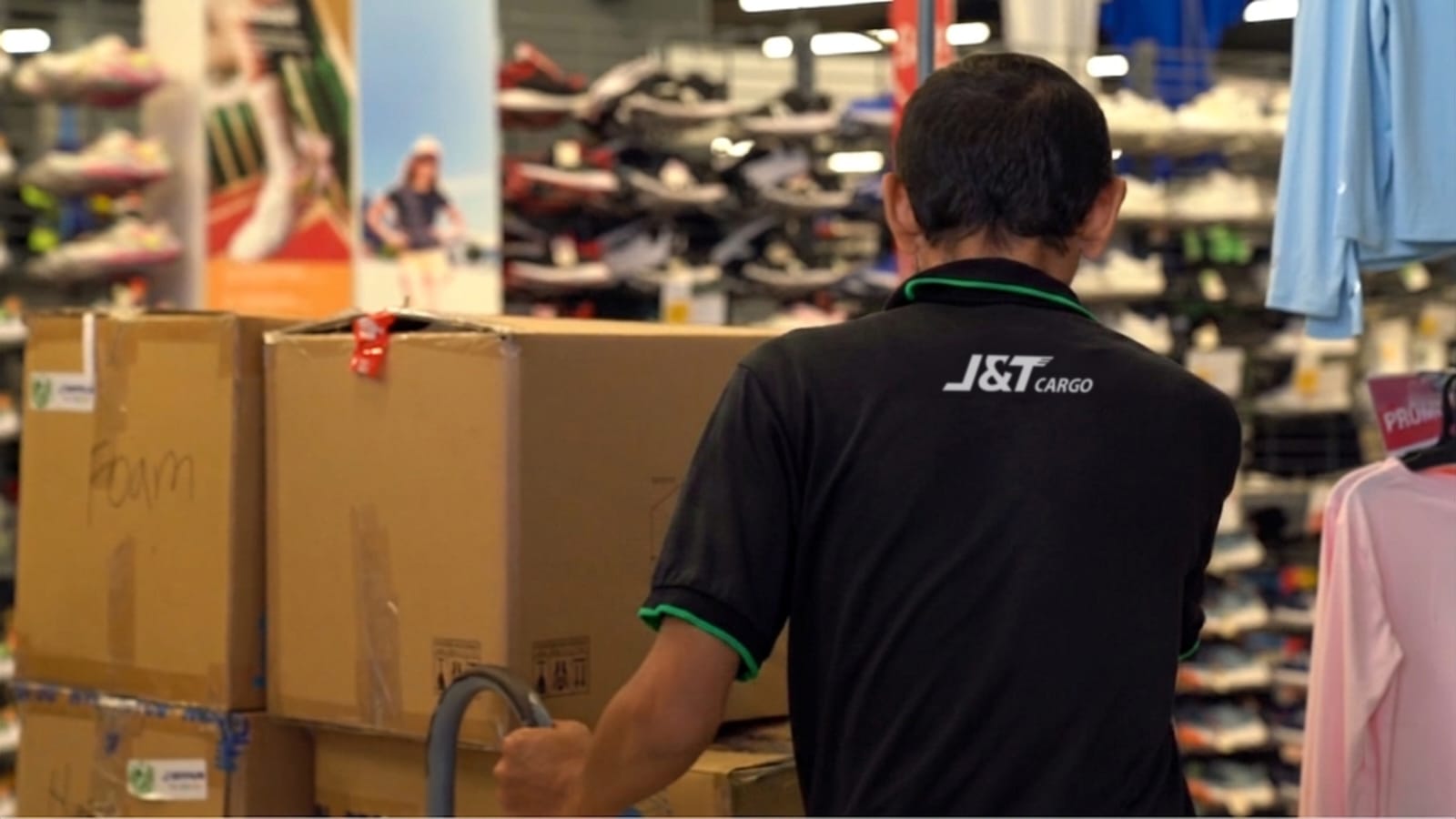
The implementation of a circular economy in retail waste management is being advanced through cross-sector collaboration involving business operators, logistics service providers, and social communities. Under this scheme, retail operational waste such as cardboard, plastics, hangers, and other packaging materials is collected from various participation points and subsequently channelled to a network of community waste banks.
J&T Cargo, together with Decathlon Foundation Indonesia and Kampus Diakoneia Modern (KDM Foundation), a social institution that also collaborates with a network of community waste banks, is running a circular economy-based waste management programme that connects the retail, logistics, and social community sectors within one collaborative ecosystem. The programme focuses on collecting retail operational waste from various participation points in Jakarta, which is then distributed through J&T Cargo’s logistics network to the KDM Foundation for further management through the community waste bank mechanism.
Fanny, representing Brand & Corporate Culture at J&T Cargo Indonesia, stated that in the programme, the company acts as a logistics partner supporting the scheduled and documented collection and distribution of waste, from collection at retail operational points to delivery to the KDM Foundation. “The waste collected generally consists of retail operational materials such as cardboard, plastics, hangers, and other packaging materials that have economic value within the waste bank system,” she said in an official statement.
She explained that during the period from March to May 2026, the programme, which is being promoted by the DKI Jakarta government, recorded total waste management of approximately 8.2 tonnes, based on operational data from field collection and delivery. “This volume demonstrates the consistency of the programme’s implementation, which runs periodically and in a structured manner,” she said.
Regarding the environment, Farida stated that based on internal estimates and standard emission factors for waste management scenarios compared to final disposal, the programme is estimated to have resulted in around 40 tonnes of CO2e in potentially avoided emissions during the period. “This figure is an estimate of the indirect impact of diverting waste to the waste bank system and is not the result of direct field measurement,” she noted.
Meanwhile, concerning the social aspect, Fanny explained that the collaborative programme provides social contributions through the waste bank mechanism operated by the KDM Foundation. In this system, the collected waste is managed by community waste bank partners, and the proceeds from its management are used to support various social activities. “This includes education for vulnerable children, meeting basic needs, and empowerment programmes within the KDM Foundation environment,” she added.
The collaboration between Decathlon Foundation, J&T Cargo, and the KDM Foundation reflects a cross-sector effort to support waste bank-based waste management. This cooperation also demonstrates the role of the logistics system in supporting the chain of collection and distribution of waste that can be reprocessed within a circular economy scheme.
Fanny said that the company’s involvement in the programme has provided an understanding that the logistics system is not only related to the delivery of goods but can also support various social and environmental initiatives. According to her, the process of distributing waste which is then managed through waste banks, and subsequently supports the children under the care of the KDM Foundation, has become an important reflection for the company to continue delivering added value from every operational process it undertakes.
Through this initiative, J&T Cargo affirmed its commitment to continuously developing logistics practices that focus not only on distribution but also on creating value and benefits for the community. “We will continue to present various initiatives that have a positive impact on society through our CSR programme, Satu Langkah Satu Kebaikan,” she concluded.