
Cipinang Prison Chief Says Razman's Cell Placement Complies with Law and SOP
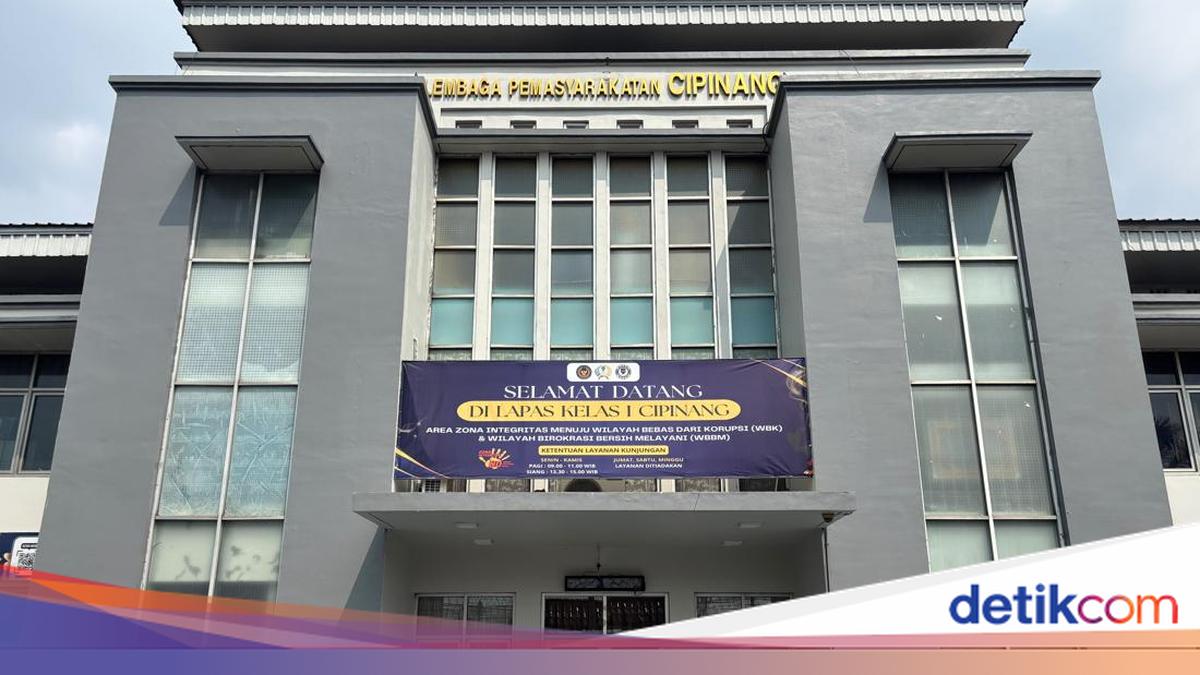
The Head of Cipinang Class I Prison has explained the procedure for placing the inmate Razman Nasution, who has been serving his sentence at the facility since Thursday, 25 June 2026. As with the reception and placement of other inmates, the prison refers to two legal instruments: Law No. 22 of 2022 on Corrections and the Decree of the Director General of Corrections Number PAS-170.PK.01.01.02 of 2015 concerning Standards for Registration and Classification of Convicts and Detainees. The Director General’s decree contains technical rules stipulating that newly admitted inmates must undergo stages including administrative registration, health screening, risk and needs assessment, and classification as the basis for determining placement. In the context of Razman Nasution, the prison highlighted his physical and health conditions. Razman weighs 120 kg, and based on a diagnosis by a specialist doctor at Gatot Soebroto Army Hospital on 19 January 2026, he suffers from a blocked blood vessel. The prison medical team also found symptoms of a mild stroke and an anxiety disorder. These physical and health factors formed the basis for Cipinang Prison to place him on the ground floor of block E. Razman currently shares a cell with two other inmates who also have health problems. "Officers placed him in a location that facilitates medical monitoring and evacuation if needed at any time. This placement is part of health services and protection for inmates as mandated by the Corrections Law and the Director General’s decree," explained Cipinang Class I Prison Chief Syarpani in an official statement on Sunday. Under the Corrections Law, the right to health services is also enshrined in Article 9 point (D), which states that inmates are entitled to health services, proper food, and physical and spiritual care. "This right is absolute and must be fulfilled by the state through correctional officers," he added. The law also prohibits discriminatory attitudes in corrections. Article 3 point C affirms the principle of non-discrimination towards inmates. "There is a principle of non-discrimination and humanity that guides all prisons. This means the fulfilment of health rights must be equal and cannot be differentiated based on the type of crime or background of the convict. Illness actually becomes a priority of attention," Syarpani stressed. Furthermore, the inmate assessment process for placement, according to Article 36 paragraph (4) of Law No. 22 of 2022, stipulates that inmates are grouped not only by age and gender but also by risk assessment. "This includes the physical and psychological health conditions of the convict. The health assessment results will determine whether a sick convict needs to be placed in a special block, isolation room, or health chamber," Syarpani stated. "We also have inmates whose health conditions require them to undergo dialysis twice a week. We are obliged to facilitate their treatment by providing escorted transport to the hospital, naturally under supervision according to SOP," he added. Syarpani noted that the direction of rehabilitation in corrections is not torture or revenge. "It has transformed into being rehabilitative and restorative," he said. Syarpani stated that inmates are also human beings and part of the Indonesian people. An inmate is someone undergoing rehabilitation by the state, through the prison, to be ready to return to society as a better version of themselves. "If the prison already knows an inmate has health problems, for example weighing 120 kg and other health issues, but still places them on an upper floor where daily activities in the prison could pose a life-threatening risk to the sick inmate. If something undesirable happens to that inmate, the evacuation process would certainly be difficult if they were placed on an upper floor," Syarpani explained. Syarpani said that on many occasions, the Minister of Immigration and Corrections Agus Andrianto has instructed the Directorate General of Corrections and its staff to focus on making improvements in prisons, especially regarding services and the fulfilment of inmates’ rights. ‘Humanising humans’ is Minister Agus’s message to correctional staff, whose main duties and functions are to rehabilitate convicts so they become better and more useful individuals upon leaving prison. "Based on the Minister’s direction, his spirit to reform corrections to be more service-oriented, he conveyed the message to ‘humanise humans’, so that every inmate leaving prison can be accepted back into society and become a better, more useful person," Syarpani said. He quoted Minister Agus’s direction that the role of corrections is not to punish, as punishment is the authority of law enforcement officers such as the police, prosecutors, judges, and other law enforcement officials. The role of corrections begins after a person has obtained a legally binding sentence. "Subsequently, the task of corrections is to prepare them to return to society," Syarpani concluded. He said every prison provides health examination services. If the medical team later confirms Razman is in good health, his status as an inmate under special supervision or observation will change to that of a general inmate, and his placement will be adjusted according to his latest health condition. "Every prison, including ours, has a medical team and a doctor to check the health condition of inmates. As long as they require medical supervision, inmates are placed according to the assessment results," he said.