
Cipayung Regional Hospital commits to waste sorting at source
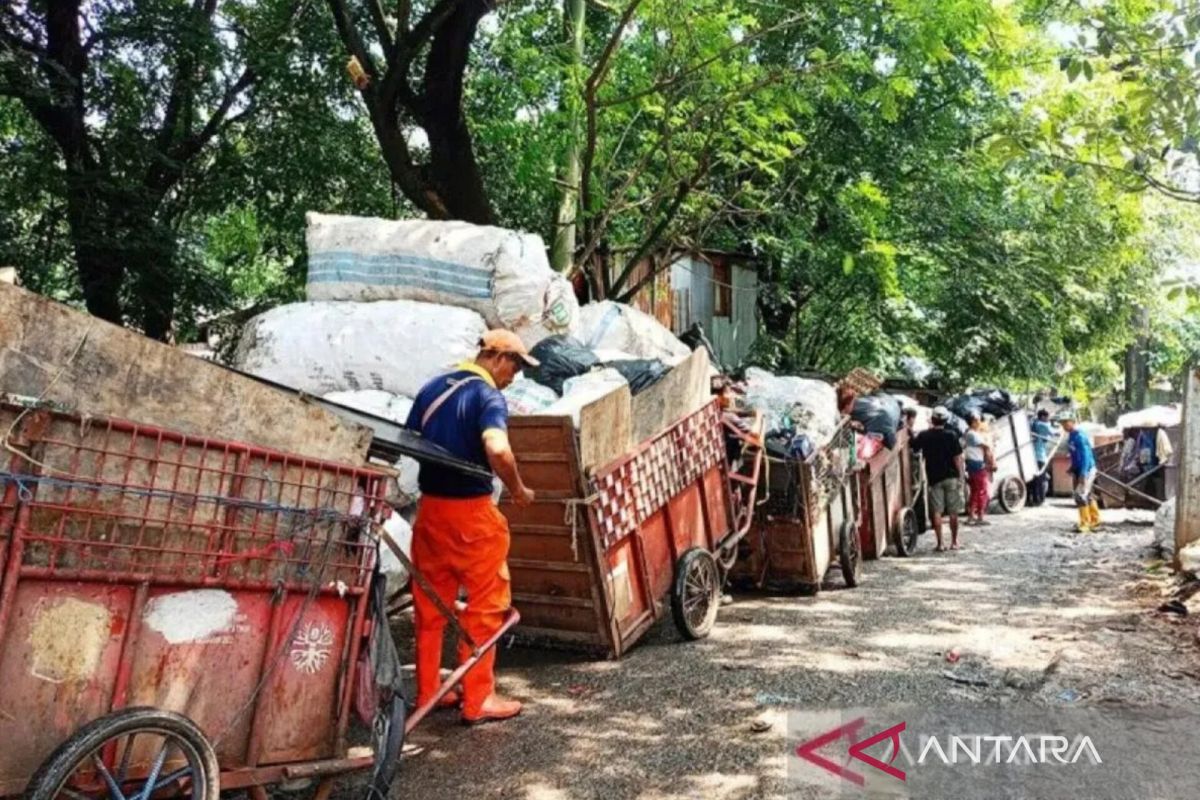
Jakarta (ANTARA) - Cipayung Regional General Hospital (RSUD) in East Jakarta is committed to implementing a waste sorting programme at the source to create a cleaner environment.
“The hospital does not only function as a healthcare service facility, but can also contribute to supporting the waste reduction movement and environmental preservation in Jakarta,” said the Director of RSUD Cipayung, Agustina, in Jakarta on Friday.
This commitment is in line with Jakarta Governor’s Instruction (Ingub) Number 5 of 2026 concerning the Waste Sorting and Processing Movement from the Source.
Agustina mentioned that these efforts began with socialisation conducted by the Jakarta Information Commission (KI) to provide understanding and guidance regarding the implementation of the waste sorting movement at the source.
“The material presented during the socialisation not only increases insight but also serves as motivation for the RSUD Cipayung staff to become more active in implementing a waste sorting culture within the hospital environment,” explained Agustina.
“We are grateful to have had the opportunity to receive direct guidance from the Jakarta Information Commission. This socialisation serves as a reminder that waste management is not just the responsibility of cleaning staff or the government, but a shared responsibility that must begin within our respective work environments,” said Agustina.
She also expressed hope that education regarding waste sorting could be carried out sustainably until it becomes an ingrained culture for both employees and the public visiting RSUD Cipayung.
Meanwhile, the Chairman of the Jakarta Information Commission, Harry Ara Hutabargo, stated that public awareness regarding waste sorting will not grow without education and information that is easily accessible to the public.
Waste issues can no longer be viewed solely as the responsibility of the government, but rather require the involvement of the entire community.
“The waste problem is not just a government problem, but a problem for all of us. What happens today is the result of the habits we practice every day,” said Harry.
He explained that Governor’s Instruction Number 5 of 2026 is a concrete step to address the increasing challenges of waste management in Jakarta.
The volume of waste that continues to increase every day, Harry noted, makes efforts to reduce waste at the source an urgent necessity.
This condition serves as a warning that waste issues could develop into more serious environmental threats if not addressed immediately.
“This could become a time bomb that could trigger larger problems at any time. Therefore, we cannot allow this condition to persist unchecked,” said Harry.
Furthermore, he stated that sorting waste at the source is a simple yet effective step to reduce the burden of downstream waste management. However, changes in public behaviour cannot happen instantly as they require a consistent and continuous educational process.
“Education cannot happen through ‘magic’. We have a socialisation today, and tomorrow everyone is suddenly sorting waste; that is impossible. There must be a process, there must be understanding, and there must be continuous examples provided,” concluded Harry.
Therefore, he invited all public bodies to take an active role in ensuring the success of the waste sorting movement.
“If done consistently, this habit is believed to provide a significant impact on reducing the volume of waste that ends up in landfills,” added Harry.