
Cimahi Deputy Mayor Outlines Tactics to Tackle Regional Fiscal Pressure in Front of the Presidential Chief of Staff
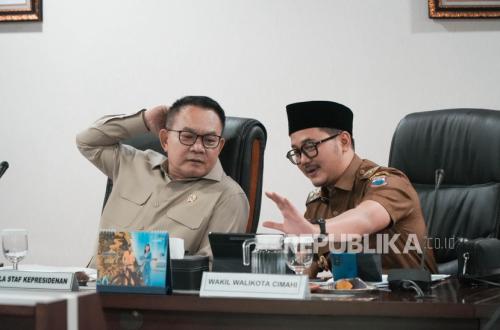
Cimahi Deputy Mayor Adhitia Yudisthira attended a policy discussion forum with Presidential Chief of Staff General (Ret) Dudung Abdurachman on Wednesday, 20 May 2026. Adhitia said that akupunktur policy is the ideal policy to apply in the regions. The scheme is seen as a breakthrough to overcome various development obstacles due to limitations on regional fiscal transfers (TKD), which affect the fiscal capacity of local governments.
“The era of fiscal discipline must not become an obstacle. Instead, we must find more precise, effective, and targeted ways so that national strategic programmes continue to run and development in the regions does not stop,” Adhitia said after the forum.
Adhitia acknowledged that the Cimahi city government is in a phase of fiscal discipline. However, he stressed that this condition should not hinder the region’s support for implementing national strategic programmes and the national development vision conceived by President Prabowo Subianto through the Asta Cita agenda and to complete his mission alongside Cimahi Mayor Ngatiyana.
In the forum he voiced aspirations and various challenges faced by regional governments across Indonesia. According to Adhitia, the KSP can play a strategic role as a policy acupuncturist to identify bottlenecks in regional development and provide targeted policy interventions.
The concept, he said, emphasises a policy approach that is precise and focused on the main problem point. With the right intervention at that point, various obstacles to policy implementation in the regions can be overcome without imposing a large fiscal burden.
“Hopefully the KSP can be a space for solutions to regional issues, so that policy bottlenecks can be resolved with fast, precise, and directly impactful approaches for the people,” Adhitia said.
He noted that the concept aligns with central policy dynamics when Finance Minister Purbaya Yudhi Sadewa promoted a ‘debottlenecking’ programme to untangle impediments in the implementation of policy and national development programmes.
This shared momentum shows a common spirit between the centre and the regions in addressing development obstacles. If at the central level a task force is formed to accelerate policy bottleneck resolution, then at the regional level the policy acupuncture approach should be implemented.
Adhitia hopes this approach can be replicated by other regions in Indonesia so that central-regional synergy grows stronger in realising national development programmes. “Ultimately our goal is the same: to succeed with national strategic programmes while ensuring development in the regions continues and benefits the people,” Adhitia said.