
Cilacap Regency Government: Weather Field School Strengthens Fisheries and Coastal Economy
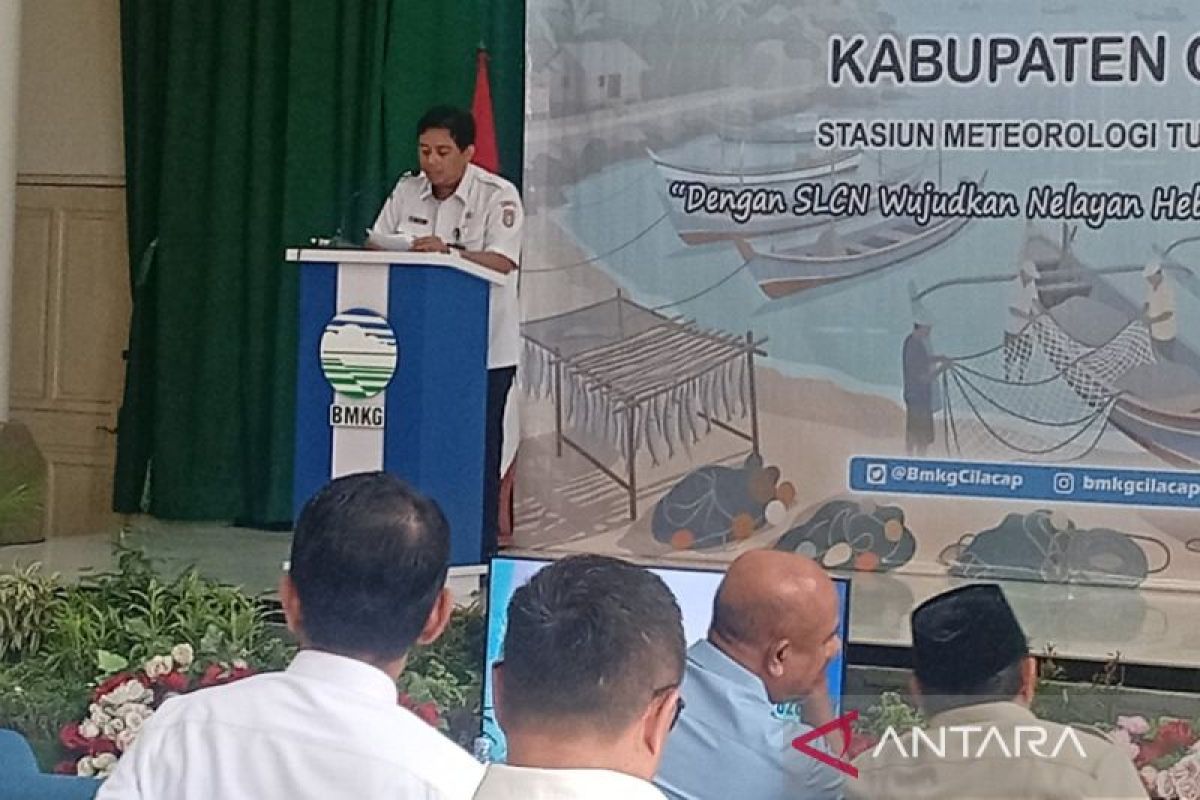
Cilacap, Central Java (ANTARA) - The Regency Government of Cilacap, Central Java, regards the Fisherfolk Weather Field School (SLCN) as a strategic effort to strengthen the fisheries sector and drive the coastal economy through improved use of weather information and fisher safety at sea.
In a written speech read by Ferry Adhi Dharma, Assistant for Economic Affairs and Development at the Cilacap Regional Secretariat, at the opening of the 2026 Cilacap Regency SLCN in Cilacap, Central Java, on Wednesday, Acting Regent of Cilacap Ammy Amalia Fatma Surya expressed appreciation for the activity organised by the Meteorology, Climatology and Geophysics Agency (BMKG).
She said Cilacap Regency possesses great marine and fisheries potential, as its coastal area stretches wide and faces the Indian Ocean directly.
“These conditions make the fisheries sector one of the mainstays of livelihood as well as a driver of the coastal community’s economy,” she said.
According to her, such great potential must be matched by an improvement in fishers’ capacity to understand weather information.
She said strong winds, high waves and extreme weather can occur at any time, making weather information an essential basis for determining when and where to fish.
Through the SLCN, she said, fishers are expected to become better able to make use of information on weather, wind direction, wave height and water conditions, enabling them to go to sea more safely while increasing the productivity of their catch.
“An abundant catch is indeed important. But what matters most is that fishers return home safely and reunite with their families,” she said.
She hoped that the knowledge gained by participants would not stop in the training room, but would be applied in daily activities and shared with other fishers.
According to her, the Cilacap Regency Government will continue to encourage synergy with BMKG and stakeholders to realise a fisheries sector that is productive, safe and sustainable, and capable of improving community welfare.
Speaking after the event, Assistant Ferry Adhi Dharma said the regional government hopes the SLCN can be held at least twice a year, given the length of Cilacap’s coastline and the large number of fishers in the area.
“We hope this activity can take place not just once a year, but twice, or even four times a year if possible. The knowledge gained by participants is expected to be passed on to fellow fishers, thereby boosting catch results and community welfare,” he said.
Responding to this hope, BMKG Secretary-General Guswanto said the SLCN in Cilacap has so far been organised regularly through a partnership between BMKG and Commission V of the House of Representatives (DPR RI).
According to him, BMKG also runs a Climate Field School and an Earthquake Field School, with their organisation adapted to the needs of each region.
“Even so, we remain open to adding field school activities in Cilacap if, at the end of the year, there are remaining budget funds that can be used to support the programme,” said Guswanto.