
Cikini Footpath Crowded by Illegal Parkers, Ojek Riders, and Street Vendors, Pedestrian Rights Compromised
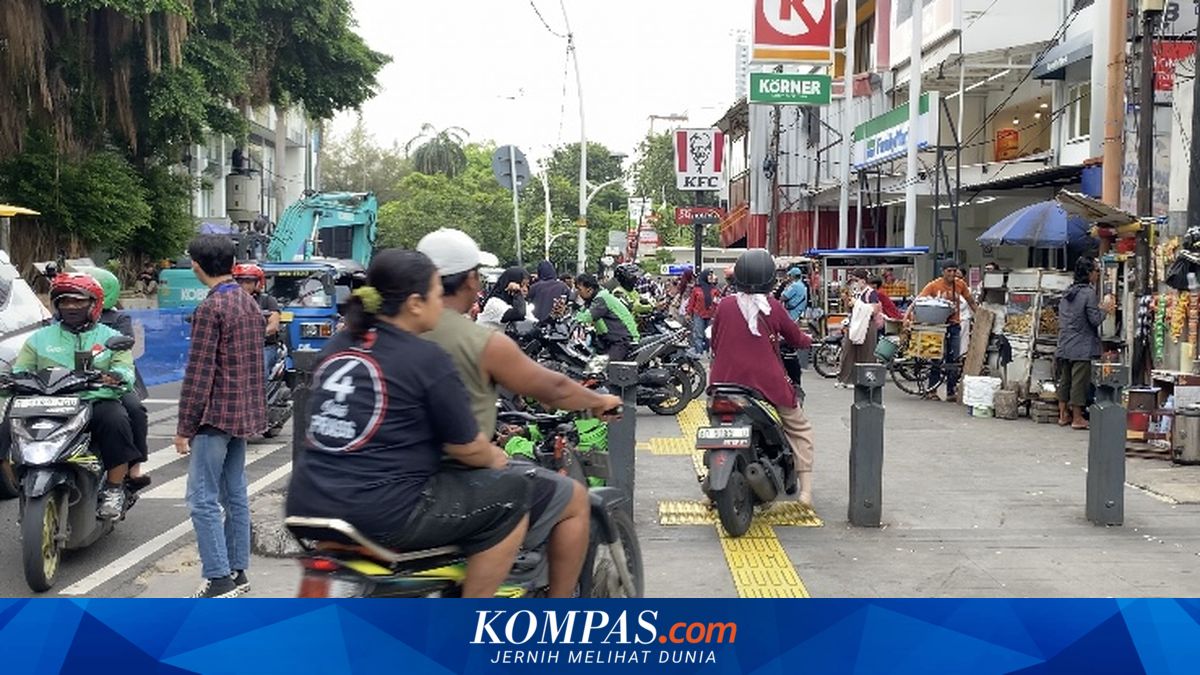
Jakarta, Kompas.com - The footpath along Jalan Pegangsaan Timur, precisely around the access points to Cikini Station in Central Jakarta, is congested with activities that disrupt pedestrian space. Motor vehicles park on and even traverse the pedestrian path, street vendors (PKL), and online motorcycle taxi drivers waiting for passengers, undermining the footpath’s function as a safe space for pedestrians. The head of the Data and Information Centre (Pusdatin) of the DKI Jakarta Public Works Department, Siti Dinarwenny, stressed that the footpath in the stretch around Cikini Station falls under the technical authority of the Dinas Bina Marga. He? She? The article states that Wenny said that technically the footpath is under the Dinas Bina Marga. According to her, the technical responsibility for the quality and physical condition of the footpath is attached to the Public Works Department. Wenny emphasised that the footpath is a public facility whose main function is as a pedestrian corridor. In practice, enforcement against violations of footpath functionality is not carried out by a single agency. “Enforcement of violations of the function of the footpath is carried out through cross-agency coordination, among others with the Department of Transportation and the Satpol PP, in accordance with the duties and powers of each agency,” she said. However, the regional government has a responsibility in ensuring enforcement is consistent, including Jakarta Regulation No. 8 of 2007 on Public Order. According to her, weak supervision of public space utilisation can open opportunities for informal actors to occupy the footpath. Failure to detect and prevent early occupancy of public space can reflect weak supervisory function. Therefore, coordination with Satpol PP and the Department of Transportation needs to be strengthened to curb illegal parking. The area around the station is a priority area in improving pedestrian facility quality because it is a hub for various transportation modes. Footpath planning in the Cikini area was actually undertaken in 2019. “However, in some segments there are temporary adjustments in line with the Jakarta Sewerage Development Project (JSDP) along the road,” said Wenny. Going forward, the Public Works Department states it will continue to improve footpath quality so that it can be used by all segments of society safely and comfortably. This commitment is realised through several steps, including periodic evaluations of footpath function involving the public. As part of evaluation, the Public Works Department has invited persons with disabilities to directly assess the condition of the footpath. “As mandated by Jakarta Regulation No. 4 of 2022. Going forward, this step is expected to become part of a sustainable evaluation practice so that footpaths are truly safe and functional for all users, including persons with disabilities and stroller users,” she explained. In addition to physical development, cross-agency coordination is also an important part of maintaining the function of the footpath. The standards include tactile paving for the visually impaired and ramps for wheelchair users and stroller users, in accordance with SE Pedoman PUPR 07/P/BM/2023 and Permen PU No. 03/PRT/M/2014. Wenny added that these standards have been applied in several key Jakarta corridors and will be expanded gradually, Sudirman–Thamrin and gradually to other areas, she said. Besides physical development, cross-agency coordination is also crucial for maintaining the footpath’s function.