
Cikarang Line Continues to Grow, Electrification Extension to Cikampek Addresses Community Travel Needs
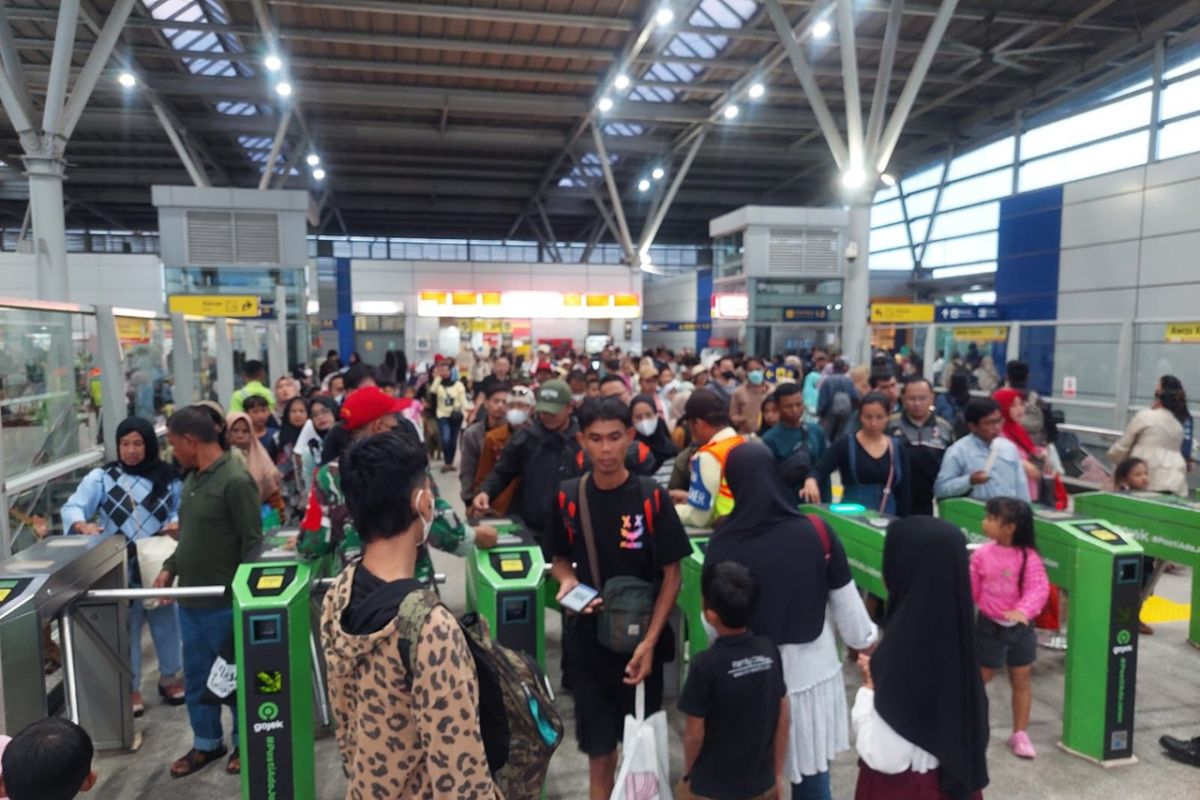
Government policy strengthens the role of railways in opening access to housing and community activities. Jakarta (ANTARA) - Activities in the eastern Jabodetabek area continue to develop. Many people now engage in cross-regional activities, from their residences to workplaces, education, and other activity centres. Daily journeys now extend further, reaching Cikarang, Cikampek, and surrounding areas. PT Kereta Api Indonesia (Persero) has observed this change directly through the increasing services on the Cikarang Line. In 2015, the frequency of trips was recorded at 158 per day. Now in 2025, the number has reached 281 trips per day. This increase reflects the public’s need for transportation with much higher frequency, affordability, and reliability to support daily activities. Passenger volume also continues to grow. In 2022, the number of Cikarang Line KRL users reached 55,660,235 people, increasing to 71,636,443 in 2023, then 84,426,385 in 2024, and reaching 85,936,774 in 2025. KAI Vice President Corporate Communication Anne Purba stated that these figures reflect the public’s need for transportation services that can accommodate more daily activities. “People’s journeys are now more extensive. Many live in one area and work or engage in activities in another. Transportation services need to follow these needs so that journeys remain comfortable and affordable,” said Anne. This strengthening of services is also supported by gradual infrastructure development. Electrification of the route from Tanah Abang to Cikarang currently covers 40.310 km, consisting of Tanah Abang–Manggarai 6.026 km, Manggarai–Jatinegara 2.662 km, Jatinegara–Bekasi 14.802 km, and Bekasi–Cikarang 16.820 km. This development is the result of collaboration between KAI and the Directorate General of Railways (DJKA) of the Ministry of Transportation in increasing trip frequency and service capacity to reach more people. Community movement continues towards Cikampek and Purwakarta. The KA Walahar Ekspres service on the Cikarang–Purwakarta route recorded 2,116,286 users in 2022, then increased to 3,253,936 in 2023, 3,855,463 in 2024, and reached 4,084,928 in 2025. From January to March 2026, the number has reached 1,065,973 users. The same trend is seen in the KA Jatiluhur service serving the Cikarang–Cikampek route. This service is part of daily mobility in the eastern area. The number of users increased from 219,177 in 2022 to 390,918 in 2023, then 513,034 in 2024, and reached 1,197,919 in 2025. In the first quarter of 2026, 346,664 users have been recorded using this service. This increase shows that public travel needs continue to extend to areas further from Cikarang. This condition forms an important basis for further service development, including electrification extension towards Cikampek to better accommodate public needs. Many people rely on rail services for mobility in working, trading, or daily activities. This situation indicates that the eastern Jabodetabek area is growing as a new support zone. According to Anne, the electrification extension will help deliver better and more accessible services for the public. “With increasingly extensive services, people can save travel time, have more schedule options, and remain connected to various activity centres such as industrial areas, trade centres, and daily workplaces,” she explained. This transportation strengthening aligns with government policy direction. President Prabowo Subianto, when inaugurating the new Tanah Abang Station on 4 November 2025, stated that the railway system is an important part of national development to serve the public more broadly. This was reiterated in a limited meeting at Merdeka Palace on 6 April 2026, which discussed accelerating the people’s housing programme. The government encourages the utilisation of strategic land, including areas connected to mass transportation, for housing development. “Well-connected transportation is one of the keys so that people can live in more location options without being far from workplaces or activity centres,” Anne emphasised. The electrification extension to Cikampek is expected to open access to more areas, support public activities, and help form more dispersed housing zones. “KAI sees that this development needs to be continued gradually so that services can continue to follow public needs. Support from various parties will accelerate the arrival of more extensive services reaching more areas. Hopefully, more people can experience easier, more comfortable, and affordable journeys,” Anne concluded.