
Cigarette Factory Workers at Risk of Mass Layoffs, Manpower Ministry Issues Warning
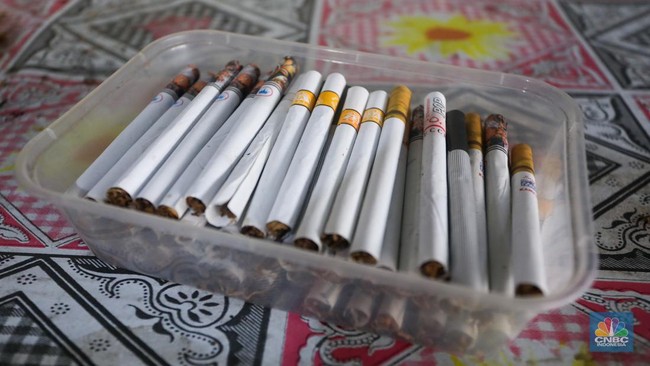
The Ministry of Manpower has reminded policymakers that any regulations targeting the tobacco industry must consider the impact on millions of workers, as the labour-intensive sector provides a livelihood for numerous families from upstream to downstream.
Meinar Kusumo, Head of the Institutional Industrial Relations Team at the Ministry of Manpower, stated that an estimated 5.3 million workers depend on the tobacco industry, with some studies suggesting the figure could be even higher. The supply chain involves farmers, factory workers, hand-rollers, distribution, and the retail sector.
“The tobacco industry is one of the labour-intensive sectors that makes a strategic contribution to employment. From upstream to downstream, we estimate it involves 5.3 million people. Some studies even mention figures of six to nine million. This is not a small number and is a serious concern for the Ministry of Manpower,” Meinar said during a tobacco industry discussion on Friday (26/6/2026).
The ministry also highlighted the characteristics of workers in the sector, who are predominantly women with relatively low levels of education. This group is considered more vulnerable to long-term unemployment if laid off, due to a mismatch between their skills and the needs of other industries.
“If a worker is laid off, the impact is not just on one person. An entire family is affected. It can then lead to problems in children’s education, health, and even stunting. This is an inseparable cycle,” she explained.
According to a study presented by the ministry, any decline in company revenue due to pressure on the industry could result in massive job losses. Consequently, the government is preparing several mitigation measures, including reskilling and upskilling programmes, as well as utilising tobacco excise revenue-sharing funds to improve worker competency.
Meinar added that laid-off workers can also receive protection through the Job Loss Insurance (JKP) programme, provided they are registered as participants of BPJS Ketenagakerjaan. However, this protection does not yet fully cover informal workers, who still make up a significant portion of the tobacco sector.
“Our recommendation is not to impose stricter regulations before alternatives or mitigation strategies are in place. Controls can still be implemented, but they must ensure the sustainability of the industry and job opportunities, accompanied by well-planned mitigation strategies,” Meinar said.