
Cibinong Prison and the Psychology of Privilege
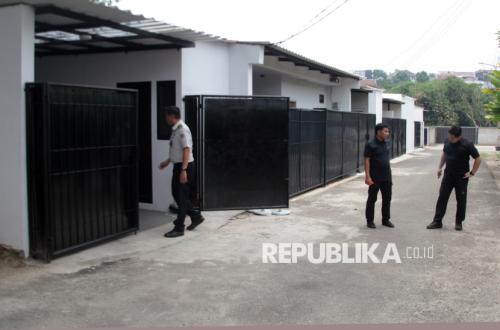
Usually, when we speak of prisons, the message conveyed is one of certain boundaries: certain actions are prohibited, consequences must be endured, and responsibilities must be restored. However, that message loses its power when an individual learns within those walls that such boundaries can be relaxed through status, proximity, or money.
This is where the controversy regarding luxury facilities at the Cibinong Class IIA Prison needs to be read from a psychological perspective. The issue transcends the mere presence of sofas, televisions, or refrigerators. What is at stake is the experience of justice and the moral lessons received by inmates in their daily lives.
In a press release on 24 September 2026, the Indonesian Ombudsman reported allegations of luxury cluster-like housing used by inmates following an inspection the previous day. Meanwhile, as reported by Republika on 28 September, the Directorate General of Corrections (Ditjenpas) provided a preliminary explanation stating that the building is an official residence or staff quarters, with several aspects still under investigation. This discrepancy in statements must be resolved through an open investigation. Psychological analysis cannot replace the proof of who used which facility and under what authority they used it.
The aforementioned polemic raises a fundamental question: how can rehabilitation be trusted if the environment where rehabilitation takes place is alleged to showcase preferential treatment?
In learning psychology, behaviour is generally formed by the consequences that follow. Special treatment obtained through illegitimate means has the potential to act as a reinforcer for behaviours that seek shortcuts. An individual may learn that the ability to influence officers is more profitable than the willingness to follow rules. If this pattern is allowed to persist, correctional institutions risk re-teaching the very mindsets that should be corrected.
Therefore, special facilities cannot be judged solely by the price of the items. What is more decisive is how they are obtained, who can access them, and the message they convey. Healthcare services provided according to need are certainly different from comforts provided due to proximity. Fair treatment allows for differences based on justifiable needs.
The next perspective is procedural justice. Research on prison life shows a link between the perception of fair processes and inmates’ assessment of institutional legitimacy. People observe how decisions are made: whether the reasons are clear, whether officers are consistent, and whether complaints are heard.
In the context of Cibinong, this theory helps us understand the risks, without assuming the psychological state of every inmate is known. If inmates see that rules are applied strictly to some but flexibly to others, calls for discipline may sound like unilateral demands. Consequently, compliance may only last as long as supervision is present, while respect for the rules weakens.
In truth, rehabilitation requires more than orderly behaviour in front of officers. What is expected is the development of self-control, the consideration of the consequences of actions, and respect for the rights of others. Such goals are difficult to instil through an environment that provides contradictory examples.
Regarding officers, the concept of moral disengagement developed by Albert Bandura is also relevant as an analytical framework. An individual can alleviate guilt by justifying actions, euphemising terms, or shifting responsibility to others.
Within an organisation, phrases such as “just helping” or “it has become a habit
Source: jawawa.id (https://jawawa.id/newsitem/cibinong-prison-and-the-psychology-of-privilege-1790747781)
Originally published by Republika (https://analisis.republika.co.id/berita/tm5w69393/lapas-cibinong-dan-psikologi-keistimewaan), translated from Indonesian