
Cianjur Disaster Management Agency Records 5,711 People Affected by Drought Across 20 Districts
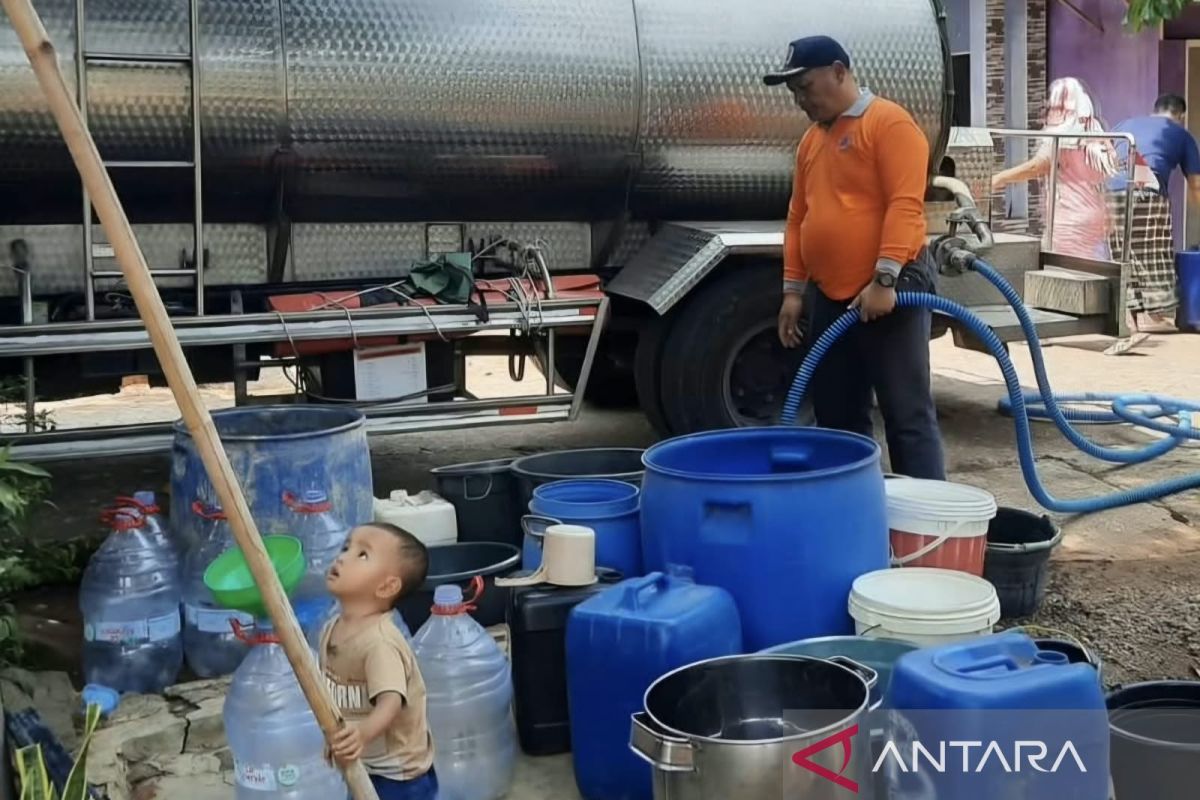
The Cianjur Regional Disaster Management Agency (BPBD) in West Java has recorded 5,711 individuals affected by drought due to a prolonged dry season spanning 20 districts, prompting various relief efforts including water tanker distributions.
Samudra Wira Purnama, Head of the Emergency and Logistics Division of BPBD Cianjur, stated on Saturday that the extended dry season affecting most parts of Cianjur has made it difficult for residents to obtain clean water as natural springs have dried up.
River water levels, which are typically used for washing and bathing, have continuously decreased, forcing residents to rely on clean water assistance delivered daily by water tankers involving various stakeholders.
“We are coordinating with Perumdam Cianjur, the Cianjur Police, the Cianjur Public Works Department (PUTR), and the Indonesian Red Cross (PMI) to distribute clean water assistance to dozens of affected districts that are accessible by water tankers,” he said.
On average, distributions consist of 10,000 to 20,000 litres of clean water to meet the needs of thousands of people, covering areas from northern to southern Cianjur, including the Haurwangi, Ciranjang, Sukalu, Cibeber, and Cibinong districts.
Data shows that approximately 56 villages across 20 districts are experiencing difficulties accessing clean water in areas unreachable by tankers; in these locations, efforts are being made to construct boreholes and provide water tanks and piping systems.
The primary causes of the drought in Cianjur during this long dry season include various factors such as deforestation, climate change, and sub-optimal water management.
“We urge the community to face this drought together by conserving water usage and reporting any clean water crises in their residential areas so that we can provide immediate assistance,” he added.
To anticipate a wider impact, the agency has implemented various mitigation and handling measures, such as providing clean water through water tanks in areas difficult to reach by tankers.
“In areas that are hard to access, we distribute clean water through piping systems into tanks with a 5,000-litre capacity, so that residents no longer have to walk long distances to obtain clean water,” he said.