
Ciangir Prison Involves Local Community in Managing Rice Fields with Inmates
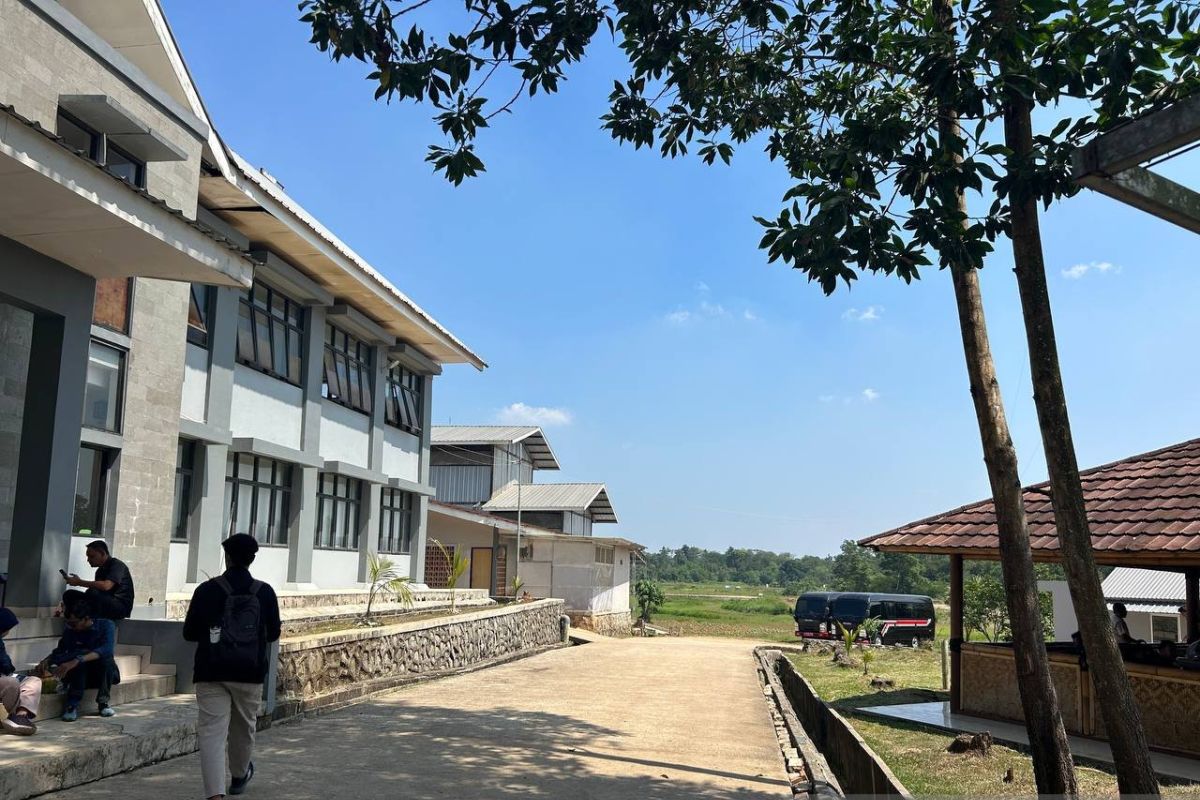
Jakarta (ANTARA) - The Ciangir Class IIB Open Prison (Lapas Terbuka) in Banten is involving the local community in managing eight hectares of rice fields together with correctional inmates (WBP).
Head of Ciangir Open Prison Soesanto Poedji Djatmiko said 40 local residents are taking part alongside 15 inmates in a self-reliance development programme focused on food security.
“Here we involve 40 residents. They work the rice fields together with the inmates,” said Tanto, as Soesanto is affectionately known, when met at Ciangir Prison in Banten on Thursday.
Tanto said the rice fields at Ciangir Prison have been managed over the past two years. A variety of rice types are planted, depending on the season and residents’ preferences, sometimes IR varieties and other types.
He explained that each planting season produces 10 tonnes of unhusked rice at harvest. As the rice can be planted twice a year, annual production reaches 20 tonnes of unhusked rice.
“The residents involved are not paid a wage; we use a profit-sharing system. The harvest is divided equally between the prison and the residents,” said Tanto.
The rice produced by the inmates is used not only to meet the prison’s food supplies but is also sold to a number of markets in Banten and Jakarta.
From the sale of the rice, he said, the inmates receive a premium (income) which is saved as capital for when they are released. Meanwhile, the community’s income comes in the form of harvested rice.
“So the inmates mingle with the residents in the fields. So far there have been no problems; the residents accept them and the inmates can adapt,” he said.
Tanto said the total number of inmates at Ciangir Open Prison is currently 50, and will increase by 20 on Friday (10 July) to take part in the self-reliance development programme, bringing the total to 70.
According to him, inmates placed at Ciangir Open Prison have undergone strict assessment by the Corrections Office (Bapas) to join the correctional self-reliance development programme.
On average, those placed at Ciangir Open Prison have served half of their sentences at their original prisons. After being assessed with no bad records and demonstrating good behaviour, their status is downgraded to low-risk inmates, and they are placed at Ciangir Open Prison to join the food security self-reliance development programme.
“This self-reliance development programme prepares the inmates to return to society,” said Tanto.
In addition to the rice fields, vegetable and fruit cultivation is also being developed, along with laying hens, free-range chickens, and sheep and cattle farming.
According to him, inmates at Ciangir Open Prison are trained in self-reliance through the food security programme. Beyond learning agriculture, they also learn to adapt to the community.
Head of Ciangir Corrections Office (Bapas) Anjar said the requirements for inmates to be placed at Ciangir Open Prison are having undergone assessment, committing minor criminal offences, and having a guarantor.
“Their guarantor must be clearly identified — it can be their parents, close family, or relatives. If they abscond, we can track down their family,” he said.
According to him, inmates at the open prison do not live in cells but in residential blocks, and spend most of their time engaged in outdoor activities.
He said the inmates are free to carry out outdoor activities under officer supervision, ensuring that no one escapes. Those who flee are sent back to their original closed prison, where their activities are confined to their cells.