
CIA Uses AI: These Are 10 Important Questions About Modern Intelligence
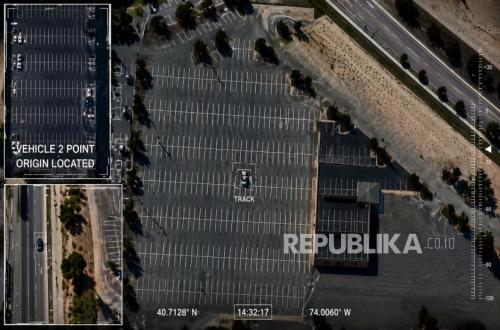
REPUBLIKA.CO.ID, JAKARTA — The world is moving into a new chapter that is not entirely visible. War no longer takes place solely on the battlefield, but also in the realm of data, algorithms, and information networks. Amid this change, artificial intelligence (AI) emerges as a new force quietly transforming the face of global intelligence.
If intelligence analysis once relied on agent reports and human interpretation, machines are now taking on increasingly significant roles. Major countries are competing to integrate AI into their security systems, not only to read threats but also to shape perceptions and policy directions. In this landscape, technology is no longer neutral; it becomes an instrument of power.
Analyses from international media and global research institutions indicate that AI is now at the heart of modern geopolitics. It accelerates decision-making processes, expands the reach of national influence, and opens up new risks that are not yet fully controllable.
- What is AI’s role in the transformation of modern intelligence?
Based on John Sacellariadis’s article in Politico, the CIA is beginning to integrate AI into the intelligence analysis process to improve the speed and accuracy in reading data from human spies and other information-gathering systems.
AI is used to compile strategic assessments, test conclusions, and identify patterns in big data that were previously difficult to process manually.
AI now functions as a “digital colleague” in the intelligence world. It accelerates the analysis process, helps detect hidden patterns, and enhances a country’s ability to understand adversaries’ intentions and strategies. However, final decisions remain in human hands, indicating that AI is still a tool, albeit with growing influence.
- Can AI change the global balance of power?
Based on analysis by Barry Pavel and his team at RAND, a country’s power in the future will heavily depend on how it develops and manages AI. This technology even has the potential to determine the rise or fall of a nation.
RAND also emphasises that the world is entering an era of “geotechnopolitics”, where technology, particularly AI, becomes the primary factor in determining a country’s position in the international system.
AI has the potential to fundamentally shift the global balance of power. Countries that excel in AI not only lead in technology but also in military, economy, and intelligence. Conversely, countries that lag behind risk a decline in competitiveness and global influence.
- How does AI affect information warfare and public opinion?
Based on John Villasenor’s article at the Brookings Institution, AI plays a dual role in the information ecosystem: it can be used to create disinformation as well as detect it.
He explains that technologies like deepfakes and AI-based bots can spread false information on a massive scale, even potentially influencing election outcomes and national policies.
AI becomes a new weapon in information warfare. Countries or certain actors can manipulate public opinion through content that appears authentic but is actually engineered. On the other hand, AI is also used to counter disinformation, creating a technological arms race between creators and detectors of fake information.