
Chronology of the Strait of Hormuz Crisis: From Attacks to Market Shocks
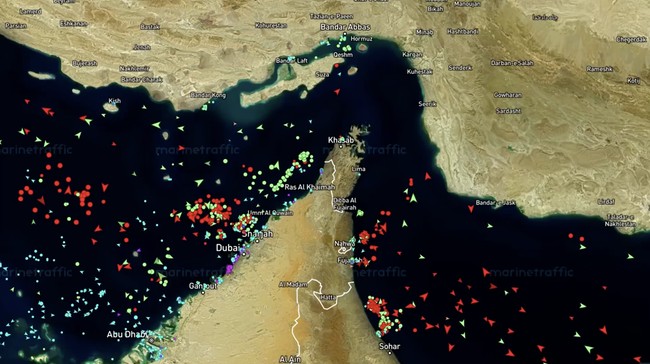
A military conflict involving the United States, Israel, and Iran since late February 2026 has triggered one of the largest energy supply shocks in modern history.
The centre of this geopolitical crisis is the Strait of Hormuz, a strategic waterway that facilitates around 20% of the world’s oil supply.
The alternating closures and openings of the strait have not only created extreme volatility in global crude oil prices but also exerted significant inflationary pressure on the economies of consumer countries, including the United States.
This crisis illustrates how military decisions and policy responses can directly disrupt the stability of capital and commodity markets worldwide.
The escalation began with a military operation that triggered the effective closure of commercial shipping lanes. The ripple effects were immediately felt in the movements of global stock indices such as the Dow Jones and S&P 500, as well as surges in Brent and WTI oil prices.
This article comprehensively outlines the sequence of events, policy responses, market dynamics, and diplomacy that have characterised the Strait of Hormuz crisis from late February to mid-April 2026.
The Beginning of Military Operations and Supply Disruptions
Tensions arose suddenly on 28 February 2026 when the United States and Israel launched an attack on Iran through Operation Epic Fury. This decision was taken by the administration of President Donald Trump with the stated aim of eliminating Iran’s nuclear threat.
The military operation immediately prompted a response from Iran’s Islamic Revolutionary Guard Corps (IRGC), leading to warnings against commercial vessels and the effective closure of the Strait of Hormuz.
This vital route, normally traversed by millions of barrels of oil per day, experienced a paralysis of maritime traffic, creating a global supply deficit estimated at 10 to 14 million barrels per day.
The closure of the strait came as a shock to energy markets. Global oil prices, previously projected to remain moderate, surged sharply, approaching US$100 per barrel in early March.
Global energy companies responded by halting operations in the Gulf region, while consumer countries began facing spikes in fuel prices.
In the United States, the national average petrol price rose dramatically, breaking through US$4 per gallon—the highest level since 2022—which then raised concerns about consumer purchasing power and potential economic slowdown.
Policy Responses and Capital Market Fluctuations
Facing economic pressures and market volatility, the US administration issued a series of policies that often created erratic price movements in stock and commodity exchanges.
Initially, US officials reassured markets that the United States had energy resilience through domestic production. However, as oil prices rose over time, the US began implementing emergency mitigation measures.
These policies included issuing temporary sanctions exemptions for countries like India to purchase Russian oil, to the controversial step of lifting sanctions on Iranian oil stored at sea to prevent oil prices from breaking US$150 per barrel.
The dynamics of communication from Washington often triggered daily volatility on Wall Street. Optimistic statements regarding the success of military operations or potential US naval escorts frequently drove short-term rallies in stock markets and pressured oil prices downward.
Conversely, threats of escalation, deadlines for attacking Iranian energy infrastructure, or reports of attacks on tanker ships directly triggered sell-offs in the Dow Jones and Nasdaq indices, as well as restoring a high risk premium on Brent crude prices.
Diplomatic Efforts Leading to a Deadlock
The mounting pressure on the global economy, reflected in surging US inflation data in March, forced the conflicting parties to consider diplomatic channels.
In early April, a temporary ceasefire agreement was announced, providing some breathing room for markets. US stock indices recorded significant recoveries in the hope that traffic through the Strait of Hormuz could return to normal.
The United States then sent a high-level delegation led by Vice President JD Vance to Islamabad, Pakistan, for direct negotiations with Iranian representatives.
However, market optimism proved premature. The talks in Islamabad failed to reach a comprehensive peace agreement. Iran demanded compensation and recognition of territorial control over the Strait of Hormuz, including the right to collect duties from passing commercial vessels.
On the other side, the US rejected these demands and insisted on the complete cessation of Iran’s nuclear programme. This diplomatic deadlock quickly dashed hopes for a short-term resolution to the conflict, returning uncertainty to global energy markets.
The Tug-of-War Over the Strait of Hormuz Status and Current Conditions
Following the failure of negotiations, the crisis entered a phase of confusing tug-of-war regarding the operational status of the Strait of Hormuz. The United States announced plans to implement an impartial naval blockade against ships entering or leaving Iranian ports.
This move was described by the US Central Command (CENTCOM) as an effort to prevent Iran from collecting illegal tariffs. Iran responded harshly, labelling the US action as maritime piracy and threatening the security of all ports in the Gulf region and the Arabian Sea if their ports were disrupted.
Claims regarding the strait’s status continued to change within days. President Trump once stated that he had permanently opened the strait for the benefit of global supply chains and China, following an agreement for Beijing not to send weapons to Tehran.
In line with the ceasefire
Source: jawawa.id (https://jawawa.id/newsitem/chronology-of-the-strait-of-hormuz-crisis-from-attacks-to-market-shocks-1776559845)
Originally published by CNBC Indonesia (https://www.cnbcindonesia.com/research/20260418214243-128-727871/kronologi-krisis-selat-hormuz-dari-serangan-hingga-guncangan-pasar), translated from Indonesian