
Chronology of the Hotel Sultan Dispute: From State Project to Eviction
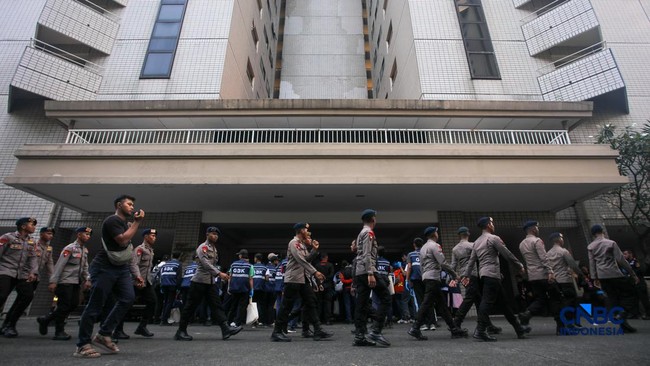
The eviction of the Hotel Sultan complex by the Central Jakarta District Court on Thursday (18/6/2026) marks the latest chapter in an asset dispute that has lasted more than two decades. The conflict between the government, through the Ministry of State Secretariat and the Gelora Bung Karno Complex Management Centre (PPKGBK), and Pontjo Sutowo’s PT Indobuildco is rooted in the issue of land status, the origins of which can be traced back to the New Order era. Since Thursday morning, joint security forces have been securing the Senayan area during the eviction process. The Central Jakarta District Court bailiff read out the execution order mandating the return of the land and buildings of the former HGB 26 and HGB 27 Gelora to the state. This step was taken following a series of court rulings that strengthened the government’s position on the disputed land. Behind the polemic, Hotel Sultan has a long history as a project born from the state’s needs. In the early 1970s, Jakarta was being prepared to host various international agendas, while the number of international-standard hotels was still limited. The Governor of DKI Jakarta at the time, Ali Sadikin, subsequently pushed for the construction of a large hotel in the Senayan area with the support of Pertamina, which was enjoying a golden era due to the surge in world oil prices. The proposal was approved by Pertamina’s then-President Director, Ibnu Sutowo. Through PT Indobuildco, hotel construction began in 1973 and was completed a few years later. The hotel then operated under the name Hilton International Jakarta, before changing its name to Hotel Sultan. However, the project, which was initially understood as part of the development of state assets, later raised questions about who actually had the right to manage the land and buildings. In his testimony cited in 2007, Ali Sadikin admitted he only later learned that PT Indobuildco was not a Pertamina-owned company. ‘I only found out Indobuild Co was not Pertamina. Yes, I was deceived,’ said Ali Sadikin. The hotel subsequently grew into one of the largest hotels in Indonesia with more than a thousand rooms, a large-capacity ballroom, meeting rooms, and various sports and recreational facilities. Its management was under PT Indobuildco, which is known to be a company owned by Ibnu Sutowo’s family and later managed by his son, Pontjo Sutowo. During the New Order era, the existence of the hotel on state land in the Senayan area was not widely questioned. But the situation changed after the government issued a Land Management Right (HPL) for the Gelora Bung Karno area covering the site where Hotel Sultan stands. Since then, two legal bases have emerged as the source of a long debate: the HPL held by the state and the Building Use Right (HGB) held by PT Indobuildco. The government argues that the Hotel Sultan land is part of HPL Number 1/Gelora, which the state had acquired since the hosting of the 1962 Asian Games. Meanwhile, PT Indobuildco maintains that its HGB stands on free state land and is therefore not dependent on the HPL claimed by the government. The conflict intensified as the HGB’s validity period neared its end. The two HGB certificates forming the basis of land tenure expired in 2023. The government considered that after these rights expired, land control reverted entirely to the state’s HPL managed by PPKGBK. Conversely, PT Indobuildco believed it still had a priority right to obtain a renewal or extension of the land rights. This difference in interpretation then moved to the courtroom. Various lawsuits were filed over the years, ranging from land administration disputes to civil cases. In several rulings, the Supreme Court affirmed the validity of the Gelora area HPL and confirmed the state’s position as the land manager. A crucial moment occurred in November 2025 when the Central Jakarta District Court rejected PT Indobuildco’s lawsuit. The panel of judges stated that the HGB forming the basis of land tenure had expired and no longer had legal force. The ruling also paved the way for the execution, despite ongoing legal efforts from the disputing party. Beyond the issue of land tenure, the government also highlighted the obligation to pay royalties for the use of the area included in the state’s HPL. This issue has also been part of the series of disputes that have rolled on for years between the two parties.