
Choosing and Selecting: A Test of Conscious Leadership
A conscious organisation never stops nurturing conscious leadership. It continually renews itself and adapts to the times when appointing its best talent. This may sound abstract when read merely as a management slogan, but becomes very concrete when a nation must fill one of its most sensitive public offices.
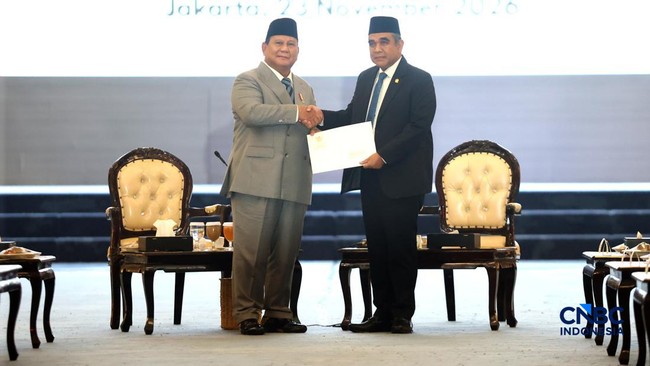
The vacancy in the office of Vice-President of the Republic of Indonesia following Gibran Rakabuming Raka’s resignation on 12 November 2026 is a real test. This is not merely a change of figure, but a test of how the state selects and chooses leaders amid public scrutiny, coalition tensions and citizens’ need for certainty.
In the Indonesian context, a vice-presidential vacancy is not resolved through a new general election. The Constitution provides a more orderly and measured route. Article 8, paragraph (2) of the 1945 Constitution of the Republic of Indonesia stipulates that, if the vice-presidency becomes vacant, the People’s Consultative Assembly (MPR) must convene a session within 60 days to elect a vice-president from two candidates proposed by the president.
These constitutional safeguards are important, but legal rules alone are not enough. The quality of the outcome depends greatly on whether political actors exercise discernment in narrowing the field, rather than simply making a choice.
Narrowing the Field Before Choosing
Narrowing the field is quieter work than choosing. A vote can be held quickly, whereas careful selection demands time, courage and honesty. It is at this stage that an organisation’s judgement is tested: it must be prepared to set aside a popular name that is not yet suitable, and retain a figure who may be less popular but has the necessary ability.
A conscious organisation does not treat popularity as the sole measure, personal closeness as a substitute for competence, or group loyalty as a substitute for loyalty to the Constitution.
In appointing a vice-president, the selection process should examine three key attributes in each candidate at the same time:
Potential: Intellectual capacity, managerial skills and the ability to understand interconnected issues in the economy, geopolitics, technology, ecology and society. The vice-presidency is not merely ceremonial. The vice-president assists the president and may at any time coordinate across ministries, represent the country at international forums, bridge central and regional government, and make decisions during a crisis. This potential requires systems thinking, the ability to absorb expert advice without losing direction, and the judgement to turn ideas into workable policy.
Track record: Evidence of what actually happened when someone was entrusted with responsibility, rather than merely a list of posts held. Did they leave institutions stronger than they found them? Could they defuse conflict without provoking new disputes? Were they willing to make unpopular long-term decisions and remain consistent under pressure? A track record reveals patterns, not just isolated moments.
Ethical and moral record: This is the quality most often invoked, but one that demands the strongest proof. It concerns integrity in managing power, budgets and information, as well as honesty about the identity and documents underpinning public legitimacy. A leader’s legitimacy is not settled on the day of appointment; it is continually tested through transparency, accountability and compliance with legal procedures.
Understanding Today’s Context, Not Just the Balance of Power
Alongside these three attributes, the ability to understand the current context is also decisive. This means more than counting coalition strength or calculating electoral security; it means understanding the challenges of the times that must be addressed.
Indonesia today needs not only a guardian of stability, but also a manager of transitions. The energy, digital and demographic transitions; geopolitical shifts; disparities between regions; the need to strengthen trust in institutions; and young people’s expectations of clean, participatory governance all call for adaptive leadership.
A leader suited to the past may not meet the needs of the future. The selection process should therefore test fundamental questions: does the candidate understand Indonesia as a diverse archipelagic nation?
Do they see development as restoring citizens’ dignity, rather than merely achieving numerical targets? Do they have the empathy to hear differing views without treating them as a threat? And can they act as a partner to the president while remaining loyal to the Constitution?
Under Article 8, paragraph (2) of the 1945 Constitution, the 60-day deadline also conveys that uncertainty in the state should not be allowed to drag on. But speed must be matched by care, so that the person chosen is substantively suitable, not merely formally eligible.
Voters’ Judgement Is Also on Trial
It is not only candidates who are being tested; voters are too. Formally, the voters are MPR members. More broadly, all Indonesians are watching, assessing and experiencing the consequences.
Here, precision means the quality of deliberation. Is the decision based on a verifiable record, or merely short-term calculations about the distribution of positions? Is the process sufficiently open to be explained to the public’s reasonable satisfaction?
A conscious leader is not appointed as an extension of a group’s interests, but as a guardian of the constitutional mandate alongside the president. Conscious voters, too, should not act solely out of political indebtedness, but consider whether the greater authority entrusted to the new vice-president will strengthen the republic or narrow the circle of power.
At the same time, public maturity matters. A critical outlook helps people avoid being dazzled by narratives unsupported by evidence, while patience gives constitutional procedures room to run in an orderly manner.
A Leader for the Whole Nation, Not One Faction
Once the appointment process is complete, the responsibility begins. The elected leader no longer belongs to a particular party or group, but is a leader of all Indonesians. Public office is not a prize for the most loyal supporters or compensation for those who have waited longest; it is a responsibility to all citizens, including those who chose differently.
Leadership rooted in Indonesian values is reflected in deliberation, mutual cooperation and just and civilised humanity. Deliberation teaches a willingness to listen before deciding; mutual cooperation reminds us that the nation’s great tasks cannot be carried by one person alone; and humanity tests the courage to act fairly without discrimination.
Filling the Vacancy with Quality
The vacant vice-presidency is a moment for reflection on national life. It highlights opportunities to improve selection and verification procedures from the outset, while also showing that the constitutional route remains in operation.
Rushing to fill the vacancy merely to quieten immediate public clamour would mean missing an important lesson. A state that learns from experience will strengthen verification standards, maintain transparency and allow the president and the MPR to exercise their powers accountably.
Ultimately, only one name will be chosen, but the message conveyed to the public will be much broader: public office is a trust for which one is accountable to God, the Constitution and the people.
If the process is conducted with full awareness, the new leader will do more than fill an empty seat; they will help restore trust and sustain the continuity of national leadership. Let us hope so.
Source: jawawa.id (https://jawawa.id/newsitem/choosing-and-selecting-a-test-of-conscious-leadership-1795506730)
Originally published by CNBC Indonesia (https://www.cnbcindonesia.com/opini/20261124134109-14-787964/memilih-dan-memilah-sebagai-ujian-kepemimpinan-berkesadaran), translated from Indonesian