
Chinese Toys Transform, Increasing Quality and Innovation
Beijing (ANTARA) - For many of us, the label “Made in China” may have been familiar since childhood. That label is printed on the back of various toys sold in shops, markets, and street stalls around schools, ranging from toy cars, miniature animals, and dolls to plastic robots.
These products generally arrived in simple forms and at affordable prices, making them a staple of children’s daily lives. In the early 2000s, wheeled toys and doll strollers were among the prominent groups in Indonesia’s toy imports from China, according to a University of Indonesia study based on UN Comtrade and BPS data.
As the Chinese toy industry has developed, the types of products entering the Indonesian market have become increasingly diverse, ranging from action figures, blind boxes, and plush dolls to building blocks, robots, educational toys, and various playsets.
This change was visible at the Indonesia International Baby Products & Toys Expo (IBLE) 2026, held from 19-22 August at the Jakarta International Expo (JIExpo), Kemayoran. According to the organisers, more than 1,000 participants from over 24 countries attended the exhibition.
This product diversity was evident among the Chinese participants at IBLE 2026. Dongguan BDS Technology Limited, for instance, brought robotics products that combine play with science education. Meanwhile, Guangdong No.1 Industrial Co., Ltd. showcased various intellectual property (IP) based products, including doll ornaments and keychain pendants. There was also Guangdong Xinlexim Education and Culture Co., Ltd., which brought building blocks.
Among the products exhibited, Chinese toys appeared in various concepts, ranging from educational and interactive toys to artificial intelligence (AI) based dolls, character-licensed products, building blocks, blind boxes, and collectibles.
In the children’s toy segment, Guang Dong Jollybaby Products Co., Ltd. offered educational toys and IP-based products, while Dongguan Jiandudu Trading Co., Ltd. introduced the category of AI Interactive Toys. These products demonstrate that Chinese toys no longer rely solely on mass production, but also prioritise education, IP, design, technology, and the playing experience.
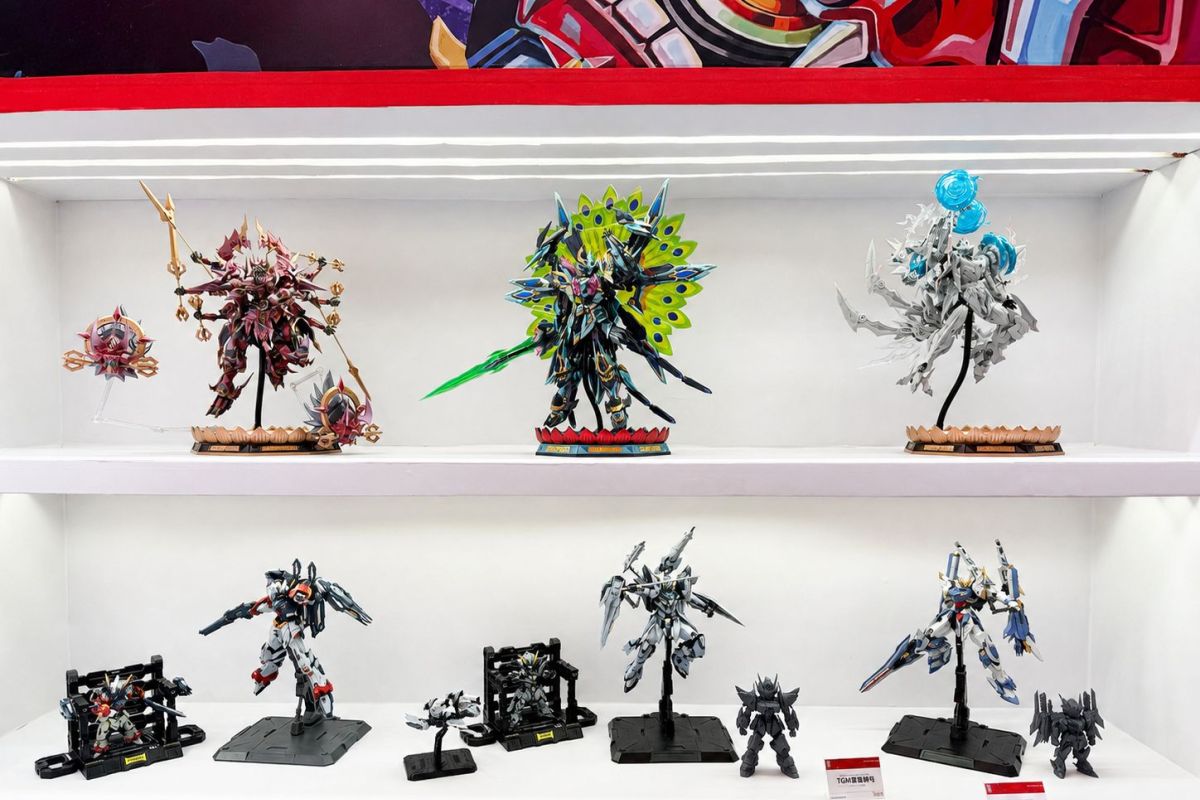
This shift is also reflected in the growing adult collector market. David, a content creator who reviews and unboxes toys via the @koleksidavid account, assesses that the development of Chinese toys is progressing very rapidly.
“Very rapidly. Previously, when imagining Chinese toys, one would certainly think of something that looked cheap and felt ‘plastic’. But now, toys from China are becoming more varied, ranging from those made specifically for children to toys with extraordinary detail for adult collectors,” said David.
According to him, products targeting collectors also show an improvement in terms of materials and design. “Because they are targeting collectors who are more serious about their collections, the materials used have been upgraded. The combination of plastic, metal, and even rubber in some parts makes a toy more poseable and looks cool,” he said.
David noted that Chinese toy products are now available in various price and quality segments. “Chinese toys have a wide range of variations. There are cheap toys, but there are also higher-class toys. However, it must be acknowledged that the designs are always unique and the quality is consistently maintained,” he said.
At one booth, a couple, Rina and Alex, were interested in the soft plush AI-based dolls from Jiandudu. For both, these products offer a different experience compared to the toys they knew as children.
“I used to have plastic doll toys,” said Rina. Alex had different memories. “For me, it was toy cars,” he said.
According to the couple, the development of Chinese-made toys is now evident in the wider range of products available to consumers. “Now, Chinese toys are very diverse, ranging from keychain dolls to AI-based dolls,” said Alex.
This change is also felt by consumers and toy importers alike. Intan Andriana, a visitor who has attended IBLE for three consecutive years, assessed that the quality of Chinese toys continues to improve. “If I look at previous years, honestly, it has become much more diverse. The quality is also getting better across many products that I have seen and that I import from there,” she said.
In her view, affordable prices remain one of the main attractions of Chinese toy products, but consumers are now also increasingly considering other aspects, especially educational value and safety. “In this era, mothers prefer toys based on their educational value, safety, and price, as they are being given to children,” she said.
This transformation is also reflected in the trade relationship between Indonesia and China. In 2025, Indonesia’s import value from China for the category of toys, games, and sporting goods reached approximately 670 million USD (1 USD = Rp 17,799), based on UN Comtrade data cited by Trading Economics. This significant value demonstrates the strong link between the Chinese toy industry and the Indonesian market.
As product choices expand, “Made in China” toys in Indonesia now offer not only affordable prices but also diverse designs, functions, and technologies. From plastic dolls and toy cars to interactive AI-based toys, this development reflects the increasingly diverse and innovative transformation of the Chinese toy industry.