
Chinese Smartphones Drive Camera Innovation to New Heights
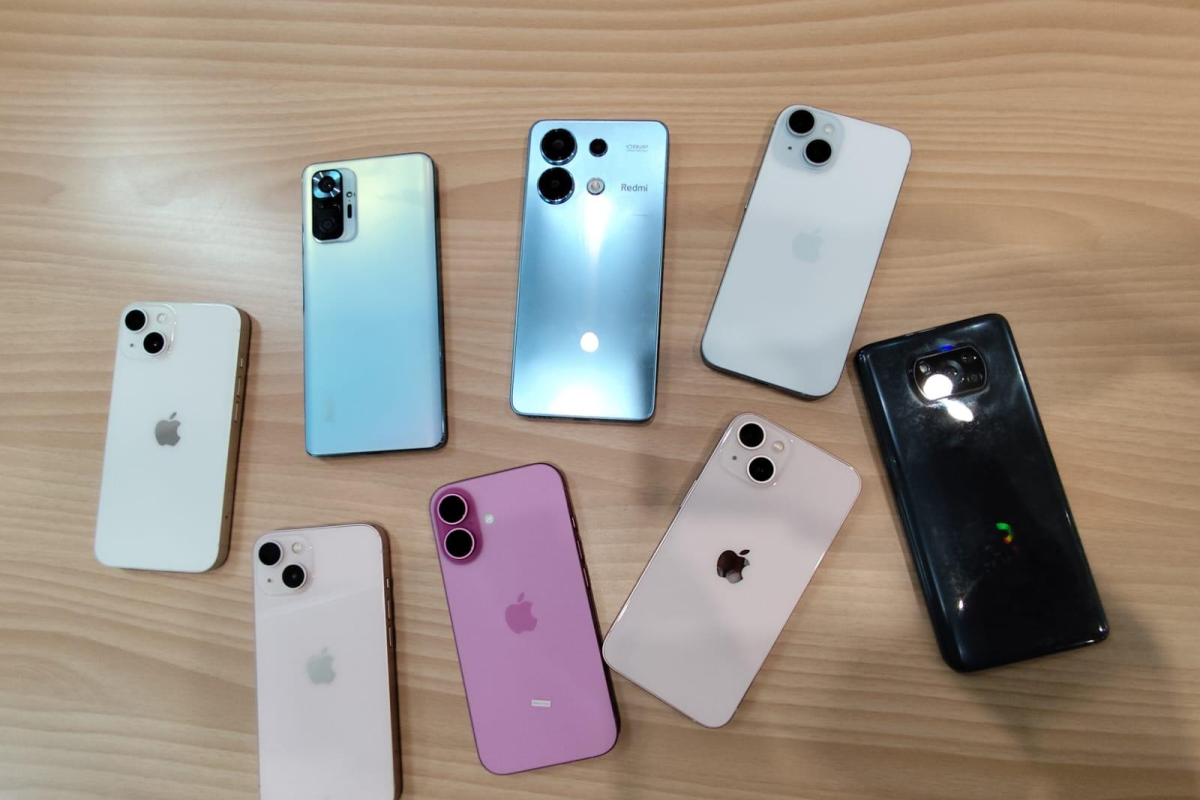
The smartphone industry is witnessing a massive landscape shift, with Chinese brands no longer acting as followers in the market. They have now transformed into primary locomotives, continuously delivering surprises through various technological innovations in camera features.
Chinese manufacturers are daring to break the boundaries between mobile photography and professional-grade camera quality, bringing sophistication once deemed impossible into a handheld device. These innovations frequently exceed public expectations, offering leaps in technology through devices such as the Honor Robot Phone, which features unique camera movement mechanisms, to high-specification premium gadgets like the vivo X500.
The presence of these cutting-edge phones serves as tangible proof that Chinese vendors are restructuring photography feature standards in the modern era.
Giant Sensors
This extraordinary transformation is triggering a fundamental shift in industry trends. Aditya (37), a technology journalist in Jakarta, revealed that the era of the resolution race is coming to an end. “The biggest trend is the shift from the ‘megapixel war’ to the ‘sensor size war’ and exclusive collaborations,” said Aditya.
According to Aditya, rather than continuously chasing astronomical figures like 108 or 200 megapixels, Chinese manufacturers are now focusing on embedding massive 1-inch sensors into phone bodies. He explained that larger sensor sizes aim to capture more light, resulting in photos with a very wide dynamic range and clean low-light captures without the need for artificial brightness effects.
Strategic engineering with global optical giants such as Leica, Hasselblad, and Zeiss has also become a trump card. Aditya emphasised that this move has entered a highly technical realm and is not merely a cosmetic gimmick to boost turnover. “Leica with Xiaomi, for example, truly blends colour profiles and optical lens designs to produce the dramatic photographic character characteristic of Leica,” he told Xinhua on Monday (2/9).
Another revolutionary hardware leap recently is the introduction of periscope telephoto lenses. Aditya explained that Chinese manufacturers are using clever designs containing horizontal lens arrays and light-bending prisms to produce pure 5x to 10x optical zoom without making the back of the phone as thick as a brick. This lens technology continues to evolve, introducing tele-macro features powered by floating lens elements, which claim to capture super-close details with a bokeh effect similar to professional mirrorless cameras.
Aditya projects that the physical limitations of hardware will eventually trigger a new battleground in the realm of computational photography supported by generative Artificial Intelligence (AI). He believes future AI systems will not merely smooth faces, but will also be capable of instantly reconstructing missing textures during extreme 100x zooms and manipulating sunlight direction (relighting) on objects in real-time.
Replacing Professional Cameras
The sophistication of this hardware and software is being felt directly by creative industry professionals. Ardie Susanto (48), a culinary content creator, has decided to entrust his entire daily production to a Chinese phone, the Xiaomi 17 Ultra.
Ardie shared that his greatest enemy when filming dishes in restaurants is often dim lighting, as well as the dark shadows cast by his own phone when photographing food plates from very close range. These classic problems have been overcome thanks to the periscope telephoto and tele-macro capabilities of his device. “I can stand or sit at a sufficient distance, about half a metre from the plate, but perform 3.2x or 5x optical zoom with incredible macro sharpness,” said Ardie. He also praised the technology’s ability to record hot steam and food textures aesthetically with a thick bokeh effect without relying on software-generated blur.
Beyond detail, colour accuracy is another deciding factor that delights creators. The Leica Authentic colour profile is crucial for Ardie, as he recognises that social media audiences prefer natural food colours rather than over-saturated grilled meat caused by orange filters. Furthermore, the 1-inch main sensor ensures that his skin tone remains perfect when his hand accidentally enters the frame.
Ardie believes that Chinese phones have made a significant leap as trendsetters in mobile photography technology. He admitted that the flexibility of modern smartphones has reduced his need to carry heavy mirrorless cameras. “Chinese phones are no longer a cheap alternative, but rather the highest standard if someone is looking for the best camera phone on the market,” Ardie said when met by Xinhua in Bogor, West Java, on Sunday (1/9).
Premium Strategy
This aggressive manoeuvre of integrating periscope optical innovations and conducting co-engineering research with European brands clearly involves significant investment. Aditya noted that Chinese manufacturers are implementing a strategy known as ‘premiumisation’.
He revealed that after long-standing battles in the entry-level segment with thin margins, Chinese vendors are now shifting their focus to the ultra-premium segment, with camera quality serving as the most valid ‘entry ticket’. To win the hearts of consumers, collaborations with legendary brands are being utilised by Chinese manufacturers to elevate their prestige in the global market. “By attaching the red Leica logo or the blue Zeiss logo, they are essentially ‘renting’ heritage, credibility, and trust,” said Aditya.
Source: jawawa.id (https://jawawa.id/newsitem/chinese-smartphones-drive-camera-innovation-to-new-heights-1790258840)
Originally published by Antara (Indonesian) (https://www.antaranews.com/berita/5757259/ponsel-china-bawa-inovasi-kamera-ke-level-baru), translated from Indonesian