
Chinese Smartphone Sales Slump Further, Traders Face Bleak Outlook in 2026
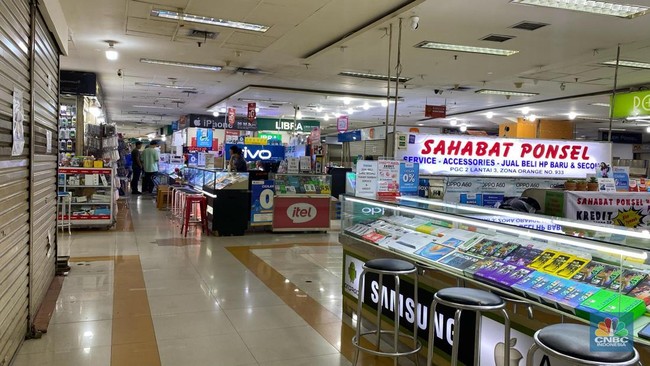
Jakarta, CNBC Indonesia – The global memory chip shortage, a knock-on effect of surging AI data centre demand, has affected the consumer electronics industry, including smartphones, laptops and games consoles. According to research firm Counterpoint, global smartphone shipments throughout the second quarter (Q2) of 2026 fell sharply by 11% year on year.
Chinese smartphone manufacturers were hit hardest. Xiaomi, Oppo and vivo all recorded double-digit year-on-year declines in shipments in Q2 2026, according to Counterpoint’s latest report, quoted from its official website on Tuesday (14/7/2026).
The weakening performance of Chinese manufacturers is attributed to increased market volatility caused by rising memory chip costs, which have also depressed demand in the entry-level and mid-range phone segments.
“Given their greater reliance on these segments, all three [Chinese] brands were significantly affected as consumers postponed purchases, switched to cheaper older-generation devices, or extended their device replacement cycles,” the Counterpoint report stated.
Despite the pressure on their businesses, Chinese manufacturers continue to try to stimulate consumer demand. Xiaomi, for instance, simplified its portfolio and relaxed financing terms for retailers in order to maintain sales volumes.
This move helped Xiaomi secure a 12% market share, ranking third in the ‘Top 5’ of handsets with the largest global market share in Q2 2026. Nevertheless, that share declined from 14% in the same quarter of 2025.
At the same time, Xiaomi also recorded positive growth in the premium segment, driven by the Redmi Note 15 series, the Redmi K90 and the Xiaomi 17 series.
Oppo and vivo ranked fourth and fifth in the market in Q2 2026, holding shipment shares of 11% and 8% respectively. vivo faced supply constraints, and a recent price increase pushed some of its key models out of crucial price ranges, further burdening the brand’s shipment figures.
Oppo faced sluggishness across most of its key markets owing to persistently weak demand. However, reasonably good performance from its A and Reno series lines helped cushion the overall decline in volume, even though the brand continues to face pressure from cost dynamics in the entry-level segment, which are also affecting the wider industry.
Handset Sales Increasingly Difficult
The 11% fall in total global smartphone shipments in Q2 2026 also marks the deepest second-quarter decline since 2013. According to Counterpoint Senior Analyst Shilpi Jain, several factors have triggered this trend.
Beyond the principal factor of the global memory chip shortage, which has raised component costs for handset production, geopolitical tensions in the Middle East — which have lifted oil prices and shipping costs — have also added to handset price inflation.
These factors have battered the smartphone industry at a time when the world faces broad macroeconomic challenges: sluggish global economic growth, higher inflation and consumer sentiment at its lowest point in history. The latter has had the greatest impact on price-sensitive buyers.
Jain said handset manufacturers have generally responded to rising component costs in several ways. Some have raised selling prices and accepted margin pressure; some have delayed launches and production of new devices; and others have extended the lifecycle of older-generation devices and used promotions to entice budget-conscious consumers.
The outlook for the remainder of 2026 remains full of challenges. Counterpoint estimates global smartphone shipments will fall by around 14% over the full year, and expects the global memory shortage to persist into 2027.
Handset manufacturers are likely to continue prioritising value over volume. They are expected to cut low-margin models, adjust configurations and storage tiers, and rely more heavily on refurbished and previous-generation devices to retain price-sensitive consumers.
The premiumisation trend is expected to remain fairly resilient for the rest of the year, supported by financing schemes, ecosystem loyalty and AI-based retail experiences. However, an overall demand recovery appears unlikely until memory supply conditions improve significantly.
Samsung and iPhone Handsets Still Selling Well
Samsung retained its position as the ‘king’ of global handsets in Q2 2026. The South Korean manufacturer captured a 24% market share in Q2 2026, up from 20% in Q2 2025.
Samsung’s performance was fairly strong in India and the Middle East, supported by better product availability, more modest price increases and aggressive summer promotions that complemented the momentum of its flagship products.
Increased production of the Galaxy S26 series drove overall shipment growth, with the Ultra variant standing out as the most prominent product thanks to high demand for its privacy screen feature and AI capabilities.
Meanwhile, vertical integration, an expanded AI portfolio and a refreshed product range have also sustained Samsung’s growth amid weakening demand in the entry-level and mid-range segments.
Apple, meanwhile, occupied second place with a 20% market share in Q2 2026, higher than its 17% share in Q2 2025. Apple was also the only major handset maker that did not raise its prices during the quarter.
This achievement marks a sustained annual growth trend for the brand, driven by the strong performance of the iPhone 17 series — the highest-volume model globally in shipment terms — as well as resilient demand across several key markets.
China remains a relatively weak market for Apple, where shipments declined year on year despite an early promotional campaign ahead of the 618 shopping festival. This was because this year’s discounts were less aggressive than promotions during the same period in 2025.
Demand for older iPhone models has also tended to slow, as component allocation has been prioritised for current-generation devices amid memory-related supply constraints.
Source: jawawa.id (https://jawawa.id/newsitem/chinese-smartphone-sales-slump-further-traders-face-bleak-outlook-in-2026-1784026363)
Originally published by CNBC Indonesia (https://www.cnbcindonesia.com/tech/20260714144957-37-750724/hp-china-makin-tidak-laku-nasib-pedagang-memprihatinkan-di-2026), translated from Indonesian