
Chinese rocket company to test space-based pharmaceutical payloads
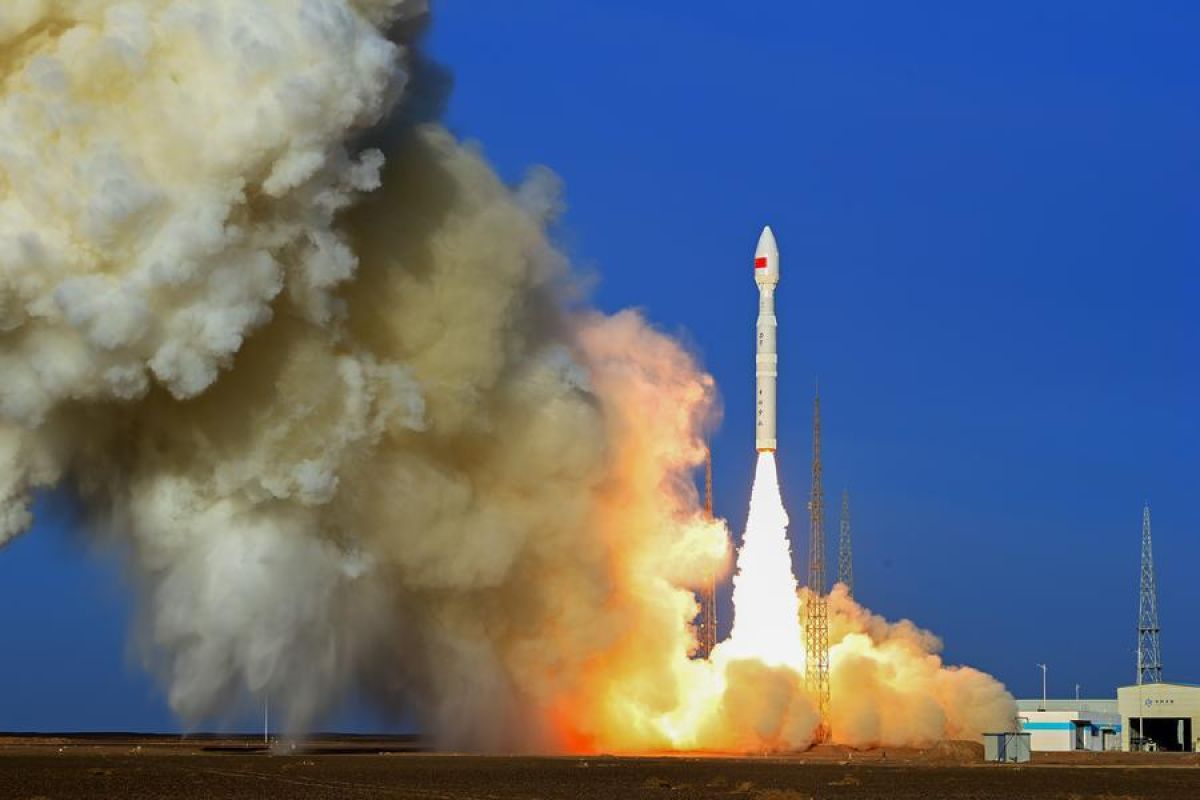
Beijing (ANTARA) - Chinese commercial rocket company, CAS Space, has announced a partnership with Guangzhou Laboratory to undertake collaborative research and development regarding space-based pharmaceutical payloads, with plans for suborbital flight validation using a reusable spacecraft in 2027.
CAS Space plans to fly the first payload group using Lihong-2, the company’s reusable launch vehicle. This payload group will conduct experiments on protein crystallisation and small-molecule drugs, as well as initial technical validation of space pharmaceutical equipment.
Based in Guangzhou, the laboratory focuses on studying respiratory diseases and their prevention and control.
Under this collaboration, the laboratory will formulate scientific questions regarding drug crystallisation and manage experimental design, sample management, ground-based control experiments, and result analysis.
According to Xu Qiang, a lead researcher at the laboratory, modern medicine has a significant need for higher-quality structural data, more stable drug crystal forms, disease models that more closely resemble the human body, and more efficient screening tools.
The space environment can offer new ways to address these challenges.
The microgravity environment of space can assist certain proteins in forming higher-quality crystals and offer new experimental conditions for screening crystal forms and controlling small-molecule drug particles.
“Cells in such conditions are also more likely to form three-dimensional (3D) aggregates that can be used to study disease mechanisms and drug responses,” said Xu.
The company stated that the Lihong series spacecraft is designed for space medicine research, biomedical experiments, manufacturing, and space tourism. In January this year, the company’s Lihong-1 rocket successfully completed its suborbital flight test mission in China.
“The near-space region at altitudes of 100 to 200 kilometres provides an ideal experimental environment for microgravity research, such as space manufacturing and biomedicine,” said CAS Space Vice President Fan Na.
Based on this concept, the company has established a space medicine laboratory in conjunction with a hospital.
“This laboratory can bring back data quickly, thereby accelerating the development of new drugs,” said Fan.
Space pharmaceuticals represent an emerging sector within the space economy, alongside space breeding, space material processing, satellite internet, and space tourism.
A World Economic Forum report indicates that the space economy is expected to grow from US$630 billion in 2023 to US$1.8 trillion by 2035.
Goldman Sachs and several other institutions predict that the value of the space economy will increase to several trillion US dollars over the next 20 years.