
Chinese Robotics Giant Unitree Soars on Stock Market Debut, Is the US Losing Its Shine?
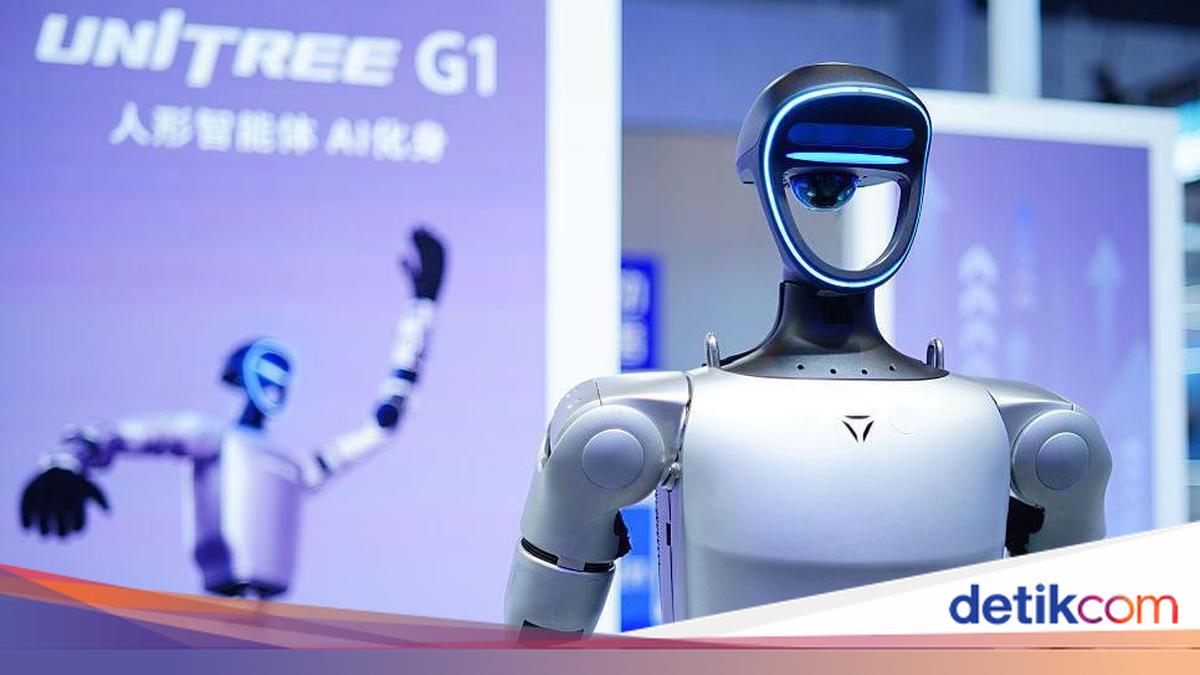
The world’s largest humanoid robot maker, Unitree Robotics, listed on the Shanghai stock exchange on Wednesday (19/08), with its share price soaring more than 600% in early trading.
In the highly anticipated initial public offering (IPO), shares of the Chinese company opened at 1,100 yuan (approximately Rp2,900,000), before trimming some of its gains and trading around 900 yuan.
Unitree’s listing on the Star Market, an exchange focused on technology companies often dubbed ‘China’s Nasdaq’, marks an important milestone for Beijing’s ambitions to develop a national robotics industry.
The move comes as the United States and China compete fiercely to dominate the global market for robots and the artificial intelligence (AI) models that serve as the brains behind these machines.
Although Unitree is not the first Chinese humanoid robot maker to list on a stock exchange, this debut is the first to take place in mainland China.
Robots, ranging from automated industrial equipment to smart vacuum cleaners, have long been widely used in factories, warehouses and homes.
Now, the humanoid robot industry is attracting significant investment as major companies, including Tesla, BYD and Amazon, develop two-legged robots capable of performing various tasks previously done by humans.
What is Unitree?
Unitree, officially named Yushu Technology Co Ltd, was founded in 2016 and now plays an important role in Beijing’s ambitions to develop advanced technology.
Unitree has become one of the leaders in the robotics industry, selling a range of products from sensors and automated robotic arms to four-legged robots and humanoid robots.
The company shipped more than 5,500 humanoid robots last year, amid rising demand for the technology.
Unitree is also one of the few companies in the sector to have posted a profit, recording a net profit of 278 million yuan in 2025.
The company is a strong competitor to robot developers in the US because it can produce robots with similar capabilities but at lower prices.
Unitree is headquartered in Hangzhou, eastern China. The region is known as one of the main hubs of the robotics industry, which has grown thanks to substantial government investment.
According to the state-run China Daily, this support has helped drive the number of robotics companies in China to more than triple between 2020 and 2024.
Robots are also seen as a potential solution to the challenges arising from China’s ageing population.
The situation is expected to cause labour shortages in the country, said Fei Qin, an associate professor at the University of Bath.
According to Qin, Beijing views the robotics sector as a ‘strategic priority’ in its efforts to become a global leader in advanced technology.
‘Robots are the point where artificial intelligence (AI) steps out of the screen and into the economy,’ Qin added, noting that their presence is now increasingly visible in factories, hospitals and potentially in homes.
US-made robots generally offer more user-friendly software.
However, it is difficult to ignore the far cheaper prices offered by Chinese manufacturers, said Harold Soh, a researcher at the National University of Singapore.
Unitree’s robot dogs start at US$2,700 (approximately Rp48,143,700), only a fraction of the price of Spot, the four-legged robot made by Boston Dynamics, which is priced at around US$70,000.
‘These products are not entirely comparable because some Unitree robot dogs are much smaller in size,’ Soh said. ‘However, the price difference is indeed very large.’
Unitree began selling humanoid robots in 2023. A year later, the company launched the G1 model, a child-sized robot marketed at US$13,500 (approximately Rp240,646,950).
Meanwhile, several major competitors in the United States, including Elon Musk’s Tesla, have yet to begin shipping their rival humanoid products to market.
Unitree’s robots took centre stage in a major promotional campaign ahead of the company’s IPO.
This week, Unitree’s machines also competed in the World Humanoid Robot Games 2026 in Beijing.
The event was attended by hundreds of teams competing in various disciplines, from running and football to simpler challenges such as opening boxes and sorting library books.
In February, Unitree robots attracted public and researcher attention when their G1 robot performed a series of martial arts movements during the China Spring Festival Gala.
The live broadcast showed the robots performing various movements ‘in ways we have never seen before’, said robotics researcher David Hsu.
‘It was an indication of the rise of an industry,’ Hsu added.
A barometer for robotics companies?
Several experts believe Unitree’s stock market debut could serve as a benchmark for investor interest in the rapidly growing humanoid robot industry.
According to Jack Pearson of investment firm RoboStrategy, the listing provides a relatively rare opportunity for the public to invest in a humanoid robot company and could potentially serve as a reference for other manufacturers in the same sector.
The listing also marks a ‘turning point’ for China’s robotics industry, Pearson said. According to him, Unitree’s success comes amid US efforts to restrict imports of foreign-made robots.
Unitree’s IPO took place nearly three years after its smaller rival, UBTech Robotics, listed on the Hong Kong Stock Exchange.
In July this year, UBTech attracted global attention when it introduced a robot described by Chinese state media as ‘highly human-like’, designed to provide emotional support and everyday interaction.
Several other robot manufacturers, including Leju Robotics and AgiBot, are expected to follow in the footsteps of UBTech and Unitree by listing their shares on stock exchanges in the coming months.
However, the optimism surrounding the industry comes amid doubts among some experts about the scale of demand for robots for use outside industrial and commercial settings.
According to Harold Soh, robots still need years before they can work effectively in household environments.
He said developers still need to overcome a number of challenges, such as extending battery life, ensuring user privacy protection, and improving system reliability.
‘There are still various technical issues that need to be resolved before robots can be widely used in homes,’ Soh said.
In the early stages, the main market for humanoid robots is likely to be in sectors such as factories and hospitals, Soh added.
US-China technology rivalry
Robots and artificial intelligence (AI) have become the latest flashpoint in the rivalry between the US and China, both of which view the two sectors as strategic industries.
In July, the administration of US President Donald Trump announced a ban on newly imported Chinese-made humanoid robots and four-legged robots entering the US market. The move was said to be aimed at protecting national security and the domestic manufacturing industry.
Beijing rejected the accusations and accused Washington of having ‘politicised’ trade issues.
The US has also imposed various strict restrictions on other Chinese technologies, including AI models and electric vehicles.
China’s dominance in the robotics industry is seen as reflecting a broader challenge for Washington, as Chinese companies become increasingly embedded in global manufacturing chains, said Christine Wan of the Peterson Institute for International Economics.
According to Wan, many countries may be reluctant to reduce their dependence on Chinese suppliers because such a move risks disrupting domestic manufacturing activities.
Nevertheless, this dynamic shows that the competition between the US and China is no longer limited to trade or semiconductors, but also encompasses robotics technology that is seen as set to play an important role in the future economy.
So far, Western-made robots have not had the same impact on factory floors or consumer markets.
Boston Dynamics, one of the leading robot developers in the US, said it will begin deploying humanoid robots in Hyundai car factories within the next two years.
The South Korean automotive company is the majority shareholder of Boston Dynamics.
Other US companies, such as Amazon and Tesla, have also announced plans to use humanoid robots in their operations.
Earlier this year, Elon Musk’s company announced that its California factory, which has been producing Model S and Model X cars, will be used to produce the Optimus humanoid robot line.
Meanwhile, Amazon, which began testing humanoid robots in its warehouses in 2023, told the BBC that the company is continuing research to develop the next generation of robots.
The BBC has also contacted Tesla and Boston Dynamics to request comment on their humanoid robot development plans.
However, according to David Hsu, one thing that is now increasingly clear is that the US has lost its position as a leader in robotics.
‘We no longer often hear US robotics companies making headlines. Currently, it is Chinese robotics companies that dominate the news,’ Hsu added.
‘They are now the most interesting players and the ones attracting the most attention in this industry.’
Source: jawawa.id (https://jawawa.id/newsitem/chinese-robotics-giant-unitree-soars-on-stock-market-debut-is-the-us-losing-its-shine-1787126111)
Originally published by detikcom (https://news.detik.com/bbc-world/d-8625424/raksasa-robotika-china-unitree-melesat-di-bursa-as-kehilangan-pamor), translated from Indonesian