
Chinese Researchers Achieve Breakthrough in Cloning Hybrid Rice
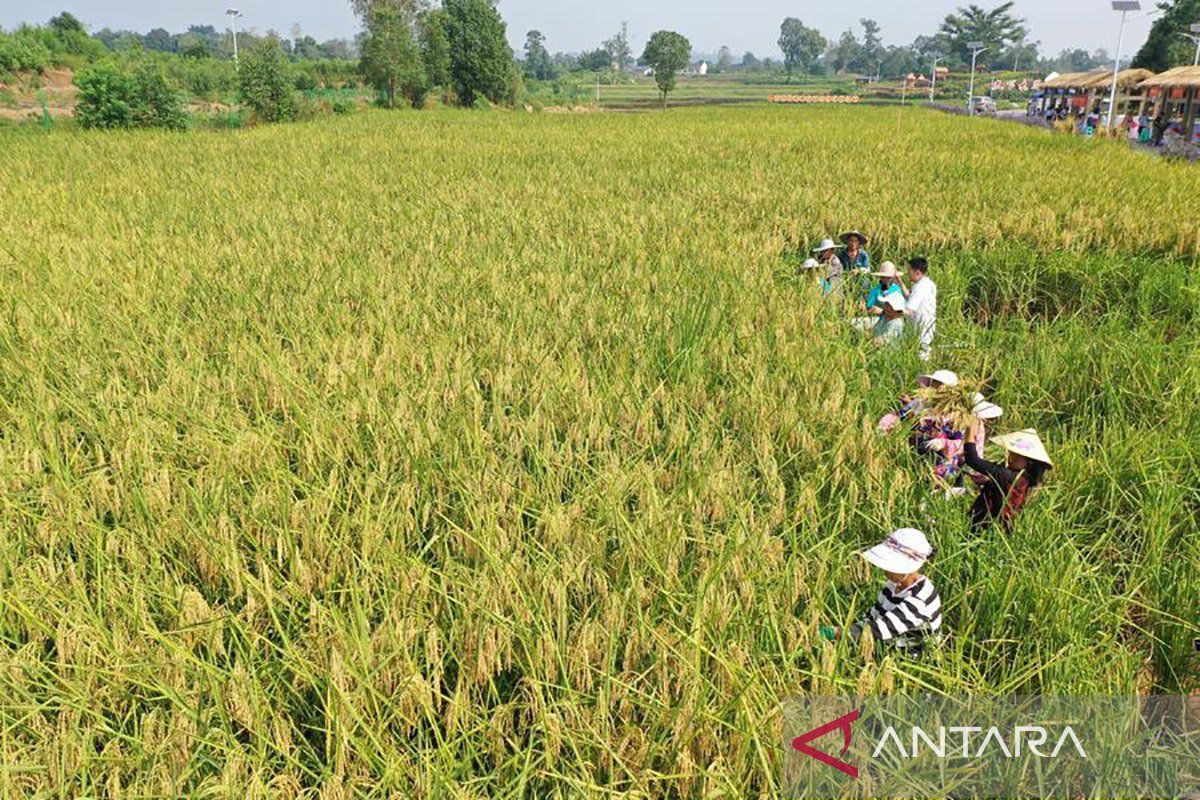
Beijing - Researchers in China have achieved a major breakthrough in cloning hybrid rice, which could fundamentally change the conventional paradigm of annual seed production and provide new technological support for global food security. After years of sustained effort, a team led by researcher Wang Kejian from the China National Rice Research Institute successfully identified and characterised an endogenous rice gene, which they named HUAXU. Their study, published in the journal Vita on Tuesday, demonstrates that the HUAXU gene in hybrid rice egg cells can efficiently induce parthenogenesis and produce haploid offspring. When combined with a gamete cloning strategy, several apomictic lines developed by the team achieved cloning efficiency approaching 100 percent. Across various conditions, including different hybrid rice varieties, multiple generations, diverse planting populations, and large-scale field trials, cloning efficiency remained consistently above 99 percent, while crop yields were maintained at normal levels. This achievement marks the initial realisation of the ‘1 to 100’ target in a one-line hybrid rice system, a crucial step towards realising the vision of sustainable cross-generational propagation. Cloning efficiency refers to the percentage of seeds produced through artificially induced apomixis that are genetically identical to the parent plant. This parameter serves as a key metric for assessing the technical success of maintaining heterosis and directly influences seed purity. Wang noted that the currently widely adopted three-line and two-line hybrid rice systems cannot maintain hybrid vigour in subsequent generations due to genetic segregation in the progeny. Consequently, these systems require artificial seed production every year through crosses between male-sterile lines and restorer lines. The ultimate goal of a one-line system is to enable hybrid plants to produce clonal seeds through apomixis, thereby fixing heterosis and allowing a single hybridisation to be inherited across generations. In theory, this means a single hybrid seed could be utilised sustainably without the need to produce or replant new seeds annually. Wang stated that this breakthrough addresses a long-recognised global challenge in plant breeding: permanently fixing heterosis in hybrid rice through seeds.