
Chinese Renewable Energy Firm GCL ET Explores AI Data Centre Opportunities in Indonesia
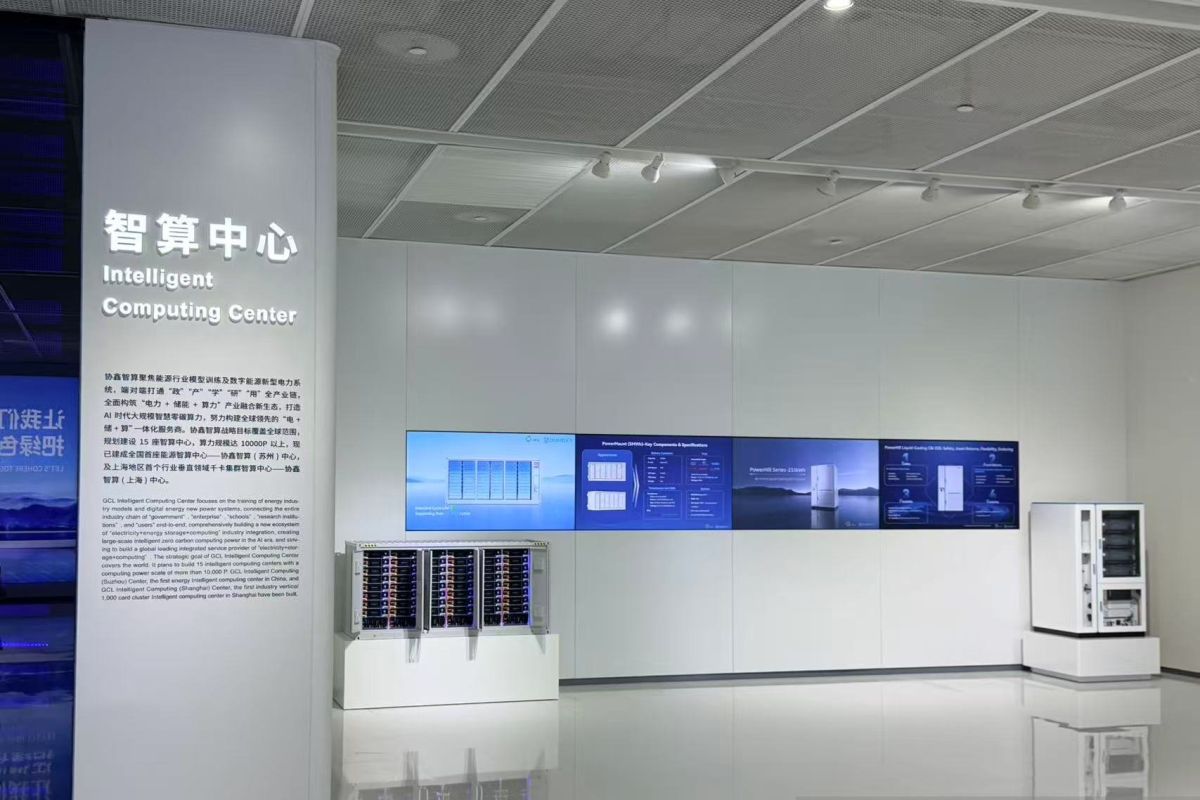
Beijing (ANTARA) - Chinese renewable energy company GCL Energy Technology (GCL ET) is exploring opportunities to develop artificial intelligence (AI) data centres in Indonesia as part of the company’s expansion strategy in Southeast Asia.
“Southeast Asia is one of the key regions in GCL ET’s international AI data centre strategy, particularly Malaysia, Indonesia, and Thailand,” said Fanzhong Zeng, Head of the Strategic Development Centre at GCL Energy Technology, in a written statement to ANTARA in Beijing on Monday (29/6).
Fanzhong stated that Indonesia is one of the markets receiving significant attention from the company, alongside Malaysia and Thailand, due to its proximity to Singapore, the growth of its digital economy, and its supporting energy resource potential.
According to him, Singapore’s position as a digital infrastructure and data centre hub in Asia is driving the development of new projects in neighbouring countries, including Indonesia, given the limitations of land and electricity capacity in Singapore.
Fanzlong revealed that the Suzhou-based company, located in Jiangsu Province, is actively exploring AI data centre business opportunities in Malaysia and Indonesia alongside local partners to support the industry’s development.
Fanzhong noted that the opportunity to open AI data centres is not only related to computing needs but also to the availability of stable, green, and efficient energy.
“Every market has a different energy structure, customer needs, and industrial ecosystem. Therefore, we will not simply copy the same model, but will work with local partners to find a cooperation model that suits local market conditions,” he added.
GCL ET is developing integrated solutions for AI data centre projects through an approach that combines wind energy, solar power, energy storage, gas power generation, and computing infrastructure into a single system.
Fanzhong said this approach is intended to address the challenges of AI data centre development, particularly in regions where power grid capacity may not always be able to rapidly support large-scale data centre requirements.
He noted that the global growth of AI is causing a continuous increase in the demand for computing power. Consequently, the company sees the relationship between energy and computing becoming increasingly intertwined.
“The current AI wave aligns with our strategy to integrate energy and computing power,” Fanzhong added.
Furthermore, there are two main directions in the energy and computing integration strategy. The first is “powering computing,” where GCL ET utilises its capabilities in energy generation, energy management, and electricity trading to provide cheaper, more reliable, and environmentally friendly energy solutions for AI data centres.
The second direction is “empowering energy with AI,” which involves using AI to improve efficiency in the energy sector, including the management of renewable energy plants, electric vehicle charging stations, electricity trading systems, and energy load regulation.
“By combining these two approaches, we are building a closed ecosystem between energy and computing power,” he said.
Since 2023, GCL ET has begun investing approximately 800 million RMB (around Rp2.1 trillion) in computing power services, including infrastructure for AI computing based on NVIDIA A800 and H800 systems.
GCL ET was previously known as an energy investment and services company. However, the company is now expanding its business scope to become a technology-based service provider that integrates energy, computing, and electricity trading.