
Chinese Phones Lose Ground as Consumers Turn to iPhones
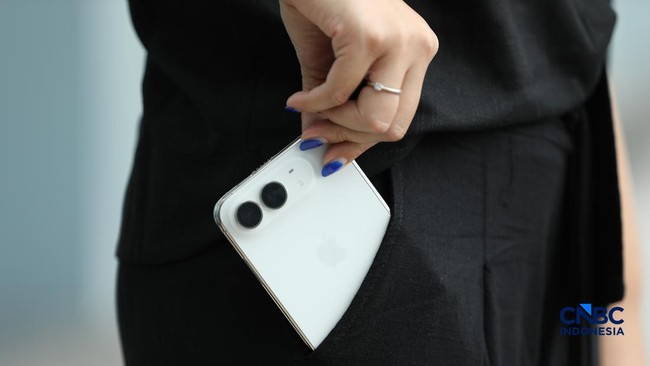
Jakarta, CNBC Indonesia — Apple has officially released its financial results for the fourth quarter (Q4) of fiscal 2026, which ended in September. The Cupertino-based technology giant recorded its highest-ever revenue, at US$114.5 billion (about Rp2,076 trillion), up 12% year on year.
Apple’s strong financial performance was driven in part by iPhone sales, which grew rapidly both in the quarter and across fiscal 2026.
In the September quarter alone, iPhone sales surged to US$57.6 billion (about Rp1,045 trillion), up significantly from US$49.0 billion in the same period last year, according to GSMArena on Wednesday (4 November 2026).
For the full 12 months of fiscal 2026, total iPhone sales jumped to US$254.1 billion (about Rp4,610 trillion), well above the previous year’s US$209.6 billion.
The iPhone sales performance brought Apple’s fiscal 2026 revenue to a record of more than US$479 billion (equivalent to Rp8,691 trillion). Earnings per share (EPS) also rose by a double-digit percentage, reaching US$2.10, up 14%.
Apple chief executive John Ternus said the surge in iPhone sales was the main driver amid a series of what he described as the company’s most ambitious product launches to date.
“Today, Apple is proud to report record September-quarter revenue of US$114.5 billion, up 12 per cent from a year ago. This was driven by a new September-quarter iPhone sales record and Services revenue reaching an all-time high,” Ternus said, according to GSMArena.
“We are closing the year with our most ambitious product line-up, including the launch of iPhone Duo, our most transformative iPhone since the first generation, alongside iPhone 18 Pro and iPhone 18 Pro Max, the most powerful iPhones we have ever made,” he added.
In addition to surging iPhone sales, Apple’s Services business also reached a record, generating US$31.6 billion in the September quarter and US$123.3 billion for the full year.
In hardware, Mac became Apple’s third-largest segment, with quarterly sales of US$10.8 billion, up from US$8.7 billion. It overtook Wearables, Home and Accessories, which fell to US$8.3 billion, and outpaced the iPad line, which generated US$6.2 billion.
By region, the Americas remained Apple’s largest revenue contributor, with net sales of US$48.7 billion in Q4 2026. Europe contributed US$32 billion, while China generated US$17.5 billion.
Chinese phone sales fall further
While iPhone performance soared, its Chinese rivals suffered steep declines. Research firm Counterpoint Research reported that leading brands including Xiaomi, Oppo and vivo saw shipments fall sharply in Q3 2026, owing to surging DRAM and NAND memory-chip costs and a global shortage of components.
Memory-chip costs have risen amid extensive purchasing for artificial intelligence (AI) infrastructure projects. This has increased bills of materials (BOM) and forced manufacturers to raise retail handset prices by an average of 20% during 2026.
“The third quarter was the second consecutive period to feel the full impact of the memory crisis. The extreme shortage has pushed the market into a more selective phase,” Counterpoint senior analyst Shilpi Jain said in the report.
The component crisis has hit the strategies of Chinese vendors particularly hard, as they have traditionally relied on high sales volumes in affordable entry-level and mid-range segments.
Xiaomi recorded the steepest decline among major players, with shipments plunging by more than 30% year on year. Its market share fell to 10%. The company has had to reduce production in lower-priced segments and scale back overseas expansion to protect margins and avoid operating losses.
Oppo, including OnePlus and realme, and vivo were also battered by the market. Shipments from both manufacturers fell by more than 20% year on year, leaving their market shares at 9% and 8%, respectively.
To stay afloat, Oppo has had to consolidate its product lines and operations across Oppo, realme and OnePlus to improve cost efficiency. Vivo, meanwhile, has been hit by price increases that have pushed its low-cost Y-series models out of the affordable range sought by consumers.
Source: jawawa.id (https://jawawa.id/newsitem/chinese-phones-lose-ground-as-consumers-turn-to-iphones-1793778663)
Originally published by CNBC Indonesia (https://www.cnbcindonesia.com/tech/20261104123230-37-782223/hp-china-sudah-tidak-laku-ramai-ramai-beralih-ke-iphone), translated from Indonesian