
Chinese NEV Manufacturers Enter Robotics Industry
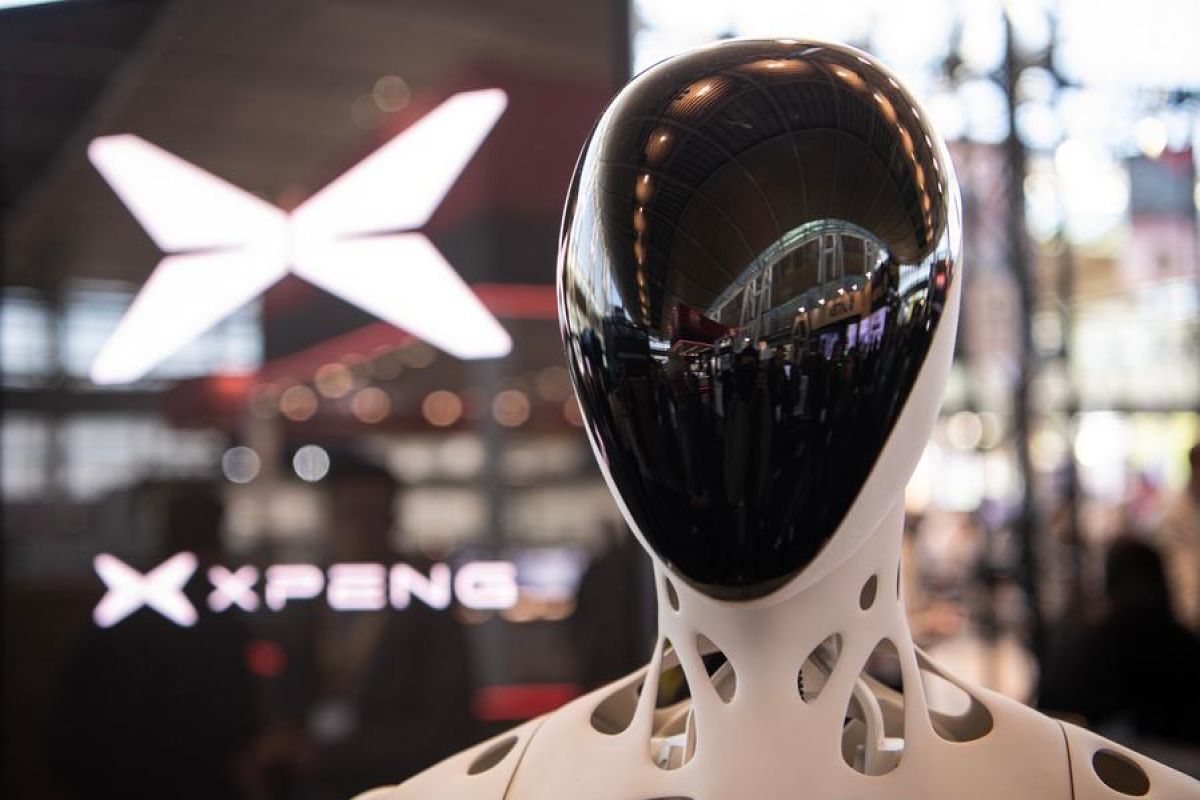
Beijing (ANTARA) - Chinese New Energy Vehicle (NEV) brands have begun pioneering competition in a new field: the robotics industry. Nearly 20 automotive manufacturers, including XPeng, Li Auto, and BYD, have entered the robotics sector through research and development, subsidiaries, or industrial investments, as embodied intelligence enters the stage of industrialisation, according to Beijing Daily.
As reported by Xinhua on Thursday (10/9), XPeng has demonstrated how far car manufacturers can push their ambitions. Its robotics unit recently completed an initial external funding round of over US90/billion(1US = Rp17,529), with a valuation exceeding US$6.3 billion. The funding was led by IDG Capital, with participation from Gaorong Ventures and strategic support from Tencent and Alibaba as investors.
The company introduced the IRON humanoid robot last November. This robot is designed with a humanoid spine, bionic muscles, and flexible skin. IRON utilises the same chips, perception systems, and end-to-end models used in XPeng’s smart cars, and has begun small-batch trial production at a factory in Guangzhou since July.
The company has signed agreements to build a production base spanning 110,000 square metres in the southern Chinese city, targeting a production capacity of over 1,000 units per month by the end of the year.
Li Auto confirmed in May that it has commenced R&D on humanoid robots, viewing autonomous driving and versatile humanoids as two key components of embodied intelligence. Conversely, NIO is committed to an “invest, rather than build” strategy, supporting an embodied AI startup founded by its head of intelligent driving technology division.
Beyond independent development, industrial cooperation and investment serve as vital channels. In August, BYD signed a strategic partnership agreement with PaXini Tech to promote the application of robots in industrial manufacturing processes. Meanwhile, ModelBest and Geely’s AI centre jointly launched an embodied intelligence agent framework in July, which is now routinely used in Geely’s factories.
“The main driver behind car manufacturers entering the robotics industry is the effort to pursue a second growth curve,” said Cui Dongshu, Secretary-General of the China Passenger Car Association. “Automotive manufacturers may even possess an advantage over many robotics startups,” Cui added. He noted that skills developed for intelligent driving—such as perception, decision-making, control, and computing power—can be applied to embodied intelligence.
Furthermore, components such as electric motors, batteries, and controllers, alongside expertise in supply chain management, quality control, and mass production, are closely linked to the robotics industry. Cui stated that automotive factories are ideal environments for deploying humanoid robots, as various tasks such as material handling, loading/unloading, assembly, and quality inspection involve highly repetitive work.
“Automotive manufacturers can deploy robots within their own factories for testing and continue to collect data in real-world environments to refine their products,” said Cui. He suggested a roadmap of “business customers first, households later; specialised applications first, versatile applications later.”
“If robots evolve from industrial environments to commercial services and even household consumption in the future, automotive manufacturers’ stores, after-sales services, and overseas networks could potentially become new sales and service channels for them,” Cui added.
However, unlike the automotive sector, which is supported by a mature supply chain for mass production, humanoid robots still rely on core components and an immature supply chain, a point also emphasised by Tesla regarding its Optimus humanoid robot.
China’s latest five-year development roadmap has placed embodied intelligence as a priority industry for the future. According to projections from the State Council of China’s Development Research Centre, the market value of this sector is expected to reach 400 billion yuan (1 yuan = Rp2,612) by 2030 and exceed 1 trillion yuan by 2035.
China is now home to more than 140 humanoid robot manufacturers. With an annual delivery volume of 14,400 units, China currently accounts for eight out of every ten humanoid robots produced globally, according to the National Development and Reform Commission of China.
However, the commission has warned of the risk of market saturation and is establishing industry standards and mechanisms to regulate the entry and exit of players in the industry. Industry players have also emphasised that challenges in the sector include the scarcity of high-quality training data, the long-term nature of profitability, chip export controls, and implications for employment.
Whether embodied intelligence will become the next success story on the scale of the NEV industry depends on how quickly the industry can transition from impressive technological demonstrations to reliable products.