
Chinese Media Highlights Plunging Rupiah, Points to Culprit
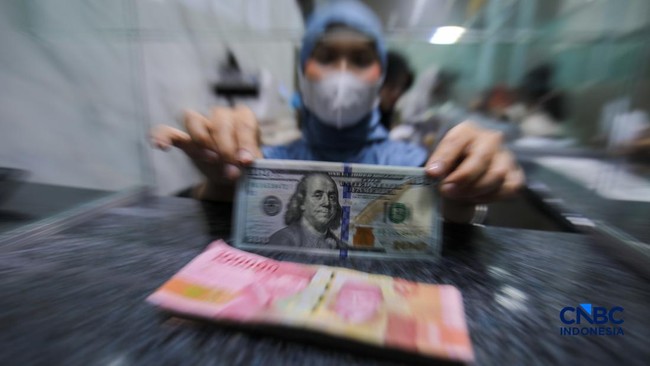
China’s largest news agency, Xinhua, has specifically highlighted the condition of the Indonesian currency after the rupiah exchange rate was reported to have weakened, breaking through a new psychological level above Rp 18,000 per US dollar on Thursday morning. The decline of the ‘Garuda’ currency occurred amidst high global uncertainty and the release of US economic data that was significantly stronger than market expectations.
“The Indonesian rupiah weakened beyond the psychological figure of 18,000 per US dollar on Thursday morning amid global uncertainty and US economic data that was stronger than expected,” the site reported in an article titled “Indonesian rupiah weakens beyond 18,000 per dollar,” cited on Friday.
“The currency fell 0.27% to 18,015 per US dollar, bringing the year-to-date decline to more than 7%.”
“Analysts say demand for the US dollar is supported by increasing geopolitical tensions in the Middle East and solid US employment and services sector data, while domestic market sentiment remains sluggish,” the report further explained.
The report also included comments from currency analysts suggesting the rupiah may continue to fluctuate within the range of 17,900 to 18,050 per dollar. It emphasised that Bank Indonesia (BI) has stated they will continue to take “consistent and measured” steps to stabilise the rupiah by optimising policy instruments and maintaining adequate foreign exchange liquidity.
The report also featured an article on how this depreciation affects entrepreneurs, titled “Rupiah weakness prompts Indonesian firms to cut costs, freeze hiring.”
“The depreciation of the rupiah exchange rate is increasingly impacting the real sector, prompting companies to delay expansion plans, limit non-essential spending, diversify markets, increase the use of local raw materials, and strengthen currency hedging strategies, an Indonesian industry organisation said,” the site wrote.
“The business world in Indonesia is implementing cost-cutting measures and freezing new labour recruitment as the rupiah exchange rate weakens beyond 18,000 against the US dollar,” said Shinta Kamdani, Chairwoman of the Indonesian Employers Association (Apindo).
“The current challenge for the business world is the impact on production costs, financing, and business certainty,” Shinta noted, while observing that approximately 80 per cent of Indonesia’s raw materials are still imported.
Referring again to Apindo, Xinhua mentioned how the weakening rupiah has increased production costs, squeezed profit margins, and reduced the ability of companies to expand. Industries heavily reliant on imported raw materials, including textiles, chemicals, petrochemicals, plastics, basic metals, electronics, and automotive manufacturing, are among those most affected.
“Shinta also mentioned high logistics, energy, and financing costs as additional burdens for the business world, while noting that manufacturing activity and business confidence have weakened in recent months,” the report added.
“She warned that the current depreciation is deeper than what was seen in the first quarter of this year, when several manufacturing sub-sectors had already recorded slow growth or contraction.”