
Chinese-made air conditioners sell out as heatwaves hit Europe
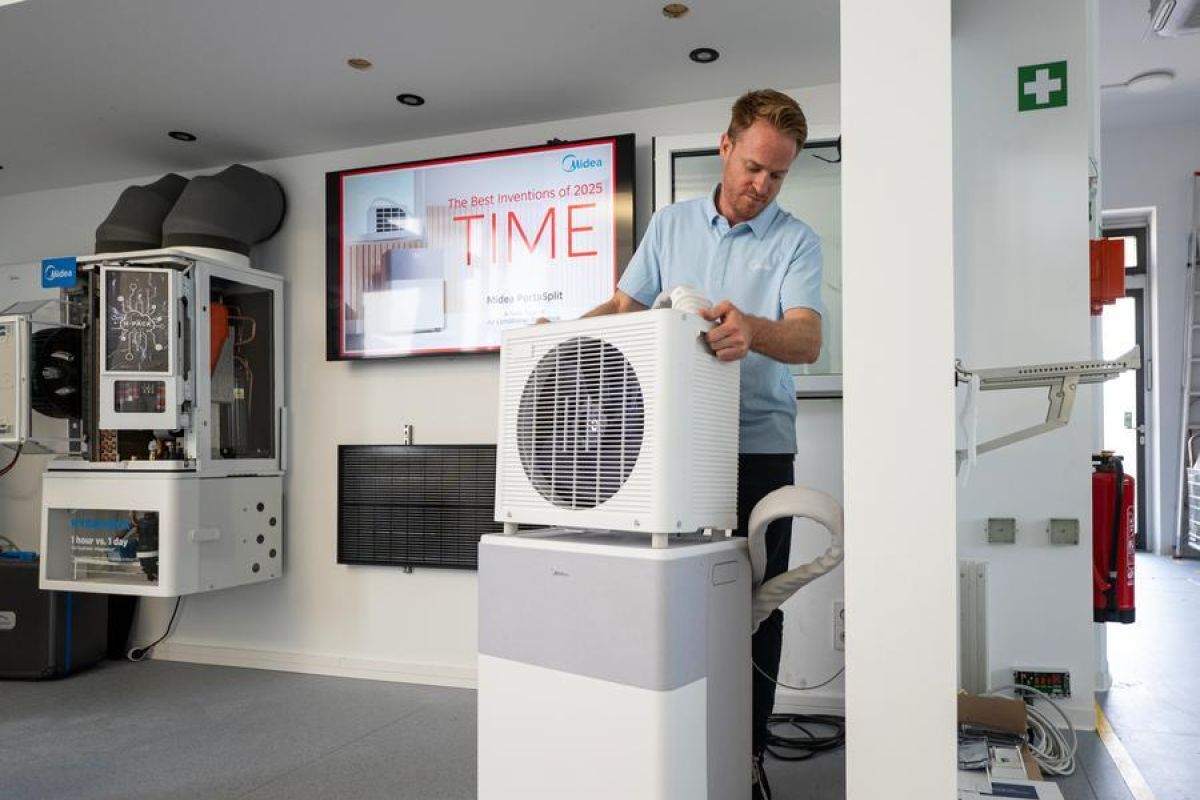
Beijing (ANTARA) - As record-breaking heatwaves sweep across Europe, Chinese-made air conditioners and various affordable cooling solutions have become the hottest-selling products.
This serves as a reminder that China’s strong manufacturing capacity is by no means a problem of ‘overcapacity’, but rather a solution to the genuine needs of society.
Xinhua reported on Thursday that a number of European politicians are considering the use of new trade defence instruments aimed at what they describe as ‘subsidised production overcapacity’ from China. Yet in the marketplace, consumers are flocking to buy affordable, reliable and easily available Chinese products, expressing their preferences through their purchases.
The lesson is simple. Production capable of meeting genuine needs is not ‘excessive’, but rather valuable.
The phenomenon also exposes the weakness of the ‘Chinese overcapacity’ narrative. From an economic standpoint, overcapacity should be assessed on the basis of persistently low utilisation rates, excess inventory, weak profitability and the absence of market demand — not on whether a country’s products are competitive enough to be exported.
The prevailing narrative in the West is clearly rooted in striking double standards. When European aircraft, cars, pharmaceutical products and wine dominated global markets and export shares, this was praised as European ‘competitive advantage’. Yet when Chinese products are able to meet global demand, they are unfairly labelled as evidence of ‘overcapacity’.
Few in the West raised concerns about ‘overcapacity’ when European countries scrambled to obtain masks and medical supplies from China during the COVID-19 pandemic. Such selective and self-serving rhetoric reflects nothing other than protectionist bias and a zero-sum mindset.
It is worth noting that the competitiveness of Chinese industry has been built through fierce market competition, continuous technological innovation, the world’s most complete industrial chains, and economies of scale supported by the country’s enormous domestic market.
The strengthening of the ‘Chinese overcapacity’ narrative essentially reflects excessive anxiety in the West, triggered by weakening industrial competitiveness, challenges in the energy transition process, and misdirected geopolitical distrust.
The imposition of trade barriers will not solve the structural problems facing the West; indeed, it may well backfire. Restricting imports of affordable Chinese products would directly raise household living costs in Western countries already hit by inflation, increase the burden on vulnerable groups, and push up the overall cost of the West’s green transition.
In the long run, protectionist policies will disrupt global industrial and supply chains, harm the interests of Western companies that have long benefited greatly from the Chinese market, and ultimately weaken Western industrial competitiveness itself.
Trade with China should be the natural outcome of market demand and complementary strengths, delivering tangible benefits to both sides. Consumers gain access to high-quality products at affordable prices, whilst businesses earn reasonable profits. This is a mutually beneficial choice, rather than the one-sided ‘flooding’ of products claimed by some Western politicians.
As global warming intensifies, demand for air conditioners and other cooling solutions in the European market is expected to continue rising. Chinese companies already hold competitive advantages in these products, both in terms of production capacity and technological innovation.
For European policymakers, rushing to erect new trade barriers against Chinese products would deprive local consumers of the opportunity to obtain more affordable solutions in the face of the heatwaves that have repeatedly struck Europe in recent years and are likely to continue. In the worst case, such policies could even cost European lives.
At the start of its reform and opening-up policy, China did not hesitate to welcome investment and advanced technology from Europe, which contributed significantly to the country’s development and prosperity.
Today, it would be wise for European policymakers to encourage Chinese air conditioner manufacturers to bring their investment and technology to Europe, including through joint ventures with European partners to achieve local production as well as research and development cooperation.
Such cooperation would yield benefits for both sides, whilst bringing relief to European citizens struggling amid the heatwaves.
Source: jawawa.id (https://jawawa.id/newsitem/chinese-made-air-conditioners-sell-out-as-heatwaves-hit-europe-1783601736)
Originally published by Antara (Indonesian) (https://www.antaranews.com/berita/5642776/ac-buatan-china-laris-saat-eropa-dilanda-gelombang-panas), translated from Indonesian