
Chinese Investors Complain to Prabowo: Serious Warning of Increased Risks of Doing Business
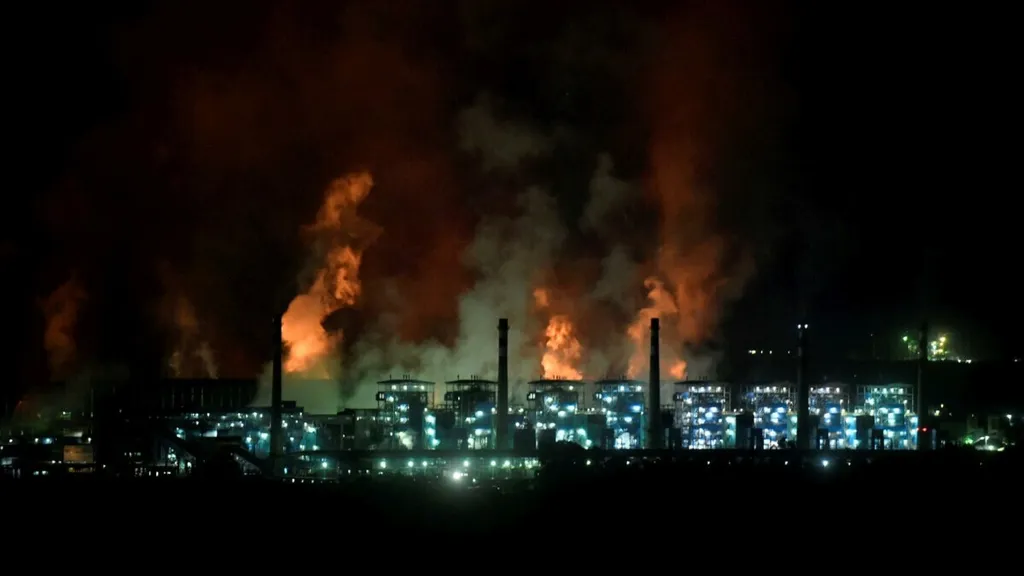
Complaints from Chinese investors reflect the real conditions of investment in Indonesia. Legal certainty, bureaucracy, and regulatory efficiency are still considered the main obstacles.
By Aguido Adri
14 Mei 2026 08:00 WIB · English
JAKARTA, KOMPAS — Complaints from Chinese investors regarding the business climate in Indonesia serve as a serious signal of the increasing perception of investment risks domestically. The government is urged to maintain a balance between strengthening state revenues and ensuring business certainty so that Indonesia’s investment competitiveness does not weaken amid global competition.
Economist from the Institute for Development of Economics and Finance (Indef), M Rizal Taufikurahman, stated that the letter from the China Chamber of Commerce in Indonesia to President Prabowo Subianto indicates the growing concerns of strategic investors regarding the direction of national investment policies.
“I see this letter from the Chinese Chamber of Commerce as a serious warning that some investors are starting to see an increase in the risks of doing business in Indonesia,” Rizal said when contacted on Wednesday (May 13, 2026).
According to him, China’s position is very important for Indonesia as it is one of the largest investors, particularly in strategic sectors such as nickel downstream processing, smelters, and electric vehicles. By 2025, for instance, the realization of Chinese investment is expected to be around 8.1 billion US dollars.
“This means that when strategic investors begin to voice open complaints regarding regulations, taxation, and law enforcement, this can no longer be considered a trivial matter,” said Rizal.
The government, Rizal said, does have an interest in strengthening state revenues, natural resource management, and environmental oversight. “But the business world needs certainty and consistency in policy to ensure long-term investment remains feasible,” Rizal continued.
Previously, the China Chamber of Commerce in Indonesia wrote to President Prabowo Subianto regarding various investment obstacles that burden Chinese business actors.
The Chinese Chamber of Commerce in Indonesia conveyed the complaint in a letter to Prabowo that was widely circulated in the public since Tuesday afternoon (May 12, 2026). Kompas has confirmed that the letter was officially written by the Chinese Chamber of Commerce.
In the letter, Chinese investors highlighted various classic issues that hinder investment in Indonesia. These include overly strict regulations, excessive law enforcement, and several new policies; such as tax and royalty increases, mandatory retention of foreign exchange from exports, reduction of nickel ore quotas, tightening of work permits for foreign workers, as well as allegations of corruption and extortion by certain authorities.
“This issue has disrupted normal business operations, directly undermined long-term investment confidence, and raised widespread concerns among Chinese investment companies regarding the business climate and the future development of their businesses in Indonesia,” the letter stated.
Rizal believes that most of these complaints reflect the real condition of investment in Indonesia, which is often voiced by domestic entrepreneurs as well as foreign investors from other countries.
Last year, for instance, a South Korean consortium led by LG Energy Solution officially withdrew from the electric vehicle (EV) battery project in Indonesia. In addition to the shifting landscape of the global EV industry, another factor driving this decision is the certainty of investment in Indonesia.
Various global surveys such as the World Competitiveness Ranking and Ease of Doing Business have previously indicated that Indonesia’s main issues still revolve around legal certainty, bureaucracy, and regulatory efficiency.
“Many investors complain about rapid regulatory changes, overlapping central and regional authorities, and high business compliance costs,” he said.
In the nickel sector, for example, changes in the mineral benchmark price (HPM), reductions in the work plan and budget (RKAB), and policies regarding foreign exchange from natural resource exports (DHE SDA) are said to create additional pressure on the cash flow and business planning of companies.
According to Rizal, supervision of foreign companies indeed needs to be strengthened so that Indonesia does not merely become a site for the exploitation of natural resources. However, problems arise when law enforcement is perceived as inconsistent, overly discretionary, and variable.
“Global investors can actually still accept high taxes or strict environmental obligations as long as the rules are clear and predictable,” he said.
He added that the greatest risk actually arises when business costs increase due to regulatory uncertainty and high informal costs. In the current global conditions, Indonesia is considered to be in direct competition with Vietnam, Thailand, and Malaysia in attracting the relocation of global industries.
Regarding the DHE SDA policy, Rizal believes that the government’s move to retain export foreign exchange domestically is important for maintaining macroeconomic stability and strengthening the supply of domestic foreign currency.
However, its implementation needs to consider the capital-intensive nature of the mining and downstream industries. “This industry requires high cash flow flexibility for machinery imports, US dollar debt payments, and business expansion,” he said.
If export earnings remain held domestically for too long, companies could potentially experience liquidity pressure, particularly for debt refinancing, heavy equipment imports, and new smelter construction. In the short term, this could slow expansion.
Rizal also highlighted the issue of investment bureaucratic governance, which is considered a significant homework for the government. Legal certainty and regulatory consistency are the most determining factors in maintaining the fl
Source: jawawa.id (https://jawawa.id/newsitem/chinese-investors-complain-to-prabowo-serious-warning-of-increased-risks-of-doing-business-1778781566)
Originally published by kompas.id (https://www.kompas.id/artikel/en-keluhan-investor-china-cerminkan-risiko-usaha-dan-investasi-di-indonesia)