
Chinese Giant Companies Aggressively Selling Debt Instruments to Arab and Others, What's Going On?
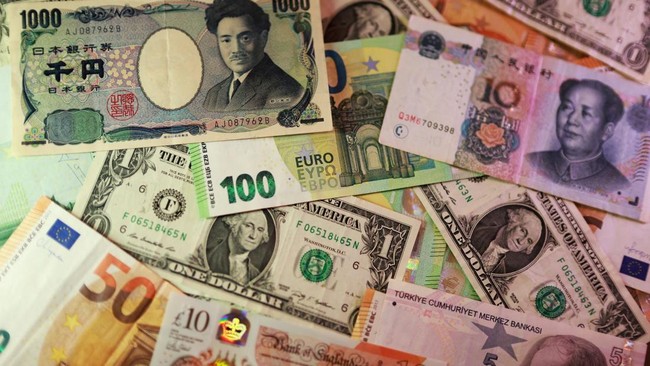
A new dynamic has emerged in the internationalisation of the Chinese currency, particularly the offshore yuan (CNH), which is beginning to play a strategic role in cross-border trade and financing systems. This situation creates a new imbalance while opening up alternative financing opportunities for the global financial architecture.
China is also becoming increasingly active in promoting the yuan as an investment tool for payments or loans. Chinese companies are now being aggressively encouraged to issue global debt instruments denominated in yuan in other countries.
This effort is part of China’s long-term strategy for de-dollarisation and shifting the dominant role of the United States (US) on the global stage.
China’s aggressive efforts are gradually bearing fruit.
The share of global foreign exchange reserves denominated in the US dollar has slowly declined to 56.77% in the fourth quarter of 2025. This portion is at its lowest point since the mid-1990s era.
Conversely, the share of the Chinese yuan in global foreign exchange reserves has slowly climbed to 1.95% in the same period. Although the dollar’s dominance remains strong, pressure on the petrodollar system is starting to become apparent.
In response to this structural shift, developing countries are seen as no longer able to simply resign themselves to a single source of liquidity. If they wish to pursue progressive economic growth targets of up to 8%, the issue of funding burdens must be urgently addressed through the creation of a new financing architecture, one of which is the utilisation of CNH instruments.
Differences in Cost of Funds and Momentum of Dim Sum Bonds
This shift towards alternative funding is not only driven by global foreign exchange reserve dynamics but also by the reality of funding cost efficiency (cost of funds). There is a striking difference in interest rate policies between the US Federal Reserve and the People’s Bank of China.
When the US dollar benchmark interest rate is held at a relatively high level, the cost of yuan-denominated borrowing offers much more efficient coupon rates for issuers.
It is this yield differential that has become the main catalyst for the surge in the volume of offshore RMB bond issuances, or what is known in the global capital markets as Dim Sum bonds, over the past two years.
This CNH financing cost efficiency opportunity has been responded to very aggressively by multinational corporations. Various technology companies from China are competing to issue yuan-denominated debt instruments in the offshore market to absorb international liquidity without bearing the high cost of dollar interest.
Interestingly, this expansive step is executed strictly under the framework of international capital market laws, primarily using the guidelines of Regulation S and Rule 144A.
The use of these regulations is a very important affirmation. These rules legally ensure that the offering and sale of bonds are specifically designed to target institutional investor bases outside mainland China (non-China).
In the Regulation S scheme, issuances are even exclusively focused on offshore transactions outside US jurisdiction. This tactical step, bound by strict rules, also proves the high confidence of global institutions in the foreign funding ecosystem, as the funds entering are truly pure liquidity from foreign investors. Below is a breakdown of bond issuances from various such giant corporations.
Meituan
The giant delivery service and e-commerce platform company, Meituan, made history at the end of 2025 by releasing its inaugural bond in CNY denomination in the offshore market.
Meituan successfully raised liquidity of CNY 7.08 billion, divided into two series of maturities. This offering experienced oversubscription driven by interest from international investment managers from Europe and Southeast Asia who are seeking diversification of emerging market instruments outside US dollar control.
Alibaba Group Holding Limited
At the end of 2024, Alibaba conducted an RMB-denominated debt offering worth RMB 17 billion exclusively using Regulation S rules. This rule specifically prohibits the sale of instruments in US territory, so all fund absorption comes purely from cross-country investors outside US jurisdiction.
The largest absorption portion was recorded by pension funds and wealth managers operating from Singapore as well as the Europe, Middle East, and Africa (EMEA) region.
Baidu Inc.
The artificial intelligence technology company, Baidu Inc., issued CNY bonds worth CNY 10 billion in the first quarter of 2025. Baidu’s management directed this issuance to absorb liquidity from Western financial entities seeking more optimal returns.
Order allocation significantly flowed to multinational private banks and institutions from Commonwealth countries connected to the global clearing system.
Tencent Holdings Ltd.
Tencent Holdings completed the issuance of offshore instruments denominated in CNY with a total value of CNY 9 billion in mid-2025. This technology company tactically offered very long tenor options to match the risk profiles of global institutional investors.
Tencent’s 30-year tenor debt instrument was specifically absorbed by sovereign wealth funds from the Middle East and pension fund management institutions from the European continent.
Kuaishou Technology
Following in the footsteps of its competitors, Kuaishou Technology also absorbed international funding through the issuance of RMB-denominated bonds worth RMB 3.5 billion at the beginning of 2026.
The instruments allocated to fund the company’s artificial intelligence infrastructure were aggressively purchased by investment managers managing emerging market mutual funds with main operational bases outside mainland China.
Dominance of Global Institutions and Alternative Financing Opportunities
The high absorption of Chinese corporate bonds in p
Source: jawawa.id (https://jawawa.id/newsitem/chinese-giant-companies-aggressively-selling-debt-instruments-to-arab-and-others-whats-going-on-1777258282)
Originally published by CNBC Indonesia (https://www.cnbcindonesia.com/research/20260422085504-128-728750/perusahaan-raksasa-china-gencar-jual-surat-utang-ke-arab-cs-ada-apa), translated from Indonesian