
Chinese Emperor Admired Prophet Muhammad, Gave an Unexpected Epithet
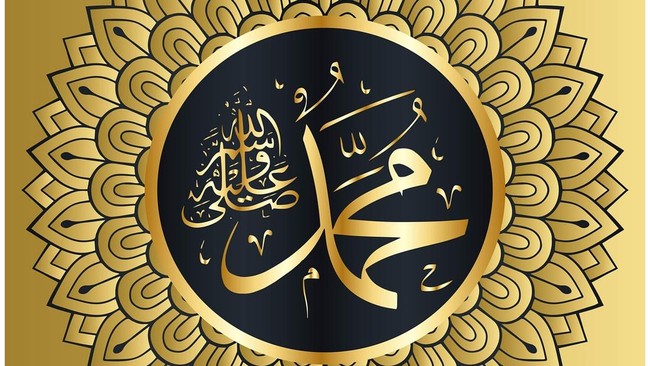
Jakarta, CNBC Indonesia - A Chinese emperor once expressed admiration for the Prophet Muhammad. The figure was Zhu Yuanzhang, founder of the Ming Dynasty, who reigned from 1368 to 1398.
The admiration is reflected in a text of praise known as the ‘Hundred-Word Praise’. In this work, the Prophet Muhammad is depicted as a noble and wise figure, as well as a bearer of mercy for all creation.
This story unfolded at a time when Islam was flourishing in China. During Zhu Yuanzhang’s reign, Islam was not merely the religion of a minority community, but began to become part of the empire’s social, political and administrative life.
Research published in Islam in Imperial China (2019) reveals that during Zhu Yuanzhang’s rule there was a significant increase in the number of people embracing Islam. Its spread took place through individual preaching that later expanded to communities, villages, clans and wider social networks.
This development also received state support. Mosques and Islamic learning centres were established, while Muslims were recruited into various imperial structures.
They were entrusted with important positions, ranging from administration and the military to the palace. Muslims also served as court advisers, eunuchs, imperial envoys, regional governors and diplomatic officials. Muslim scholars likewise received official state support.
The influence of Islam was even visible in cultural heritage. Islamic inscriptions in Arabic and Persian script were carved on imperial palace porcelain, serving as a symbol of the recognition of Islamic culture within Ming civilisation.
It was amid these conditions that the ‘Hundred-Word Praise’ emerged, a text that stands as the most symbolic evidence of reverence for the Prophet Muhammad.
In the poem, the Prophet Muhammad is described as the bearer of a religion born in the western lands. He is also depicted as the recipient of the holy scripture and a figure capable of transforming all created beings.
One passage of the poem reads:
‘A mercy to all the worlds, whose path is pre-eminent for all time. Muhammad is the most noble of sages.’
According to research in Praising the Prophet Muhammad in China, the existence of the poem can be interpreted as evidence that Zhu Yuanzhang understood Islamic teachings, even though he did not become a follower.
Thus, the praise not only demonstrates respect for the Prophet Muhammad, but also illustrates how Islam was once regarded as a moral and spiritual force within the Chinese imperial environment.
Despite providing considerable room for the development of Islam, the Ming Dynasty government also had a paradoxical side. Muslim communities underwent a process of sinicization, namely gradual assimilation with local culture.
Research in Islam in Imperial China: Sinicization of Minority Muslims and Synthesis of Chinese Philosophy and Islamic Tradition (2019) states that this process caused part of the cultural identity of Hui Muslims to merge into Chinese culture.
In other words, the era of Zhu Yuanzhang was a unique period in the history of Islam in China. On one hand, Islam developed and received support within the imperial structure. On the other hand, Muslim communities gradually adapted to Chinese culture, and amid this process a work emerged depicting the Prophet Muhammad as a noble figure and a bearer of mercy for all creation.