
Chinese Electric Motorbikes Reap Profits in India, Pakistan and Bangladesh
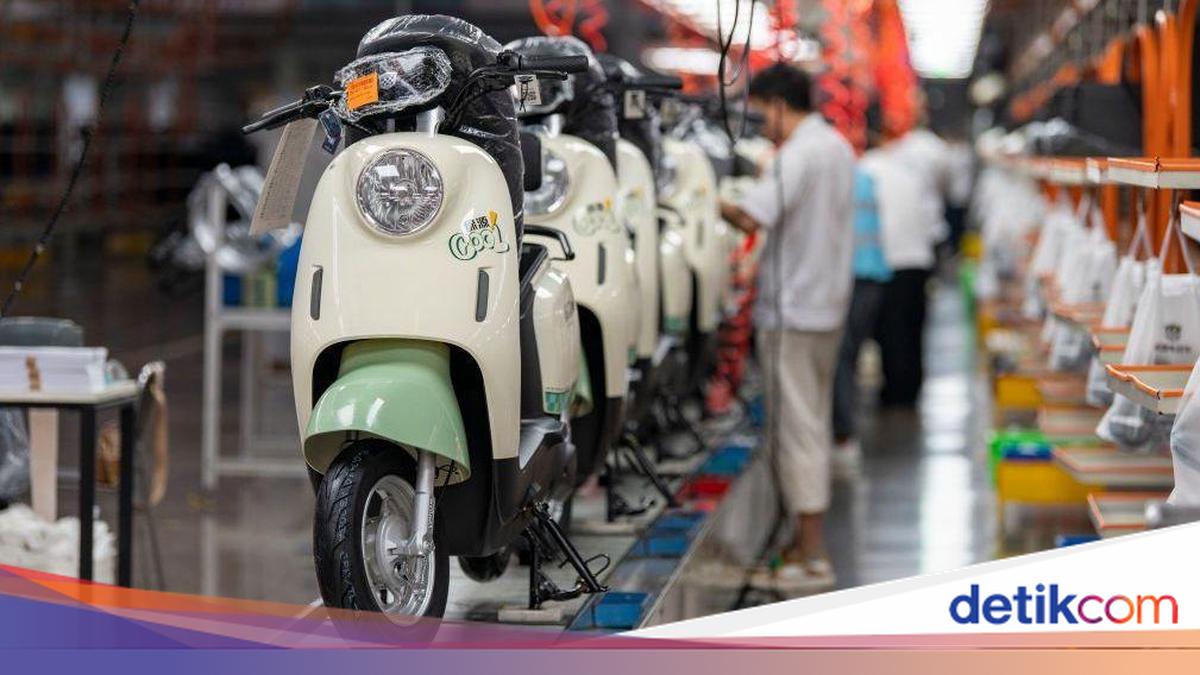
Rising fuel costs caused by the US-Israeli war with Iran are affecting transport across South Asia. It is becoming more expensive for people to commute to work, run personal errands and meet friends and family.
With fuel supplies still at risk of disruption because of the situation in the Strait of Hormuz, more people are switching to cheap, nimble electric motorbikes made in China.
As a result, Chinese electric motorbike exports to South Asia have surged in recent months.
In August alone, China’s exports of electric scooters to India nearly doubled compared with the same month a year earlier.
Exports to Pakistan and Bangladesh rose by 291% and 553% respectively, according to Chinese customs data.
An affordable option
Global fuel prices surged when the war began in February.
For Bangladesh, which imports about 95% of its oil and petroleum products, the shock came suddenly and dramatically.
“In March and April, people were queuing for eight to 10 hours to fill up,” said Imran Zaman Khan, director of the Rancon Motors division, an automotive distributor headquartered in Dhaka.
Bangladesh, India and Pakistan are known for having some of the world’s worst air pollution. Their governments have long introduced policies to encourage the use of electric vehicles.
But in Bangladesh, it was the surge in fuel prices that prompted people to make the switch.
Before the fuel crisis, people in Bangladesh regarded the arrival of electric vehicles as “something happening in other countries”, Khan said.
“After March and April, electric vehicles became something people felt they needed to consider as part of everyday life,” he added.
According to Khan, Beijing-based electric motorbike companies have emerged in Bangladesh. But competitors from India, the region’s traditional automotive hub, have never taken the market particularly seriously.
“Consumers basically have only two choices: buy a Chinese-made electric vehicle, or not switch to an electric vehicle at all.”
Not all electric motorbikes sold in Bangladesh are imported from China. Some companies assemble them locally, although all their main components also come from China, said Mostafa Al Mahmud, president of the Bangladesh Sustainable and Renewable Energy Association.
For consumers who switch, the savings are substantial. Electric motorbikes cost only one-tenth as much to run as petrol-powered motorbikes, he said.
In Western countries, the higher upfront cost of buying an electric car often acts as a barrier to faster adoption.
That is not the case with electric motorbikes, Al Mahmud said.
“The prices are genuinely comparable; many petrol-powered motorbikes are actually more expensive than electric scooters.”
‘A sense of freedom’
Not all buyers of Chinese electric motorbikes are switching from petrol-powered models.
Many are first-time riders, attracted not only by the low price but also by what Al Mahmud described as the sense of freedom and mobility they offer new riders, particularly women.
“Previously, women travelled much less often,” he said.
“Because of their low price, electric scooter sales among women have really taken off. They want independence and easy access to their own personal transport.”
The trend is also visible in Pakistan. More women are riding electric motorbikes in large convoys simply for enjoyment.
Faiza Ashraf, a young designer, bought her electric motorbike while she was a student.
“We had to use public transport or ride-hailing taxis, and many women faced harassment from drivers. It was also very hot and unpleasant.”
Ashraf was an early adopter. She bought her first electric motorbike before fuel prices rose, when female riders were still rarely seen on city streets.
“At first, riding on public roads felt lonely. But after I shared my riding experiences online, many women contacted me, wanting to connect, learn and ride together,” she said.
The US-Israeli war with Iran and its economic consequences have expanded the community of electric motorbike riders. Ashraf now often organises gatherings with fellow women riders in cities across Pakistan.
However, not everyone welcomes the change.
“In Pakistan, India and Bangladesh, there are people who believe women should not ride motorbikes or go anywhere alone. But with my electric motorbike community, I started a trend,” Ashraf said.
According to Sarim Zia, a researcher at the Sustainable Development Policy Institute in Islamabad, Chinese companies have made few adjustments to their electric motorbike models for local markets.
Their popularity among women has emerged by chance rather than through deliberate planning.
Conservative opinion in Pakistan holds that petrol-powered motorbikes are an immodest form of transport for women because riders have to sit astride them, he explained.
Electric motorbikes, on which riders sit upright, draw less objection from conservatives.
The scooters have proved popular with all kinds of riders, not only women, Zia added.
He noted that electric motorbikes are popular because they do not require complicated charging infrastructure.
“Users do not need a special connector to charge a motorbike at home. They only need a 12-volt socket,” he said.
Resisting the tide
As in Bangladesh, electric motorbikes are also assembled in Pakistan, although manufacturers depend on high-value components such as batteries and electronic controllers imported from China.
This kind of local assembly does little to bring in advanced technology or boost the local economy.
Pakistan aims to build a domestic supply chain but, according to Zia, has limited ability to reduce its reliance on Chinese components.
“We do have a very good relationship with China, so we cannot disrupt the situation. We cannot completely stop imports from China into Pakistan. We just have to think more diplomatically.”
India has greater economic strength and is more wary of imports from China, which it sees as an economic and geopolitical rival.
Electric motorbikes have grown rapidly there, but the Indian government is working to build its own electric vehicle industry to compete with China.
Part of the motivation is economic. To capture more value from finished products, India is encouraging companies to manufacture electric motorbikes and their main components domestically.
Indian electric motorbike manufacturers have achieved considerable success by tailoring their scooters to local tastes and needs.
Companies such as Ola Electric and Ather Energy also own their technology, having filed hundreds of patents in India.
But China is at the forefront of some of the most advanced battery technologies and is determined to preserve that advantage.
In October 2025, China imposed strict controls on exports of its most advanced batteries, as well as the chemicals and machinery needed to make them.
This makes China’s dominance difficult to break. Given its strained relationship with India, Beijing’s expanding electric vehicle business in South Asia also has a geopolitical dimension, said Aditya Shivamurthy, an associate research fellow at the Observer Research Foundation in New Delhi.
“What we are seeing on a larger scale is that China has used economics and trade to put pressure on South Asian countries over time,” he said.
“Ultimately, it does use its economic influence to expand its political and geopolitical involvement.”
For ordinary consumers, however, the everyday benefits of these scooters are considerable, despite their being made in China, Shivamurthy said.
“The fact is that people are beginning to feel the effects of fuel uncertainty… Chinese-made scooters are preferred and more readily available than electric vehicles made in India, whose market is only slowly developing.”
Source: jawawa.id (https://jawawa.id/newsitem/chinese-electric-motorbikes-reap-profits-in-india-pakistan-and-bangladesh-1793605936)
Originally published by detikcom (https://news.detik.com/bbc-world/d-8734543/motor-listrik-china-raup-untung-besar-di-india-pakistan-dan-bangladesh), translated from Indonesian