
Chinese Consumers Shift to NEVs Amid Tech Advances and Rising Fuel Costs
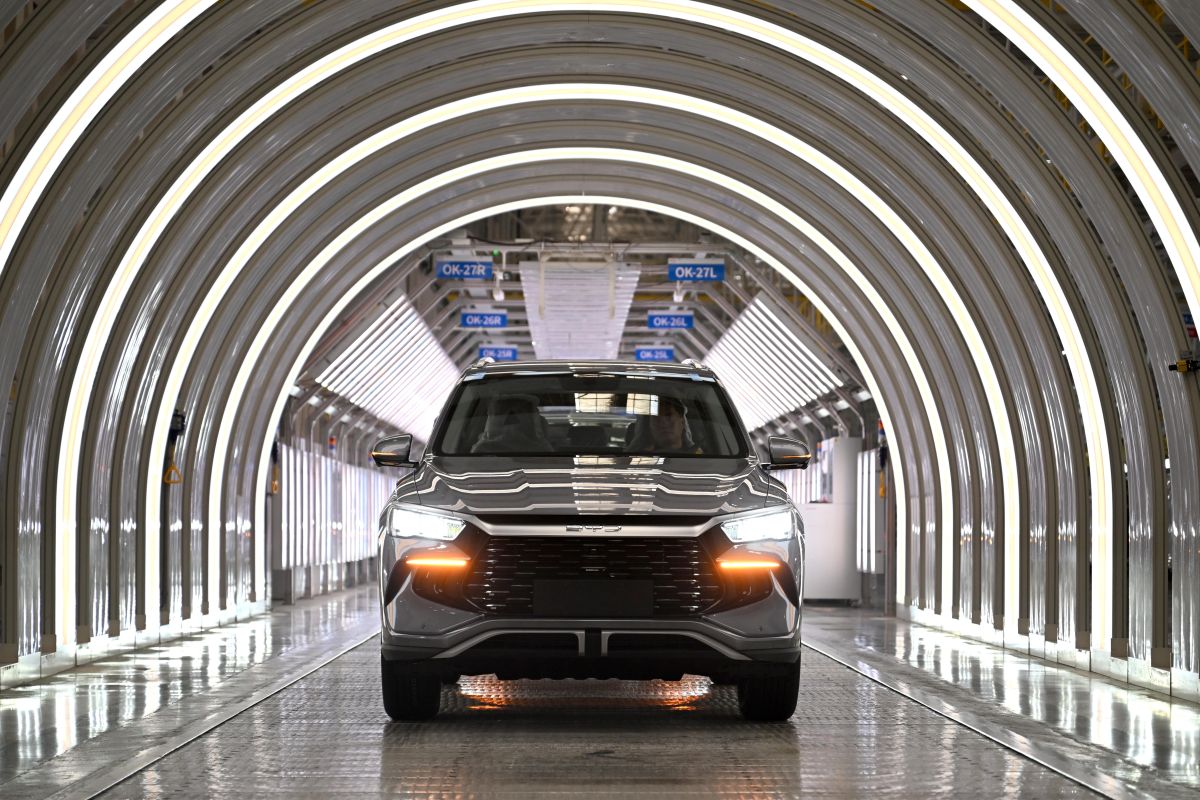
For Wang, a daily commuter in Chongqing, southwest China, switching from a petrol car to an electric vehicle (EV) has brought significant financial change. His monthly fuel costs, which once exceeded 1,200 yuan, have plummeted to under 200 yuan for electricity, yielding annual savings of around 12,000 yuan. Wang’s experience reflects a broader shift in the world’s largest automotive market.
According to the China Association of Automobile Manufacturers (CAAM), new energy vehicles (NEVs) accounted for 56.9% of total new car sales in China in May, up from 50.8% in 2025 and 40.9% in 2024. With nearly 1.5 million units sold last month, the country’s NEV market continues to grow at a pace exceeding global expectations. CAAM Deputy Secretary-General Chen Shihua attributed the momentum to a combination of falling costs, rapid technological advancement, and a fundamental change in consumer preferences. While sales of conventional petrol cars weaken, NEVs are carving out an independent growth path.
For Chinese buyers, the appeal of NEVs extends beyond cost savings. The battleground has shifted to software-defined cabins. Domestic artificial intelligence (AI) models are increasingly integrated into vehicles, transforming the driving experience from a mechanical task into something highly intuitive. Some models now use sensors and facial recognition to detect the driver’s mood, automatically adjusting cabin lighting, music, and even scent. A dealer manager in Chongqing noted that consumers are no longer fixated on engine power but prioritise smart features and the overall user experience.
This tech-focused push coincides with significant price drops. As battery material costs stabilise and advanced manufacturing techniques like integrated die-casting become standard, automakers are passing the savings directly to consumers. Brands such as BYD and Leapmotor now offer vehicles with advanced driver-assistance systems for under 100,000 yuan, with some entry-level NEVs priced around 80,000 yuan.
Charging infrastructure, long cited as a potential bottleneck, is also expanding in line with demand. According to China’s National Energy Administration, the country had built nearly 22 million charging facilities nationwide by April. The network now stretches from urban centres to remote rural areas, fulfilling the promise that charging will become as easy as refuelling for millions of drivers. Government incentives, including trade-in subsidies, further bolster this momentum.
According to Hua Guowei, a professor at Beijing Jiaotong University, the convergence of high global oil prices, rapid technological progress, and a young, tech-savvy consumer base is accelerating the transition. High performance, trendy design, and a low-carbon lifestyle combine to drive this new wave of green mobility. Leveraging a highly integrated supply chain and a vast domestic market, China has cemented its position as the world’s largest producer and seller of NEVs for consecutive years. Industry experts believe that by accelerating the rollout of NEVs, China is providing a viable pathway for a global green and low-carbon transition, supporting sustainable development.