
Chinese Citizens Sell Face Rights for Rp12 Million to Enter AI Drama Industry
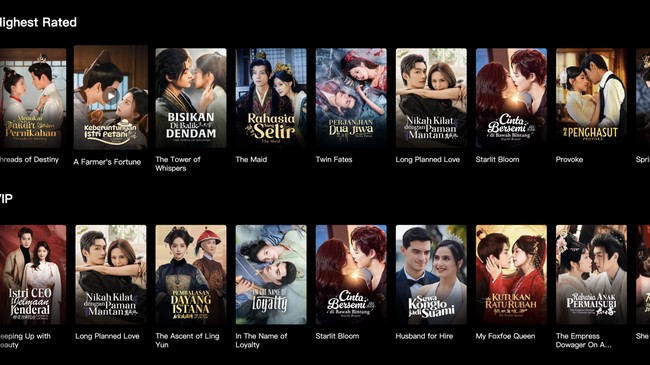
The explosion of artificial intelligence (AI) usage in China has given birth to a new, unusual business. Citizens can now earn money by renting out the rights to use their faces for various AI-based content, such as Chinese dramas (dracin).
A number of digital platforms offer payments ranging from US$15 to US$700, or approximately Rp268,000 to Rp12.4 million, to obtain a licence to use a person’s face in AI-generated content.
These platforms provide a catalogue of faces sourced from photos uploaded by users or from shoots at specific studios. Producers can search for faces based on gender, age, and even character types such as ‘girl-next-door’, ‘rugged’, or ‘supermodel’.
Producers can also tailor their search to the genre of content being made, from thrillers and comedies to romantic dramas.
Face owners retain control over the use of their image. They can determine which products or settings may feature their face, such as television advertisements, games, or short dramas. They can also set rates based on the type of use and the number of productions permitted to use the face.
‘Regardless of whether actors and models choose to license their faces on our platform or not, AI is already disrupting this industry. Selling the rights to their photos gives them a way to earn income while continuing their careers offline,’ said Long Lyu, operations head of the AI image rights platform New Claw, as quoted by Rest of World on Tuesday (18/8/2026).
The growth of this business is inseparable from the rapid production of AI-based content in China. More than 95% of the total 128,000 microdramas released in the country during the first three months of 2026 used AI in their production process.
Microdramas are very short video series in vertical format designed to be watched on mobile phones. The industry has grown into a multi-billion-dollar business in China.
However, the use of AI has also triggered new problems related to copyright and identity misuse. While in the United States such issues largely involve celebrities like Tom Hanks and Scarlett Johansson, China faces a broader problem because ordinary people’s faces are also being used without permission.
ByteDance’s AI drama platform Hongguo, for example, was accused by two influencers of using and modifying their faces with AI without consent. The drama had been watched more than 40 million times before it was eventually taken down.
ByteDance, which also owns Douyin, the Chinese version of TikTok, said it has removed more than 85,000 videos that unlawfully reproduced a person’s face and voice since early 2026.
The Guangzhou Internet Court has also handled around 700 cases related to AI face theft over the past three years.
Faces as a New Commodity
One platform attempting to regulate the trade in face rights is ActID. The Shenzhen-based platform helps users manage licensing agreements while monitoring the internet to detect unauthorised use of registered faces.
ActID also connects users with lawyers if they need to take legal action.
Since its launch in March, ActID has registered around 800 users. About 300 of them have agreed to license the use of their image for AI production. They range from professional extras and influencers to ordinary people with no acting experience.
So far, two AI drama productions have licensed around 10 faces through ActID. Rates range from 99 yuan to 500 yuan, or about US$15 to US$74 per episode, while ActID takes a 10% commission.
‘Producers want attractive faces for lead roles, but they also need distinctive faces such as elderly people, for example,’ said Camille Yan, Chief Marketing Officer of ActID, to Rest of World.
Chengdu-based New Claw also pivoted to this business after its previous production house business was heavily impacted by AI developments.
‘Since the end of last year, it has been very clear how the rise of AI dramas has affected our industry. Traditional drama production has declined, advertising budgets have shrunk, and even luxury brands have started shifting to AI-generated productions,’ said Lyu.
According to Lyu, licensing a person’s face is cheaper than hiring that person to appear in person. New Claw sets a minimum price of 500 yuan, or about US$74 per image, to prevent users from setting prices too low and triggering a price war.
The use of real people’s faces is considered to make characters in AI dramas more diverse. Until now, viewers on social media have complained that many AI-generated characters have similar appearances.
Source: jawawa.id (https://jawawa.id/newsitem/chinese-citizens-sell-face-rights-for-rp12-million-to-enter-ai-drama-industry-1787100686)
Originally published by CNBC Indonesia (https://www.cnbcindonesia.com/tech/20260818125422-37-760452/warga-china-jual-wajah-rp-12-juta-demi-masuk-dracin), translated from Indonesian