
Chinese Cars Unsold, Mass Migration to New Money-Making Machines
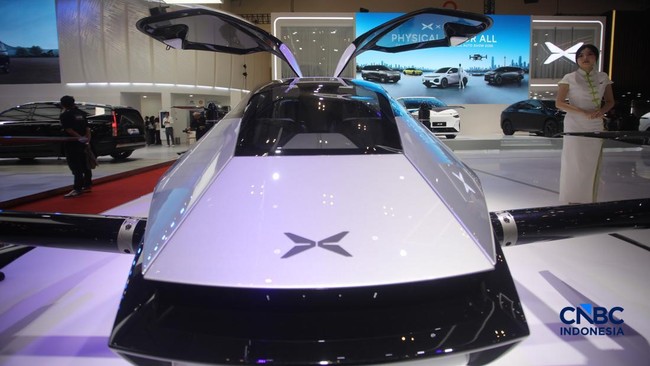
Chinese electric vehicle (EV) manufacturers are beginning to expand into other businesses. EV manufacturers are now collectively attempting their luck with humanoid robots—robots whose shapes and movements resemble humans—amidst a slowdown in domestic electric car market growth and increasingly fierce competition.
Several companies are even preparing for the mass production of robots to seek new sources of growth. It is noted that Chinese EV sales are currently estimated to be recording their worst performance since 2_021.
“These car manufacturers are attempting to change their capital valuation narrative, while simultaneously strengthening their image as technology companies and creating new sources of growth,” said Kevin Li, Director of Counterpoint Research, as quoted by CNBC International on Thursday.
This diversification emerges amidst pressure on the growth and profitability of Chinese EV manufacturers. Data from the China Automobile Manufacturers Association, cited by Counterpoint, shows that the average profit margin for the Chinese vehicle manufacturing industry was only 1.5% in the first half of 2026.
“Given the slowing growth and declining profitability in the EV market, particularly domestically, diversifying into new applications such as robotics is a reasonable strategic move,” said Jing Yang, Director of Asia-Pacific Corporate Ratings at Fitch Ratings.
One company making the transition is Xpeng. Last month, the electric car and motorcycle manufacturer raised US$900 million (Rp15.77 trillion) for its robotics business, which the company claims is the largest single funding round in China’s embodied AI industry.
This funding provides a valuation of more than US$6.3 billion (Rp110.42 trillion) for Xpeng’s robotics unit. According to Citi, this is almost equivalent to the estimated US$6.5 billion (Rp113.91 trillion) value of the company’s EV business.
Xpeng estimates it can utilise approximately 85% of its motor components, chips, and intelligent driving software for humanoid robots, while these robots could initially be deployed in the company’s showrooms and factories. On Tuesday, Xpeng stated it would begin mass production of humanoid robots by the end of 2026, with initial use in its own stores and business facilities before being marketed more widely in China and abroad in 2027.
Xiaomi has also been testing humanoid robots in its factories this year. Meanwhile, Nio’s investment division has invested in several robotics startups, such as LimX Dynamics and Acorn Robot.
Despite the significant prospects, the commercialisation of humanoid robots still faces uncertainty. This was noted by Jefferies Hong Kong analyst Xiaoyi Lei, who acknowledged that Chinese automotive manufacturers possess an advantage because they can reuse much of their existing supply chain and technology.
“In my opinion, the real challenge lies in how to adapt the algorithms and software suites originally used for intelligent driving systems so they can be applied to humanoid robots, which is far more difficult and challenging,” said Lei.
Source: jawawa.id (https://jawawa.id/newsitem/chinese-cars-unsold-mass-migration-to-new-money-making-machines-1789034824)
Originally published by CNBC Indonesia (https://www.cnbcindonesia.com/tech/20260909145854-37-766565/mobil-china-tak-laku-ramai-ramai-pindah-ke-mesin-uang-baru), translated from Indonesian