
Chinese Cars Begin to Grip the World, with Factories Across the Globe
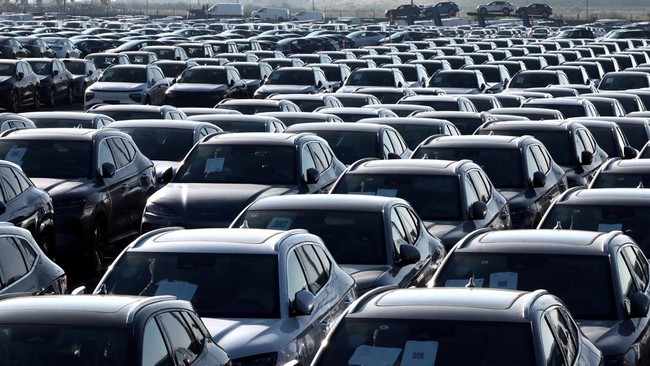
Chinese car manufacturers are beginning to build production facilities in various countries in order to expand their reach in the global market.
Chinese automotive companies such as BYD, Chery, Geely, SAIC and Xpeng are choosing to produce their vehicles closer to consumers. They are establishing new factories, purchasing existing facilities, or using part of the capacity of plants owned by other manufacturers.
This expansion comes as competition in the Chinese automotive market intensifies.
Car sales in the Middle Kingdom are expected to fall 10% this year, driving price competition and increased exports.
Over the past five years, the market share of foreign brands in China has shrunk by roughly half. Over the same period, vehicle exports from China have risen sevenfold, with around 80% of them coming from local brands.
AlixPartners, as reported by The Economist, estimates that Chinese vehicle exports could reach 10 million units in 2026, up more than 40% compared with last year.
Why Are Chinese Manufacturers Building Factories Abroad?
Production in destination countries can reduce the cost of shipping complete vehicles from China whilst avoiding import tariffs. The presence of local factories also makes it easier for companies to comply with local regulations and adapt vehicles to consumer needs.
In addition, a number of countries offer subsidies and investment incentives to attract automotive plant construction. Such investment is expected to boost production activity and create jobs.
Chinese manufacturers have assembled vehicles or planned production facilities in several developing countries, including Indonesia, Kazakhstan, South Africa, Egypt, Brazil and Mexico.
In Indonesia, BYD has just inaugurated a new energy vehicle plant at the Subang Smartpolitan Industrial Estate in Subang, West Java, on Thursday (3/9/2026). BYD’s first plant in Indonesia has a production capacity of up to 150,000 vehicles per year and is the company’s 13th production facility globally.
Despite expanding production to a number of developing countries, Chinese manufacturers still regard Europe as one of their main markets because of the size of vehicle sales in the region.
The additional tariffs imposed by the European Union on Chinese electric vehicles since 2024 have so far failed to halt their sales growth. In Q2 2026 alone, Chinese manufacturers captured 11% of vehicle sales in Western Europe, surpassing the market share of Japanese manufacturers, according to data from Schmidt Automotive Research.
The EU is currently deliberating the Industrial Accelerator Act. The regulation would link vehicle purchase subsidies and tax incentives for corporate fleets to the level of local component usage.
This provision is expected to be implemented within the next year and could still change during the deliberation process.
Nevertheless, Chinese manufacturers have begun adjusting their investment plans in Europe.
Chinese Carmakers Expand Production in Europe
In addition to building plants in developing countries, Chinese car production lines are now creeping into Europe. One example is BYD, which is nearly completing construction of a plant in Hungary capable of producing up to 300,000 vehicles per year.
China’s largest carmaker is also reviewing changes to its production plans for the European market.
BYD has postponed construction of a new plant in Turkey and begun seeking existing facilities in Spain or France. Buying older facilities is considered able to accelerate production and requires lower costs than building a new plant.
Building a plant from scratch generally takes around three years before it is ready to operate. Meanwhile, existing facilities can be purchased and adapted in a shorter time.
The availability of automotive plants in Europe is expected to increase as a number of established manufacturers reduce production capacity. On 3 September 2026, Volkswagen obtained supervisory board approval to carry out a restructuring that includes the phased cessation of production at four locations in Germany.
Chinese manufacturers are also using part of the plant capacity owned by other companies. This strategy allows production to begin more quickly without having to purchase or build their own facilities.
AlixPartners estimates that automotive plants in Europe have unused capacity to produce around 2.5 million vehicles per year.
In June 2026, Chery signed an agreement with Nissan to use part of its plant in Sunderland, England. A month later, Geely received permission to produce electric vehicles at Ford’s plant in Valencia, Spain.
Pedro Pacheco of Gartner views the use of other manufacturers’ facilities as a temporary strategy to speed up vehicle marketing in Europe. After that, Chinese manufacturers are expected to build their own production facilities.
SAIC has confirmed plans to build a new plant in Spain, whilst Xpeng is reportedly seeking a permanent location for its European production base.
Chinese Manufacturers Lead on Cost
Chinese manufacturers currently have production costs around 30% lower than European automotive companies. This advantage comes not only from labour costs but also from corporate structure, production processes, supply chains and business scale.
The cost difference is partly influenced by the number of components used.
Fabian Brandt of Oliver Wyman says Chinese cars typically have around 1,000 to 2,000 types of components, whilst vehicles made by European manufacturers use around 3,000 to 10,000 types.
Chinese manufacturers have also developed the software-defined vehicle, in which many functions are controlled through software and a centralised computer. By contrast, many Western manufacturers still use dozens of separate electronic controllers.
The use of simpler components and systems cuts costs whilst accelerating the development of new vehicles. Chinese manufacturers usually need about two years to develop a new model, whereas foreign manufacturers need at least twice as long.
This speed of development is known as “China speed”. Some of this advantage can be retained when production takes place abroad because research and development activities remain in China. Production methods used in China can also be applied to facilities in other countries.
Production Costs Outside China Are Higher
Production outside China still adds operational costs. Manufacturers must build sales and after-sales service networks across some 30 markets, requiring greater investment and management.
Local content requirements can also raise their costs. Some Chinese suppliers have indeed opened facilities in Europe, but manufacturers must still use local suppliers that also serve European automotive companies.
Chinese manufacturers also face the labour and energy costs prevailing in the countries where their plants are located. However, they can still choose lower-cost production locations such as Hungary or Slovakia compared with Germany.
According to Pacheco, production costs in Eastern Europe’s automotive industrial centres remain higher than in China. Even so, the cost difference is not substantial.
Labour usage can also fall as automation increases. Chinese manufacturers are developing dark factories, facilities where production is almost entirely run by machines and thus require only a few workers.
Overseas Production Capacity Rising
AlixPartners estimates that the overseas production capacity of Chinese carmakers will reach 3.4 million vehicles by 2030, up from 1.2 million vehicles last year. Some other estimates suggest capacity could reach 6 million vehicles.
For Europe specifically, Mobility Global estimates Chinese manufacturers will produce around 90,000 vehicles this year. Production is projected to rise to one million vehicles by 2030.
The increase in capacity reflects a shift in the expansion strategy of Chinese manufacturers. In addition to boosting exports, they are now adding direct production in destination countries to cut shipping costs, face tariff policies and comply with local content requirements.
Source: jawawa.id (https://jawawa.id/newsitem/chinese-cars-begin-to-grip-the-world-with-factories-across-the-globe-1788846704)
Originally published by CNBC Indonesia (https://www.cnbcindonesia.com/research/20260908102804-128-766084/mobil-china-mulai-mencengkeram-dunia-pabriknya-di-penjuru-dunia), translated from Indonesian