
Chinese Cars Becoming More Aggressive: In Just 5 Years, Japan Will Firmly Dominate Indonesia
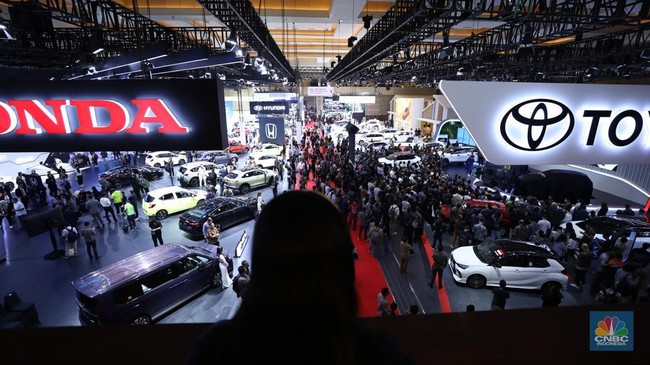
Chinese cars are becoming increasingly aggressive, and in just five years, Japan will firmly dominate Indonesia.
Jakarta, CNBC Indonesia - The dominance of Japanese car manufacturers in Indonesia’s automotive market is beginning to face new pressures amid the growing expansiveness of players from China. Dealerships of Japanese brands are starting to collapse, with the latest being a Honda dealership in Pondok Pinang closing and being replaced by a Jaecoo dealership.
Signals of a market direction change are starting to appear, particularly in the electric vehicle segment and among urban consumers.
Automotive observer Yannes Martinus Pasaribu assesses that the position of Japanese brands is currently still relatively secure, supported by a strong foundation built over decades. An extensive service network reaching remote areas and perceptions of product durability are advantages that new competitors have yet to easily match.
“In the next five to ten years, Japan’s throne will still be difficult to topple absolutely thanks to the defensive fortress of product durability reputation, resale value stability, and a post-sales network that is deeply rooted even in remote areas,” Yannes told CNBC Indonesia on Thursday (9/4/2026).
However, this strength will not suffice if not accompanied by the ability to adapt to changing trends. Shifts in consumer preferences, especially in big cities, are increasingly leaning towards more modern products based on technology.
“Unfortunately, slow adaptation will cause them to gradually but surely lose market share among the new generation of urban consumers,” he continued.
The biggest risk is not a sudden occurrence but a gradual erosion process that could weaken the dominance previously considered established. He assesses that reluctance to transform in the battery electric vehicle segment could become a critical point.
“If Japanese manufacturers continue to stubbornly resist the transition and refuse to make radical innovations in the BEV sector, the worst scenario awaiting them is not instant bankruptcy, but a slow structural bleeding that will trigger a ‘Nokia Moment’ in the national automotive industry,” he emphasised.
Early symptoms of this shift, he continued, are already visible in the field. Changes in business strategies and consumer behaviour are indicators that competition is no longer running as before.
“The collapse of this throne has already begun with a mass exodus of dealership investors in various cities switching to Chinese brands to save business margins, which in turn triggers a fall in the prices of used Japanese cars due to a flood of supply from urban consumers migrating to advanced Chinese BEVs with new designs and technological features,” said Yannes.
This potential shift in power is not mere rhetoric but a realistic scenario if Japanese manufacturers do not immediately make comprehensive strategic changes.
“Regarding the potential for Chinese cars to displace the hegemony of Japanese brands in the long term, such a shift could very well become a bitter reality if the incumbent manufacturers continue to insist on holding back and refuse to undertake total innovation overhauls,” he said.