
Chinese Carmakers Trigger European Automotive Industry Upheaval as Market Share Breaks 10 Percent Record
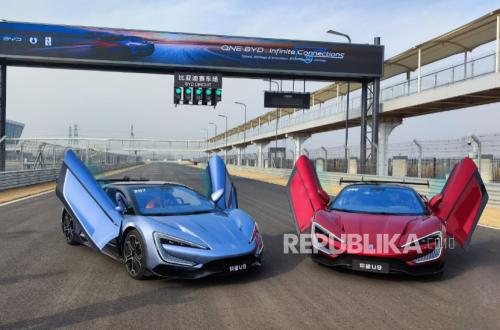
The rise of China’s automotive industry is reshaping the global vehicle competition landscape. After years of dominance by European manufacturers, the market is now moving in a different direction. Chinese car brands continue to expand their market share in Europe, triggering a wave of restructuring among established automotive producers. As reported by the Financial Times on Saturday, 27 June 2026, the market share of Chinese car brands in Europe has surpassed 10 percent for the first time. The business daily described the achievement as an important milestone reflecting a shift in the balance of power in the global automotive industry. In the same report, several analysts warned that this trend could permanently reduce Germany’s manufacturing industrial base if it continues. The surge is not solely driven by cheaper vehicle prices. Chinese manufacturers such as BYD, SAIC, Geely, Chery, and MG are able to offer electric vehicles with competitive technology, comprehensive digital features, and product development cycles that are much faster than many traditional automotive producers. This advantage stems from an integrated industrial ecosystem. China not only produces vehicles but also controls most of the critical supply chain, from electric vehicle batteries and critical mineral processing to electronic components and large-scale manufacturing capacity. This integration allows manufacturers to reduce production costs while accelerating innovation. Meanwhile, European automotive producers face increasingly heavy challenges. High energy costs, rising labour expenses, and the need for massive investment to accelerate the transition to electric vehicles are narrowing the room for competition. As a result, several companies have begun implementing efficiency measures and production capacity adjustments. One of the most attention-grabbing examples is Volkswagen. As reported by Reuters on Friday, 26 June 2026, Germany’s largest automotive manufacturer is preparing a major restructuring that includes plans for workforce reductions and the possible closure of several plants in Germany as part of a strategy to enhance competitiveness. Reuters noted the company is facing pressure from weakening demand in Europe and increasing competition from Chinese car manufacturers. Volkswagen Chief Executive Officer Oliver Blume also acknowledged that the automotive industry is undergoing fundamental change. As quoted by Reuters on Friday, 26 June 2026, he stated that the company’s current business model is “no longer viable in its current form for all brands”, making a major transformation unavoidable. Nevertheless, the increasing dominance of Chinese producers does not yet mean the era of European cars is over. Brands such as Volkswagen, Mercedes-Benz, BMW, and Stellantis still hold advantages in engineering, manufacturing quality, global networks, and customer loyalty. However, they now face a different form of competition. Where previously competition was mostly between brands, it has now shifted to a contest of industrial ecosystem strength, spanning supply chains, battery technology, vehicle software, and the ability to produce electric cars efficiently on a large scale. Therefore, the record Chinese car market share exceeding 10 percent in Europe is not merely a sales achievement. The figure is a sign that the centre of gravity of the global automotive industry is shifting. For European producers, the biggest challenge now is not just maintaining market share, but also rebuilding competitiveness to face a rapidly evolving industrial ecosystem.