
Chinese Carmakers Begin Focusing on Hybrid Engine Development
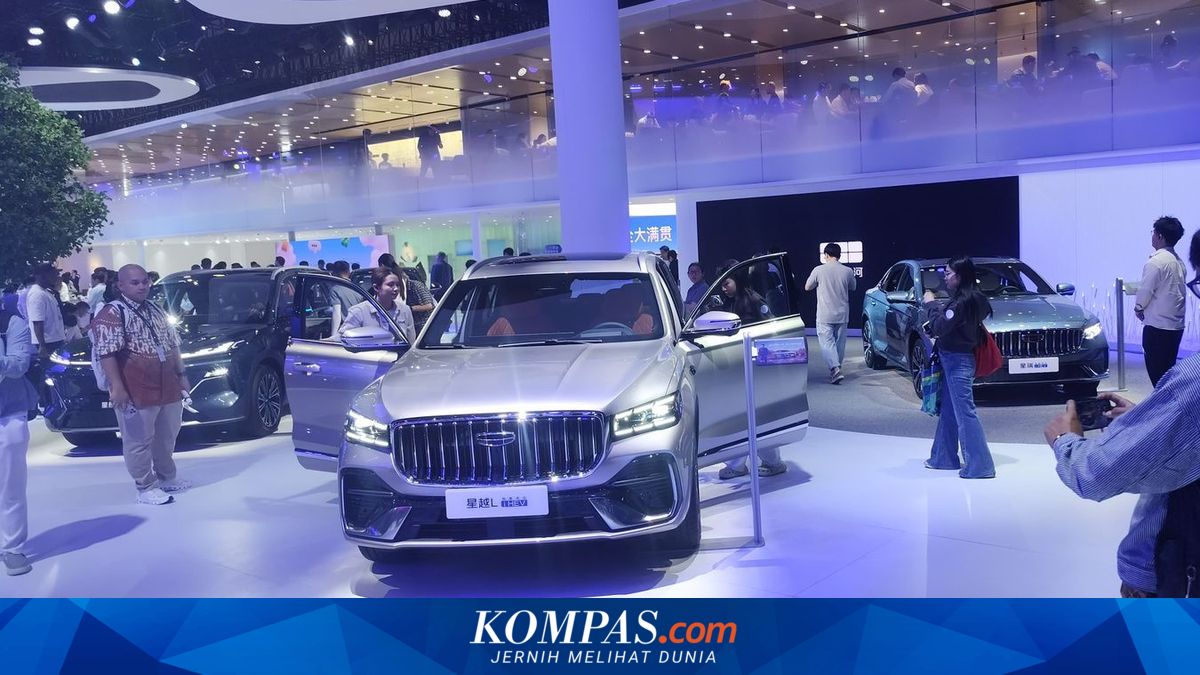
JAKARTA - After invading other countries with electric cars, several Chinese carmakers are now beginning to shift their focus to hybrid technology. This technology is believed to be more suitable for countries that are not yet ready in terms of infrastructure.
Although still relying on fossil fuels or petroleum fuels, hybrid engines have been proven to significantly improve fuel efficiency. The emissions produced are also drastically reduced compared to conventional cars.
Geely has introduced a hybrid system called i-HEV. Then, there is Changan with BlueCore HEV technology.
GAC is also developing a full hybrid system with HEV+. Other Chinese carmakers, such as GWM and Chery, are not left behind in filling the HEV segment. Meanwhile, BYD prefers plug-in hybrid electric vehicle (PHEV) technology, which it calls DM-i (Dual Mode).
Chinese car manufacturers are increasingly positioning HEV as part of their export strategy, especially in regions where charging infrastructure is still limited. This includes Southeast Asia and South America, where hybrid systems offer operational flexibility without depending on charging networks.
The penetration of electric vehicles (EV) in China exceeded 52% in March 2026, but the expansion of HEV systems shows that various powertrain technologies are developing in parallel, not sequentially replacing one another.
Rather than reversing the electrification trend, the current phase reflects a multi-pathway structure, where BEV, PHEV, and HEV systems coexist in various usage scenarios, cost segments, and global markets.